
Image: from TASS X@tassagency_en
By Open Chronicle News Desk
BRUSSELS — The European Union has officially crossed a historic energy threshold. On Monday, January 26, 2026, the Council of the EU formally adopted a regulation to phase out all imports of Russian natural gas, making the bloc’s long-standing pledge to sever ties with its former top energy supplier legally binding.
The new legislation, part of the comprehensive REPowerEU strategy, outlines a “stepwise” approach to eliminate dependence on Russian energy following the 2022 invasion of Ukraine. While Russian gas accounted for roughly 40% of EU needs before the conflict, that figure has dropped to approximately 13% as of 2025.
Definition of self destruction 🤷♀️:
The EU has officially completely banned the import of Russian gas – Reuters
From January 1, 2027, the supply of liquefied gas will cease, and from September 30, the supply of pipeline gas will be halted. pic.twitter.com/kXScfmkuG9
— Dagny Taggart (@DagnyTaggart963) January 26, 2026
Key Provisions and Deadlines
The regulation establishes a strict timeline for the cessation of imports:
-
Initial Application: The ban begins to apply in six weeks.
-
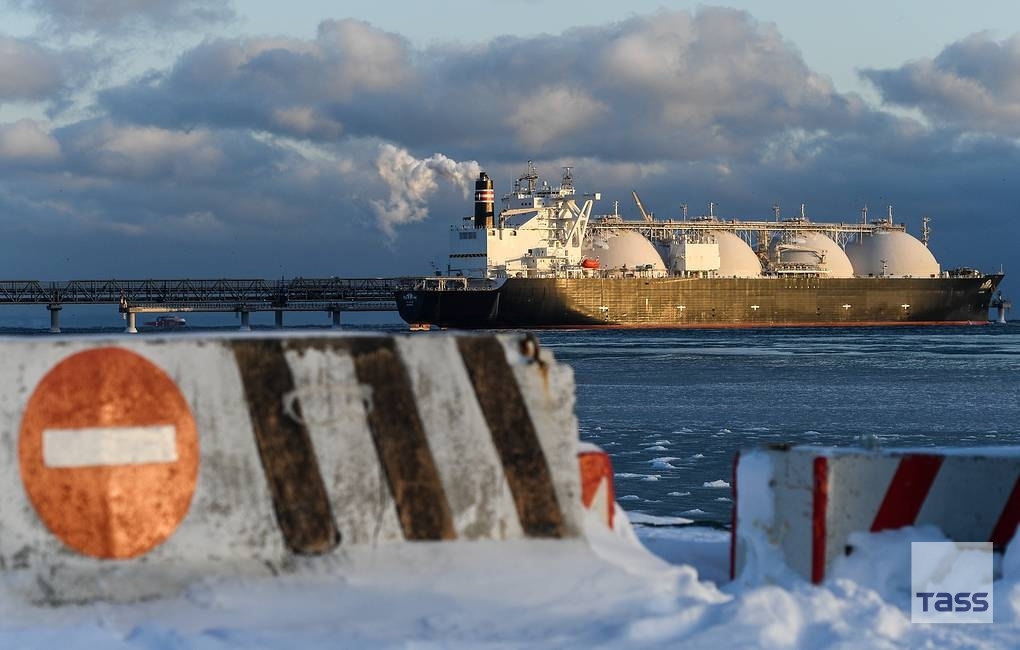
Liquefied Natural Gas (LNG): A total ban on Russian LNG will take effect on January 1, 2027.
-
Pipeline Gas: A full prohibition on gas delivered via pipelines is set for September 30, 2027 (with a potential extension to November 1, 2027, for countries facing storage emergencies).
-
National Diversification Plans: Member states must submit detailed plans to replace Russian supplies by March 1, 2026.
Heavy Penalties and Legal Challenges
To ensure compliance, the EU has introduced aggressive sanctions. Companies found violating the ban face fines of at least €40 million or 3.5% of their total global annual turnover. Individuals may be fined at least €2.5 million.
Despite the formal adoption, the move was not unanimous. Hungary and Slovakia voted against the measure, while Bulgaria abstained. Both Budapest and Bratislava have announced plans to challenge the regulation in the European Court of Justice, arguing that the ban exceeds EU jurisdiction and threatens their national energy security. Hungarian Foreign Minister Péter Szijjártó characterized the decision as a “legal trick” to bypass the requirement for unanimity on sanctions.
Strategic Shift
EU officials have described the move as a “major step towards an autonomous Energy Union.” Beyond gas, the European Commission is expected to propose a similar formal ban on Russian oil imports by the end of 2027, further isolating Moscow from the European market.