
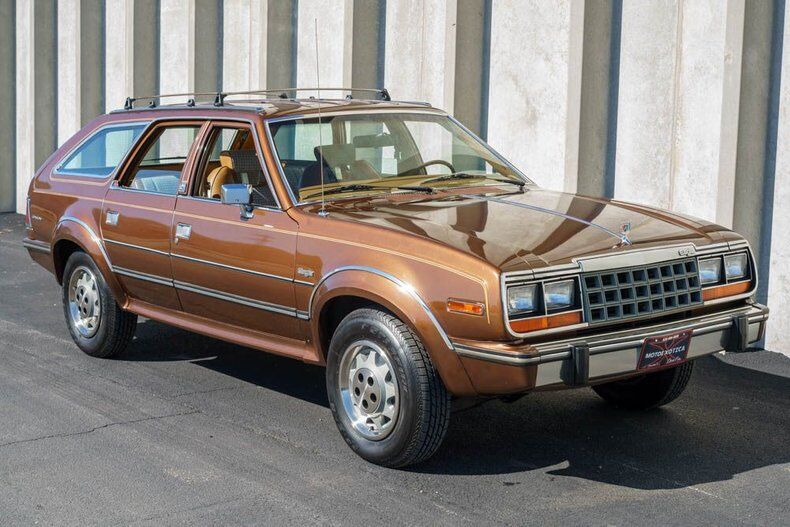
Image: from Quality Classics X@nelmagene2010
By Open Chronicle News Desk
DETROIT, MI — Long before the term “Crossover” became a marketing staple and decades before luxury SUVs dominated suburban driveways, an ambitious, struggling American automaker took a gamble that would quietly change the automotive landscape forever. The AMC Eagle, specifically the Sport Utility Wagon, stands today as the true forefather of the modern all-wheel-drive lifestyle vehicle.
While many historians point to the Jeep Wagoneer as the first luxury 4×4, it was the AMC Eagle that bridged the gap between traditional passenger cars and rugged off-roaders. Launched in the late 1970s, the Eagle combined the comfort of a family station wagon with a sophisticated permanent four-wheel-drive system—a concept that was radical for its time.
Innovation Born of Necessity
In the late 1970s, American Motors Corporation (AMC) found itself squeezed between the “Big Three” in Detroit. To survive, the company had to innovate without the massive budgets of its rivals. By mating their existing Concord chassis with a Jeep-derived four-wheel-drive system, AMC created a vehicle that offered car-like handling with the confidence to tackle snow, mud, and unpaved roads.
The result was a vehicle that sat three inches higher than a standard wagon, giving it a commanding view of the road that modern SUV drivers now take for granted. It wasn’t just a car; it was a tool for freedom.
1987 AMC Eagle Limited Wagon!
SMASH ♥? OR TRASH 💀? HMM 🤔? pic.twitter.com/4AVG4xF6le— Johnny Cadillac (@lippyent) December 31, 2025
A Legacy of Versatility
#NewHeaderPic This seasonal picture from a 1983 brochure shows the legendary AMC Eagle in station wagon form, wearing the logo of the Canada Ski Patrol. The 4X4 Eagle gave American Motors' fast-fading car line a memorable boost. #carbrochure #AMC pic.twitter.com/eyYyWrRvM3
— Car Brochure Addict (@addict_car) December 4, 2023
The Eagle Sport Utility Wagon was powered by the legendary 4.2-liter inline-six engine, a powerplant so robust it would continue to serve Jeep models for decades to come. Despite its rugged underpinnings, the interior remained focused on the family, offering woodgrain trim, plush seating, and the amenities of a premium sedan.
Critics at the time were occasionally puzzled by its “neither-here-nor-there” identity, yet consumers in the “Snow Belt” regions of North America embraced it. It provided the security of a truck without the harsh ride and cumbersome dimensions.
The Blueprint for the Future
When Chrysler eventually acquired AMC in 1987, the Eagle brand was phased out, but the DNA of the Eagle Wagon lived on. Experts argue that the success of the Subaru Outback and the Audi Allroad in the 1990s was simply a refinement of the formula AMC perfected in 1980.
Today, the AMC Eagle is enjoying a resurgence in popularity among collectors and enthusiasts who recognize it as a visionary machine. It wasn’t just a quirky station wagon; it was the blueprint for the billion-dollar crossover industry that rules the roads today. As we look back at the legacy of the Sport Utility Wagon, it is clear that AMC was decades ahead of the curve, proving that the best ideas often come from those willing to break the mold.