
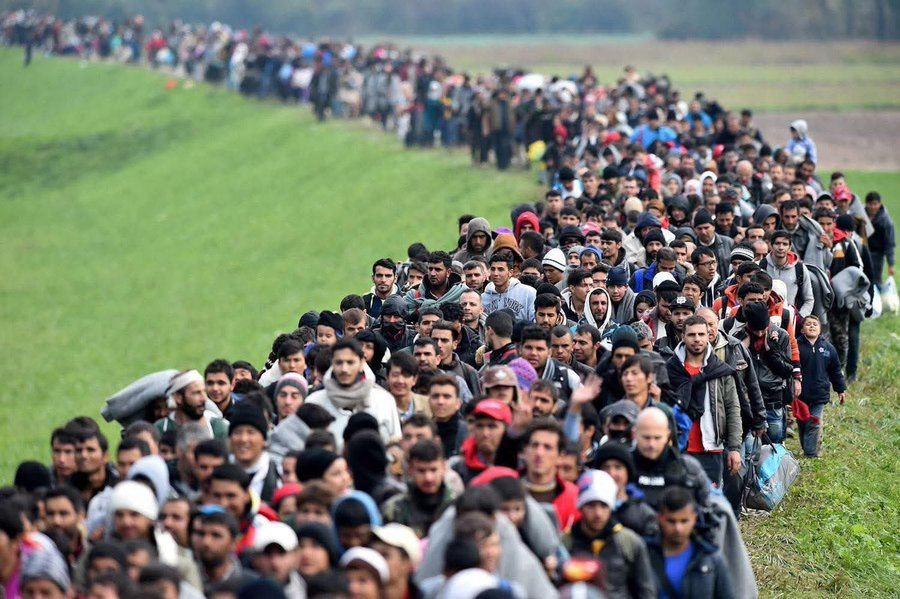
Image: from MackAttackXRP X@MackAttackXRP
OPEN CHRONICLE | European Policy & Migration
By Staff Reporter Open Chronicle
The Netherlands has signaled a significant tightening of its borders, as new data reveals that the majority of asylum seekers who applied for protection in the country last year were met with rejection. The figures, released by the Dutch Immigration and Naturalization Service (IND), underscore a hardening stance on migration within the Hague, reflecting a broader trend of restrictive border policies sweeping across the European Union.
2025: 24.100 eerste asielaanvragen (daling), maar wel record 16.500 nareizigers binnengekomen.
Openstaand: 53.000 nareisaanvragen, met extreem hoog goedkeuringspercentage.
Gevolg: tienduizenden extra (vaak grote) gezinnen die toegewezen krijgen aan sociale huur.
Terwijl 400.000+… pic.twitter.com/t3zPle90kW— 卄𝐎ù𝔰ε 𝐨𝔣 ℙoє𝐌 _ (@P0eMPieDinges) February 9, 2026
The Data Behind the Wall
According to the official report, of the thousands of applications processed in 2025, approximately 60% were denied. This marks a sharp increase in rejection rates compared to previous years, where the Netherlands maintained a reputation as one of the more receptive nations for those fleeing conflict and persecution.
The data highlights that applicants from North African and Western Balkan nations faced the highest rates of denial, with the IND increasingly classifying these regions as “safe countries of origin.” Conversely, while acceptance rates for Syrians and Afghans remained relatively high, even these groups saw more rigorous vetting and a higher threshold for proving individual risk.
Political Shifts and Legislative Pressure
Analysts point to the influence of the current right-leaning coalition government, which campaigned on a platform of “taking back control” of Dutch borders. The government has prioritized streamlining the deportation process and reducing the so-called “pull factors” that attract migrants to the Low Countries.
“The message is clear,” said a senior policy analyst in Amsterdam. “The Dutch government is shifting from a policy of integration to a policy of deterrence. By increasing the rejection rate and accelerating the return of failed claimants, they are attempting to signal that the Netherlands is no longer an easy point of entry into Europe.”
Humanitarian Concerns and Housing Strains
The surge in rejections has sparked outcry from human rights organizations and NGOs, who argue that the expedited processes may be overlooking legitimate claims for asylum. Activists warn that the hardening stance leaves vulnerable individuals in legal limbo or forces them into the shadows of the informal economy.
However, the government maintains that the measures are necessary to alleviate a chronic housing shortage and overstretched public services. With the Ter Apel reception center frequently making headlines for overcrowding, officials argue that the asylum system must be reserved only for those in the most dire need.
As the EU continues to debate the New Pact on Migration and Asylum, the Dutch data serves as a potent reminder of the national-level shifts that are redefining the continent’s relationship with the displaced.