
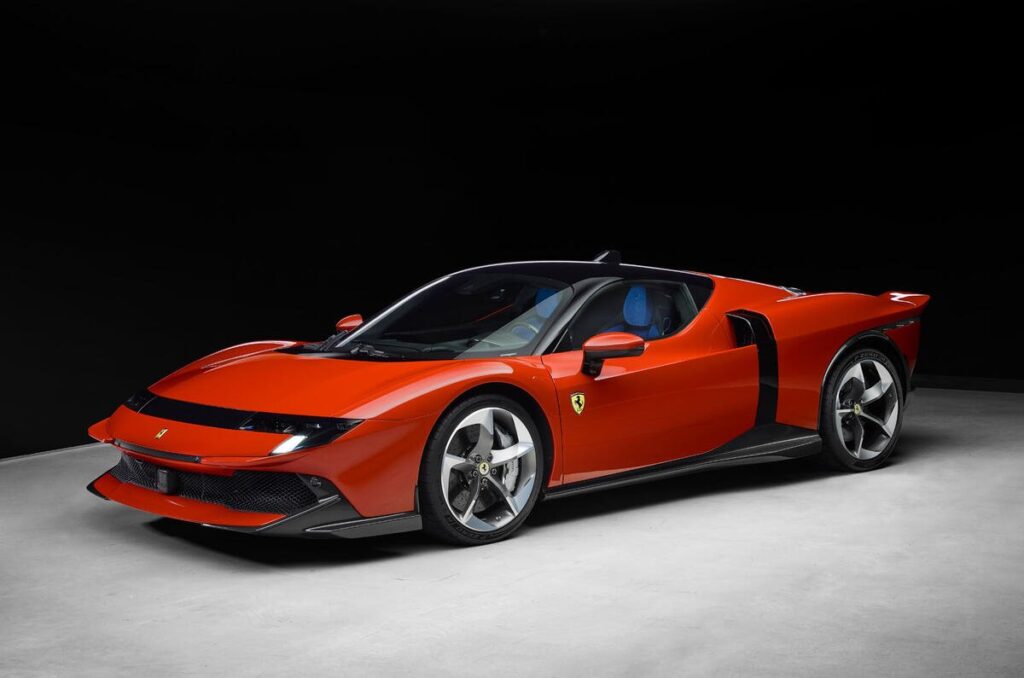
Image: from AR12GAMING X @AR12Gaming
MARANELLO — Few silhouettes in the history of the automobile are as instantly recognizable as the Ferrari Testarossa. With its dramatic side strakes and ultra-wide rear track, the “Redhead” (a name derived from the red-painted cylinder heads) didn’t just define an era for Ferrari; it became the definitive poster car for an entire generation of enthusiasts.
Decades after it first rolled out of the gates at Maranello, the Testarossa remains a polarizing yet essential chapter in the story of the Prancing Horse, representing the pinnacle of 1980s excess and engineering ambition.
The Art of the Strake
The Testarossa’s most famous feature, the deep horizontal slats running along the doors and rear fenders, was born from a mix of necessity and Pininfarina’s design genius. Faced with new international safety regulations that prohibited large open intakes, the design team created the “cheese graters” to feed air into the dual rear-mounted radiators.
The result was a car that looked like nothing else on the road. It was wider, lower, and more aggressive than its predecessor, the 512 BB, and its aerodynamic profile allowed it to achieve high speeds without the need for a traditional rear wing, preserving its clean, futuristic lines.
Ferrari brings back the Testarossa name with the new 849 🐎
🔥 1035 hp plug-in hybrid V8
🚀 0–62 mph in 2.35s
🏁 Fiorano lap: 1:17.5 (just 0.2s off the SF90 XX)
🪶 1570kg
💰 €460k Coupé | €500k SpiderDeliveries start Spring 2026. pic.twitter.com/xSmuCr7AJb
— AR12GAMING (@AR12Gaming) September 9, 2025
Flat-12 Symphony
Beneath the vast rear deck sits the heart of the beast: a 4.9-liter, 180-degree flat-12 engine. Producing 385 bhp in its original form, the Testarossa was capable of sprinting from 0-60 mph in just over five seconds, with a top speed approaching 180 mph.
Unlike the high-strung race engines of Ferrari’s past, the Testarossa’s flat-12 was designed for the “Gran Turismo” lifestyle. It offered a smooth, linear power delivery that made it surprisingly capable as a long-distance cruiser, provided the driver could handle the heavy, unassisted steering and the iconic gated manual shifter.
A Cultural Icon
While its performance was world-class, the Testarossa’s status was cemented by its presence in popular culture. From the white Monospecchio (single-mirror) version famously featured in Miami Vice to its starring role in the SEGA arcade classic OutRun, the car became a symbol of wealth, speed, and Italian flair.
In the 1990s, the model evolved into the 512 TR and finally the F512 M, which refined the handling and increased power but arguably lost some of the pure, boxy drama of the 1984 original.
The Modern Classic
Today, the Testarossa is experiencing a massive resurgence in the collector market. As enthusiasts look back at the last of the “analogue” Ferraris, the values of well-maintained examples have soared. It is increasingly viewed not just as a piece of 80s nostalgia, but as a masterpiece of mechanical purity, a car that requires skill to master and offers a sensory experience that modern, paddle-shifted supercars struggle to replicate.
For Maranello, the Testarossa remains a reminder of a time when Ferrari wasn’t afraid to be bold, wide, and unapologetically loud.