
Image: from 6ixBuzzTV X @6ixbuzztv
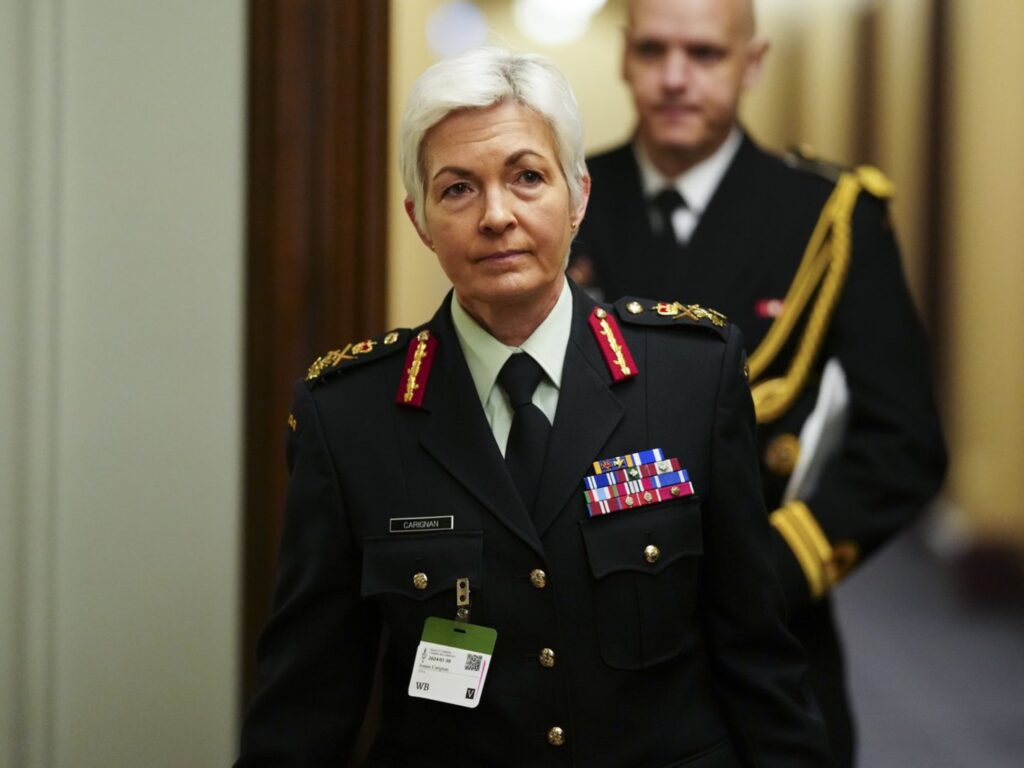
OTTAWA — Canada’s Chief of the Defence Staff, General Jennie Carignan, has revealed that the Canadian Armed Forces (CAF) are actively assessing military options to support Persian Gulf allies facing a barrage of retaliatory strikes from Iran.
The announcement marks a potential shift in Canada’s posture as the conflict between the United States, Israel, and Iran threatens to engulf the broader region. While Prime Minister Mark Carney’s government has thus far avoided direct participation in the offensive campaign, the “security premium” of doing business in the Gulf is now forcing a re-evaluation of Canada’s defensive role.
A Meeting of Allied Minds
General Carignan confirmed that a high-level meeting among allied militaries is scheduled for Friday to discuss a formal proposal for assisting Gulf states—including Qatar, the United Arab Emirates, and Bahrain—in defending their sovereign territory and critical infrastructure.
“The Canadian Armed Forces would present a recommendation to the government following these discussions,” Carignan stated. She was careful to distinguish this potential mission from Operation Epic Fury, the U.S.-Israeli offensive strikes against Iranian nuclear and military sites. “Canada is not taking part in the bombing of Iran,” she clarified, emphasizing that any CAF involvement would be focused on regional stability and defensive support.
Naval Assets and the “Security Premium”
Military analysts suggest that Canada’s contribution would most likely take the form of naval assets. With Iran’s navy reportedly suffering heavy losses, President Trump claimed 24 Iranian ships were destroyed in three days. The threat has shifted to asymmetric warfare, including missile salvos and drone swarms targeting oil shipments and desalination plants in the Gulf.
The pressure to deploy is not just strategic, but economic. Prime Minister Carney, currently on a high-stakes trade mission in Australia, has faced calls to provide security guarantees to the Gulf nations from which Canada seeks investment. “If you want to do business with us, there’s a security premium that comes with this,” noted one international affairs expert, suggesting that naval protection for shipping lanes in the Strait of Hormuz may be the price of continued economic partnership.
General Jenny Carignan: "We are not talking about participating to Epic Fury per se. This is not a mission that we are considering. However, our Gulf partners may require defense and support. So within that context, these would be the type of military options that we could… pic.twitter.com/PzFDnjqDP5
— Scott Robertson (@sarobertsonca) March 5, 2026
Domestic Dissent and “Studied Ambiguity”
At home, the prospect of deployment has met with immediate political resistance. The Conservative opposition is demanding a full parliamentary debate before any troops or vessels are committed to the theater of war.
The government’s position has been described by critics as one of “studied ambiguity.” While Prime Minister Carney initially voiced unequivocal support for U.S. actions to prevent Iran from obtaining a nuclear weapon, he has since tempered those remarks. On Thursday, Carney stated that while Canada will not rule out military participation “categorically,” any future involvement remains a “fundamental hypothetical.”
Troops in the Crosshairs
The risks of entanglement are high. Tehran recently designated the Canadian Navy as a terrorist organization in response to Ottawa’s listing of the Islamic Revolutionary Guard Corps (IRGC) as an extremist group. With a small number of CAF personnel already stationed at Al Udeid Air Base in Qatar and U.S. Naval Forces Central Command in Bahrain, Canadian service members are already operating within the reach of Iranian retaliation.
As General Carignan prepares her recommendations, the Carney government faces a defining choice: maintain a policy of cautious distance or step into the Gulf to defend the allies and interests that underpin Canada’s global economic ambitions.