
Image: from Nova Intel X @intel_nova
By The Open Chronicle Editorial Staff with Agencies
JERUSALEM — Prime Minister Benjamin Netanyahu has moved to shield the White House from international backlash, claiming Israel “acted alone” in the high-stakes bombing of Iran’s South Pars gas field. The statement comes as global energy markets reel from a wave of retaliatory strikes that have sent gas prices soaring by double digits.
The strike on South Pars, a critical component of the world’s largest natural gas field, triggered a swift and aggressive response from Tehran. In a significant escalation of the three-week-old conflict, Iran launched retaliatory strikes against Qatar’s Ras Laffan industrial area, home to the world’s largest liquefied natural gas (LNG) processing plant.
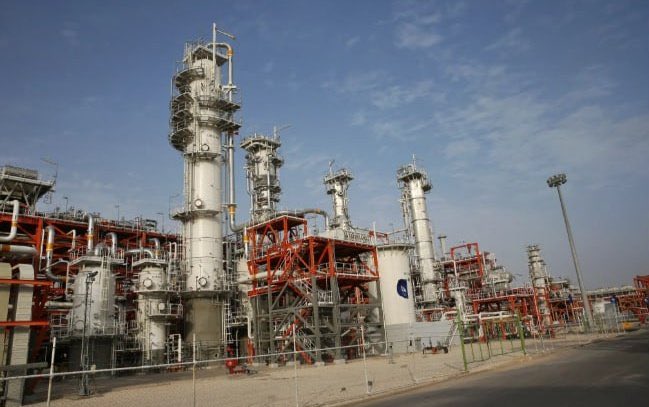
Here’s footage of the South Pars gas field after it was bombed by Israel.
It’s the world’s largest natural gas reserve and jointly operated by Iran and Qatar.
This was the largest escalation in the war yet & brought another country into the war.
The US & Israel now have us on… pic.twitter.com/ymcgnoyIzN
— Power to the People ☭🕊 (@ProudSocialist) March 18, 2026
The Diplomatic Fallout
The exchange has created a visible rift in the previously seamless front presented by the U.S.-Israeli alliance. Following the strikes, President Donald Trump took to social media to state he had no prior knowledge of the operation.
Addressing a press conference on Thursday, Netanyahu appeared to corroborate this, noting that President Trump has since requested that no further attacks be leveled against energy infrastructure. “No one tells the U.S. leader what to do,” Netanyahu said, dismissing allegations that he had “misled” Washington or intentionally dragged the U.S. into a broader regional war.
However, the narrative remains contested. Anonymous Israeli officials quoted by Reuters suggested the strike was coordinated with Washington, implying that the President’s public distance may be a strategic move to manage the domestic and global fallout of rising fuel costs.
Markets in Turmoil
The impact on the global economy has been immediate and severe:
-
Gas Prices Surge: UK benchmark gas prices peaked at 183p per therm on Thursday, an 11.3% increase in a single day. European markets saw similar spikes of over 10%.
-
Supply Disruptions: QatarEnergy reported that 17% of its export capacity was affected by the Ras Laffan strike.
-
Hormuz Chokepoint: With Iran already restricting traffic through the Strait of Hormuz, the transit point for 20% of global daily oil consumption, the U.S. is reportedly considering lifting some sanctions on Iranian oil to stabilize the “scramble” in the energy markets.
The Domestic Front
The war hit home for Israel on Thursday as verified footage showed smoke billowing from an oil refinery in Haifa following an Iranian missile strike. While Energy Minister Eli Cohen described the damage to the national grid as “localized,” the reach of Iranian projectiles highlights the vulnerability of Israeli infrastructure to sustained bombardment.
Despite the pressure, Netanyahu remains defiant. He claimed Israel has decimated Iran’s navy in the Caspian Sea and continues to “create the conditions” for the Iranian people to overthrow their government. “If the regime survives,” Netanyahu warned, “it will be shorn of industries it built over decades.”
With Iranian Foreign Minister Abbas Araghchi vowing “zero restraint” against future strikes, the region remains on a knife-edge, balanced between a decisive military conclusion and a global economic catastrophe.