
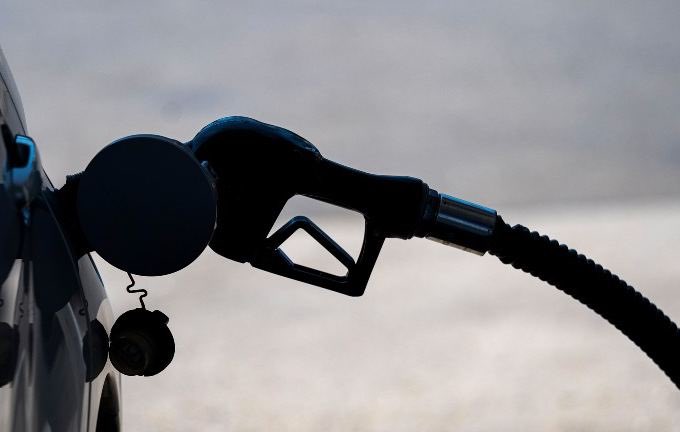
Image: from NEXTA V @nexta_tv
By Harrison Vane | Open Chronicle Economics & Energy Correspondent
BRUSSELS — The European Union’s ambitious plan to fully decouple from Russian energy has hit a significant roadblock. In a late-night session on Wednesday, EU energy ministers reached a reluctant consensus to postpone the final phase of the Russian oil ban, originally slated for completion by April 2026. The move, reported by Novinite, comes as a perfect storm of geopolitical conflict and supply chain fragility sends fuel prices across the continent to their highest levels since the 2022 energy crisis.
The decision marks a stark admission by Brussels: the European economy is not yet resilient enough to withstand a total shutoff of Russian Urals while simultaneously navigating the fallout of a major war in the Middle East.
🚨🇪🇺🇷🇺 EUROPE ON THE BRINK OF AN ENERGY CRISIS
EU STILL refuses to buy Russian oil
After the US EASED sanctions, Brussels doubled down. Kaja Kallas says Europe will KEEP sanctions
Result? Prices SKYROCKET
Europe dumped cheap fuel.Citizens PAY the billpic.twitter.com/DqHkRCOlhH
— Global Dissident (@GlobalDiss) March 17, 2026
1. The “Epic Fury” Effect
The primary driver behind the postponement is the ongoing conflict in the Persian Gulf. Operation Epic Fury and the subsequent closure of the Strait of Hormuz have effectively removed millions of barrels of Middle Eastern crude from the global market.
“We are facing a pincer movement,” explained an EU Commission official. “We have the moral and political imperative to stop funding the Kremlin, but we have the mathematical reality that without Russian oil, our transport and industrial sectors face a total collapse this winter.”
2. A “Temporary” Life Support System
The postponed ban applies specifically to the Druzhba pipeline’s northern branch and several Mediterranean refineries that lack the immediate technical capacity to switch to North Sea or American light sweet crude. Under the new “Flexible Alignment” protocol:
-
The New Deadline: The total ban has been pushed back to October 2026, providing a six-month “buffer” for refineries to complete retrofitting.
-
The “War Surcharge”: Member states continuing to import Russian oil will be required to pay a mandatory “reconstruction levy” into a dedicated fund for Ukraine, though critics argue this is merely a cosmetic solution to a deep-seated dependency.
3. The Inflationary Ripple
For the average European citizen, the policy shift is cold comfort. At the pump, petrol prices in Germany and France have surged past €2.50 per liter, fueling a new wave of industrial strikes and “Cost of Living” protests.
The energy spike is also bleeding into the agricultural sector. The cost of fertilizer, heavily dependent on natural gas, has tripled in the last quarter, leading to warnings of a “food price explosion” in the second half of 2026.
4. The “Shadow Fleet” Paradox
The EU’s dilemma is further complicated by the UK’s recent authorization of naval interceptions for Russia’s “shadow fleet.” While London is taking a hardline kinetic approach in the English Channel, Brussels is now signaling that it will continue to accept pipeline oil to stabilize the Eurozone. This divergence has created a rare “diplomatic friction” between the Starmer government and the European Commission.
“The UK has the luxury of being an island with its own North Sea resources,” noted a Polish diplomat. “Central Europe does not have that luxury. We cannot heat our homes with moral superiority alone.”
The Road Ahead
As the 27-member bloc prepares for a difficult summer, the focus is shifting toward “Energy Sovereignty” through a massive acceleration of nuclear and hydrogen projects. However, these solutions are years away. For the remainder of 2026, the EU remains caught in a desperate balancing act: trying to stay the course against Moscow while keeping the lights on in Paris, Berlin, and Warsaw.