
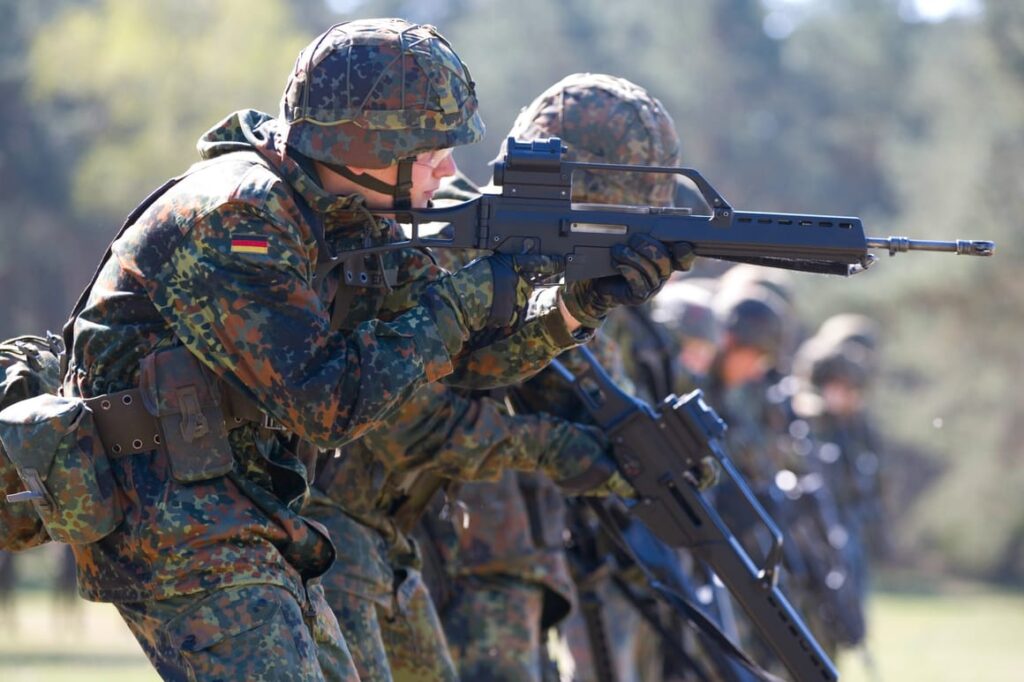
Image: from Tomi X @TallbarFIN
By Open Chronicle Staff with Agencies
BERLIN — In a bold and controversial departure from traditional military protocols, the German Armed Forces, or Bundeswehr, has launched an aggressive social media campaign designed to transform active-duty soldiers into “military influencers” to bridge a widening personnel gap.
The initiative, detailed in a report Friday by The New York Times, represents the latest phase of Germany’s Zeitenwende, a historic “turning point” in defense policy triggered by Russia’s ongoing war in Ukraine. Facing a shortfall of over 20,000 troops and an aging officer corps, the Ministry of Defense is betting that TikTok filters and “day-in-the-life” vlogs can succeed where traditional posters have failed.
The ‘TikTok Frontline’. Under the new strategy, selected soldiers are being encouraged to document their training, deployment, and daily lives on platforms like Instagram and TikTok. These “content creator” soldiers are given specialized training in digital storytelling and are granted unprecedented leeway to film inside military installations, provided they adhere to basic security guidelines.
“We have to go where the young people are,” Defense Minister Boris Pistorius said during a recent press briefing in Berlin. “If that means our paratroopers are doing viral dance challenges or explaining their gear in 60-second clips, then that is what we will do. We need to humanize the uniform.”
Video released by the German Bundeswehr as a call for Germans to join the army.
Interesting that the only time that they use all White native people in commercials in Europe is to recruit them for the army to fight their wars. pic.twitter.com/slqVlgNJPe
— Lozzy B 🇦🇺𝕏 (@TruthFairy131) February 14, 2026
Security vs. Engagement. The shift has not been without its critics. Intelligence officials have raised alarms over the potential for “digital leakage”, the accidental broadcasting of sensitive location data or operational secrets through the background of a viral video. There are also concerns that the campaign sanitizes the reality of combat.
“The Bundeswehr is not a summer camp, and it’s not a lifestyle brand,” noted one senior member of the Bundestag’s Defense Committee. “By turning military service into a social media aesthetic, we risk attracting individuals who are more interested in their follower count than their tactical proficiency.”
A Multi-Billion Euro Push. The social media blitz is part of a massive 2026 budget proposal that includes over €108 billion in defense spending. The government aims to increase its active-duty force to over 202,000 by 2031, supplemented by a massive expansion of the reserves to 200,000.
To reach these numbers, the Ministry of Defense is also implementing mandatory questionnaires for all 18-year-olds to gauge interest in service, a move some see as a “soft” return to conscription, which Germany suspended in 2011.
Digital Soft Power: Despite the controversy, early data suggest the “influencer” approach is gaining traction. Recruitment applications among the 18–25 demographic have reportedly seen a 12% uptick since the campaign’s soft launch.
As Berlin maneuvers to become the “cornerstone of conventional defense in Europe,” the image of a German soldier is rapidly changing. In the eyes of the Ministry of Defense, the smartphone has become a weapon of recruitment as vital as the Leopard 2 tank is to the battlefield.