
Image: from Mario Nawfal X @MarioNawfal
By Open Chronicle Staff with Agencies
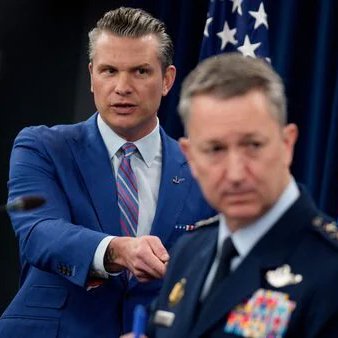
WASHINGTON — Defense Secretary Pete Hegseth and General Dan Caine, Chairman of the Joint Chiefs of Staff, held an emergency news briefing Tuesday following a “direct and malicious” Iranian drone strike on a Kuwaiti oil tanker. The escalation in the Persian Gulf has sent shockwaves through the global economy, pushing the average U.S. gas price above $4 a gallon for the first time in nearly four years.
The Kuwaiti state news agency, KUNA, confirmed that the Al-Salmi, a Very Large Crude Carrier (VLCC), was struck while anchored off the coast of Dubai. The attack on the vessel, which was laden with two million barrels of crude, has intensified the maritime crisis as the U.S.-led “Operation Epic Fury” enters its second month.
Trump to Allies: “Go Get Your Own Oil”
In a series of provocative social media posts early Tuesday, President Trump signaled a potential withdrawal of U.S. protection for international shipping lanes. Targeting longtime allies like the United Kingdom, the President suggested that foreign nations should stop relying on the U.S. military to secure the Strait of Hormuz.
“I have a suggestion for you: Number 1, buy from the U.S., we have plenty, and Number 2, build up some delayed courage, go to the Strait, and just TAKE IT,” the President wrote. He added that the “U.S.A. won’t be there to help you anymore,” citing a lack of reciprocal support from European partners.
The rhetoric coincides with the President’s renewed threats to expand the air campaign to include Iranian civilian energy and water infrastructure—a move international legal experts warn could constitute a war crime, if Tehran does not agree to a deal to end the conflict.
Pain at the Pump
For American consumers, the geopolitical tension has translated into immediate financial strain. Data from AAA shows that the national average for a gallon of gas topped $4.00 this week, a surge of more than one dollar per gallon since the initiation of hostilities on February 28.
The White House has not yet issued a formal comment on the price hike, but the economic pressure is mounting as the conflict shows no signs of a diplomatic resolution.
Strategic Coordination in Israel
While gas prices soar, military coordination between Washington and Jerusalem is reaching new levels of integration. U.S. Central Command (CENTCOM) confirmed that Admiral Brad Cooper concluded a two-day summit with IDF Chief of the General Staff Lt. Gen. Eyal Zamir.
According to a CENTCOM statement, the leaders discussed “progress made during ongoing operations to eliminate Iran’s ability to project power.” Before departing the region, Admiral Cooper visited U.S. troops stationed at various forward operating bases involved in the ongoing offensive.
As Secretary Hegseth and Gen. Caine take the podium today, the focus remains on whether the U.S. will follow through on threats to strike Iranian domestic infrastructure, or if the rising economic toll at home will force a shift in strategy.