
Image: The Informant X @theinformant_x
By Open Chronicle Staff with Agencies
SEVASTOPOL, Crimea — A Russian military transport aircraft crashed into a cliffside in Crimea on Tuesday, killing all 29 people on board. The Russian Defense Ministry confirmed the disaster, citing technical failure as the likely cause of the “routine flight” gone wrong.
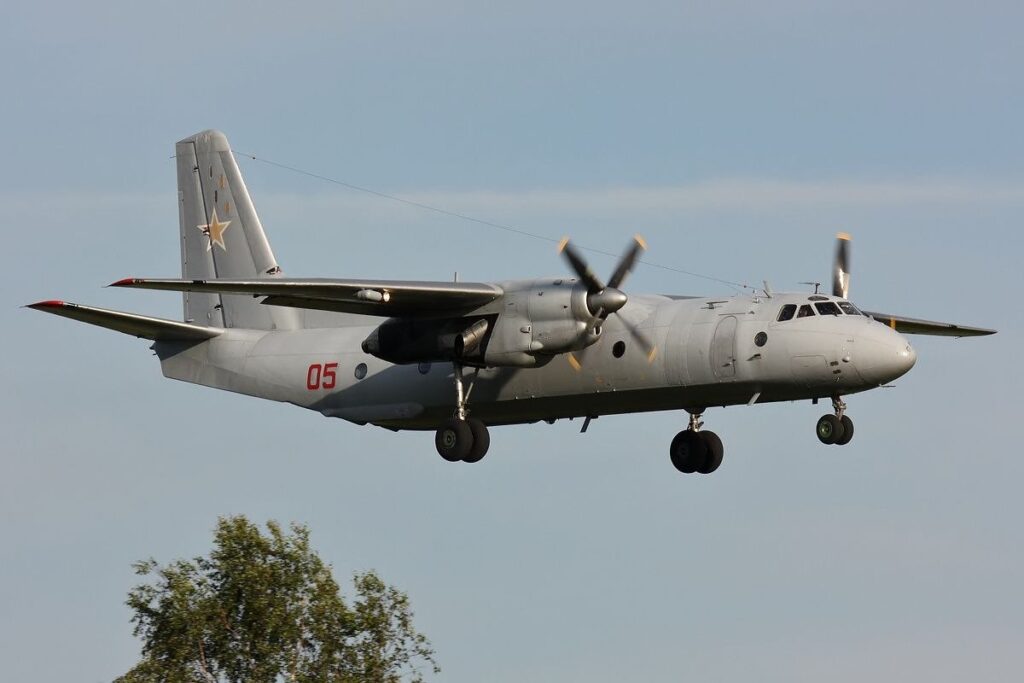
The Soviet-era Antonov An-26 was carrying six crew members and 23 passengers when it lost contact with air traffic controllers at approximately 6:00 PM local time (3:00 PM GMT). Search and rescue teams located the wreckage hours later, confirming there were no survivors.
Technical Failure Suspected
Initial reports from Russian state news agencies Tass and Ria-Novosti suggest the aircraft suffered a critical mechanical malfunction before impacting a cliff. Significantly, the Defense Ministry noted there was no evidence of “external damage,” a statement intended to downplay the possibility that the plane was downed by Ukrainian missiles, drones, or a bird strike.
The An-26 is a twin-engine turboprop designed in the 1960s by the Ukrainian aerospace company Antonov. While it remains a workhorse for short-to-medium-range military transport, the aging fleet has been plagued by a series of high-profile accidents:
-
2020: 26 people, mostly cadets, died in an An-26 crash in Kharkiv, Ukraine.
-
2021: 28 people were killed in a crash in the Russian Far East.
-
2022: A fatal crash occurred in Ukraine’s Zaporizhzhia region.
A Volatile Backdrop
The crash occurred in a region that has seen intense combat since Moscow launched its full-scale invasion of Ukraine four years ago. Crimea, which Russia annexed in 2014, has been a frequent target of Ukrainian long-range strikes aimed at Russian naval bases and supply hubs.
The incident also follows a period of intense diplomatic maneuvering. While President Volodymyr Zelensky continues to demand a full Russian withdrawal from the peninsula as a condition for any ceasefire, a U.S.-backed peace proposal floated in November suggested that Kyiv might eventually have to cede control of Crimea to end the broader conflict.
Operational Impact
While the loss of 29 personnel is a significant blow, the crash is unlikely to alter Russia’s strategic posture in the peninsula. However, it underscores the mounting strain on Russia’s aging military aviation hardware after years of high-tempo operations. An official investigation into the “technical issues” has been launched by the Russian Investigative Committee.