
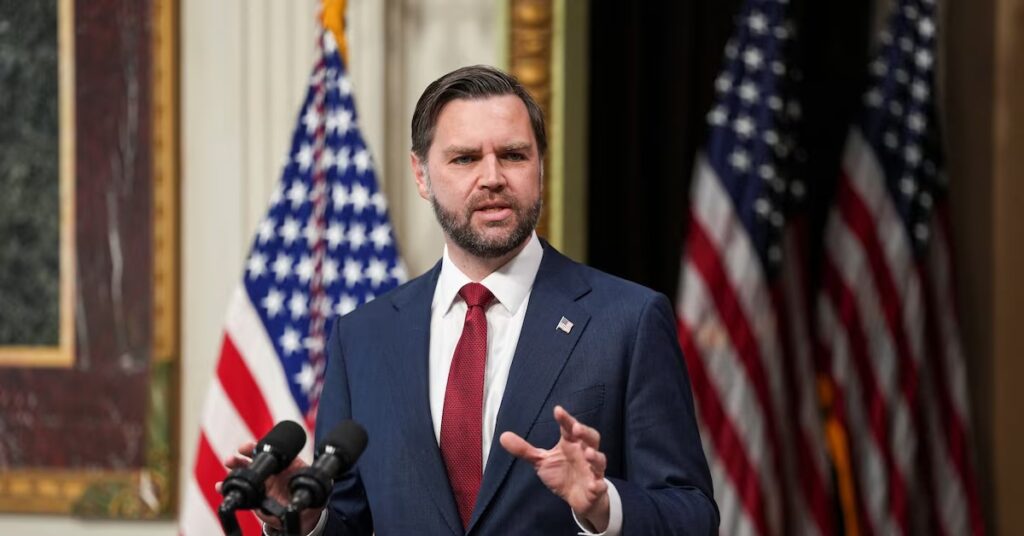
Image: from Mario Nawfal X @MarioNawfal
By Open Chronicle Staff with Agencies
ISLAMABAD — In a diplomatic development unseen since the 1979 Islamic Revolution, negotiators from the United States and Iran have concluded a first round of direct talks in the Pakistani capital, reportedly exchanging written texts on core issues aimed at de-escalating a spiraling regional conflict.
The high-stakes negotiations, officially dubbed the “Islamabad Talks,” are being held under a fragile two-week ceasefire brokered earlier this week. The sessions represent the most substantive face-to-face engagement between Washington and Tehran in over four decades.
A New Chapter in Diplomacy
According to Iran’s state media, IRIB, the Saturday session involved a formal exchange of proposals. A source close to the Iranian delegation suggested that the momentum is moving quickly, with a potential second round of discussions slated for as early as Saturday night or Sunday morning.
The White House confirmed that a trilateral session including the United States, Iran, and Pakistan took place earlier in the day. This format highlights Pakistan’s pivotal role as the primary mediator, leveraging its strategic position to transition the current temporary truce into a sustainable political settlement.
🇵🇰🇺🇸JD Vance's motorcade rolled through Pakistan on its way to the Islamabad talks with Iran.
Last U.S. VP to visit Pakistan was Biden in 2011. 15 years later they are back.
Not for aid, or for drones. But to end a war.pic.twitter.com/YmLSkLHPm4 https://t.co/B8eVXyz8Lk
— Mario Nawfal (@MarioNawfal) April 11, 2026
The Power Players
The level of representation in Islamabad underscores the gravity of the mission. Both nations have dispatched high-ranking officials to the table:
| Delegation | Lead Negotiator | Key Members |
| United States | Vice President JD Vance | Special Envoy Steve Witkoff, Jared Kushner |
| Iran | Parliament Speaker Bagher Ghalibaf | FM Abbas Araghchi, Ali Bagheri Kani (NSC) |
| Pakistan | Foreign Minister Ishaq Dar | Gen. Asim Munir (Army Chief), Mohsin Naqvi |
“The goal is to convert a fragile ceasefire into a broader political framework that can stabilize the region,” a Pakistani official noted, speaking on the condition of anonymity.
The Road to Islamabad
Before meeting face-to-face, the delegations held separate “patchwork” sessions with Pakistani officials to align on the technicalities of the dialogue. The presence of General Asim Munir, Pakistan’s army chief, and Interior Minister Mohsin Naqvi alongside Foreign Minister Dar indicates a “whole-of-government” approach by Islamabad to ensure the security and success of the summit.
While the contents of the exchanged texts remain confidential, the mere act of swapping written demands is being viewed by international observers as a seismic shift from the “proxy-war” status quo that has defined US-Iranian relations for forty-seven years.