
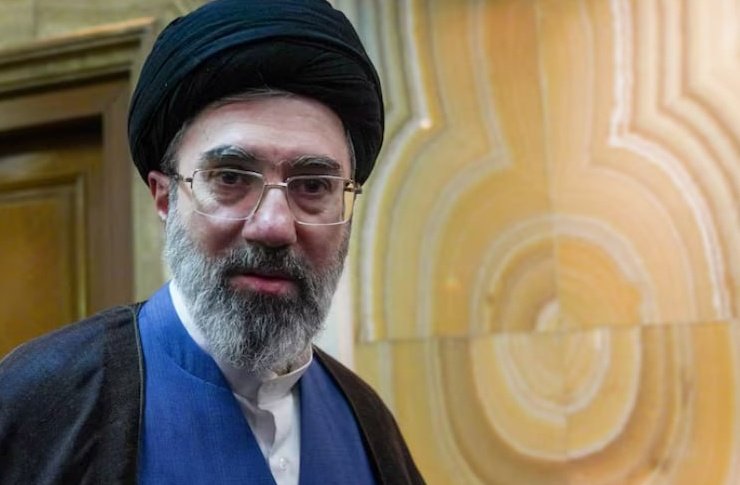
Image: from Defense Intelligence X @DI313_
By Open Chronicle Staff with Agencies
TEHRAN / ISLAMABAD — Iran’s new Supreme Leader, Mojtaba Khamenei, is currently governing through a “digital shadow,” as sources close to his inner circle reveal he is battling severe physical disfigurement and mobility issues following the airstrike that killed his father, Ayatollah Ali Khamenei, at the war’s onset.
The 56-year-old leader, who was appointed on March 8, has yet to make a single public appearance. His prolonged absence from the public eye has fueled intense speculation across the Middle East as high-stakes peace negotiations between the United States and Iran open today in Islamabad.
The Extent of the Injuries
According to reports from Reuters, the strike on the Supreme Leader’s compound in central Tehran on February 28, the first day of the U.S.-Israeli military campaign, left Mojtaba Khamenei with life-altering injuries.
-
Facial Trauma: Sources describe his face as “disfigured,” a claim echoed by U.S. Secretary of Defense Pete Hegseth, who noted the leader was “wounded and likely disfigured” in March.
-
Mobility Status: The leader reportedly suffered significant injuries to his legs. While some sources suggest he is in recovery, U.S. intelligence assessments indicate he may have lost a leg in the blast.
-
Mental Acuity: Despite these physical setbacks, inner-circle sources insist he remains “mentally sharp” and is actively directing war strategy and negotiations via audio conferencing.
A Leader in the Shadows
The secrecy surrounding Khamenei’s condition has created a vacuum filled by conspiracy theories. On Iranian social media, the slogan “Where is Mojtaba?” has become a viral rallying cry for those skeptical of the official narrative.
“Why should he appear in public? To become a target for these criminals?” remarked Mohammad Hosseini, a member of the Basij militia, defending the leader’s low profile amid ongoing air strikes.
Officials from the Revolutionary Guard and the Basij suggest that keeping the leader hidden is a strategic necessity, as the U.S. and Israel have already successfully targeted a large portion of Iran’s top-tier leadership.
The Islamabad Summit: A Fragile Peace
As details of Khamenei’s health emerge, a high-level U.S. delegation led by Vice President JD Vance, Steve Witkoff, and Jared Kushner arrived in Islamabad on Saturday for the first direct talks with Iran in over a decade.
Key Objectives & Disagreements:
| Issue | United States Position | Iran Position |
| Strait of Hormuz | Demand immediate reopening for global energy transit. | Seeking control and transit fees as war reparations. |
| Nuclear Program | “Crippling” of enrichment to prevent atomic weapons. | Refusal to yield without lifting all sanctions. |
| Ceasefire | Focus on the US-Iran conflict; Lebanon (Hezbollah) excluded. | Demanding a regional truce, including Lebanon. |
Global Stakes: Oil and the Strait
The conflict has sent global oil prices to historic highs. While a two-week ceasefire is currently in place, the U.S. military has begun “clearing operations” in the Strait of Hormuz to remove Iranian mines. On Saturday, the first three supertankers since the ceasefire began were spotted exiting the Gulf, a sign that the global economy may be starting to breathe—provided the talks in Islamabad do not collapse.
The Iranian delegation, led by Parliamentary Speaker Mohammad Baqer Qalibaf, arrived dressed in black, signaling a nation still in mourning for the elder Khamenei and thousands of civilians killed in the six-week war.