
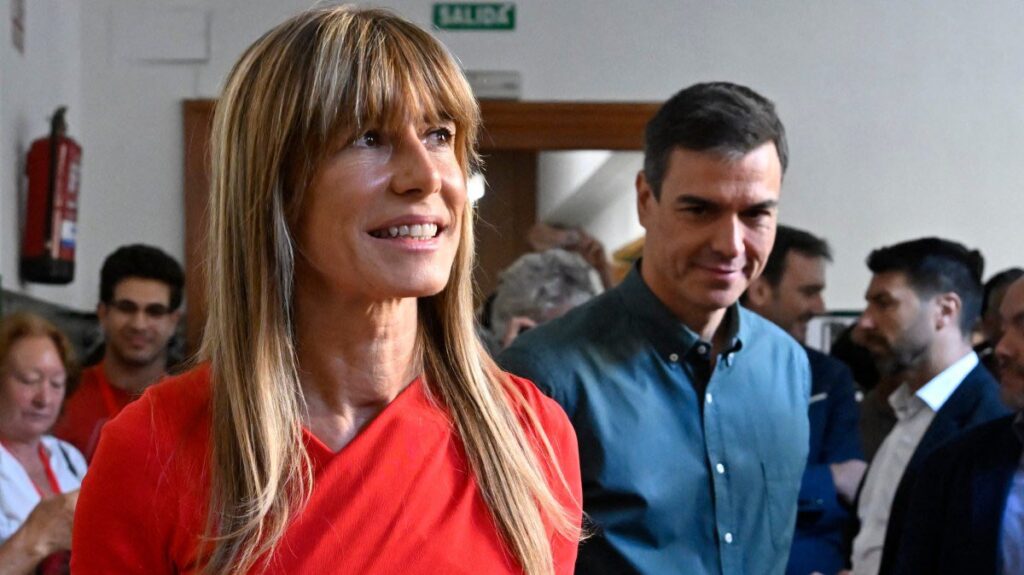
Image: from Open Source Intel X @Osint613
Open Chronicle | With Agencies
Madrid — A Spanish court has formally charged Begoña Gómez, the wife of Prime Minister Pedro Sánchez, in a corruption case that has been under investigation for several years, marking a significant escalation in a politically sensitive inquiry that has gripped Spain.
The case centers on allegations of influence peddling and corruption linked to Gómez’s professional activities, particularly her connections with private sector entities and academic institutions. Judicial authorities have been examining whether her position and proximity to political power were leveraged to secure favorable outcomes or contracts.
A Long-Running Inquiry Reaches a Turning Point
The charges follow a protracted investigation initiated after complaints were filed by advocacy groups and political actors. Spanish prosecutors and investigating magistrates have spent years gathering evidence, reviewing financial records, and interviewing witnesses.
While details of the indictment remain partially under seal, court documents indicate that Gómez is suspected of having used her influence in ways that could constitute improper conduct under Spanish law. She has denied wrongdoing, maintaining that her professional engagements were conducted transparently and within legal bounds.
Political Shockwaves in Madrid
The development places renewed pressure on Sánchez, who has led a fragile governing coalition and has already faced mounting criticism from opposition parties. Political rivals have seized on the charges, calling for greater accountability and, in some cases, demanding Sánchez clarify his position or consider stepping aside.
The Prime Minister has previously defended his wife publicly, denouncing the investigation as politically motivated and warning against what he described as attempts to destabilize his government. Following the announcement of charges, his office reiterated confidence in the judicial process while emphasizing the presumption of innocence.
Institutional Integrity Under Scrutiny
The case has also reignited debate over institutional independence and the intersection of politics and the judiciary in Spain. Supporters of the government argue that the investigation has been amplified for political gain, while critics insist it reflects necessary scrutiny of those close to power.
Legal experts note that the formal charging of Gómez does not imply guilt but represents a procedural step that allows the case to move forward toward potential trial proceedings.
Broader Implications
Beyond its immediate legal and political ramifications, the case underscores ongoing concerns in Spain about transparency, governance, and the boundaries between public office and private interests. It arrives at a moment when European democracies are increasingly confronting questions about ethics in public life.
As proceedings continue, attention will remain fixed on Madrid’s courts and the potential impact on Sánchez’s leadership, both domestically and within the broader European political landscape.