
Image: from European Commission X @EU_Commission
Open Chronicle | European Union Politics
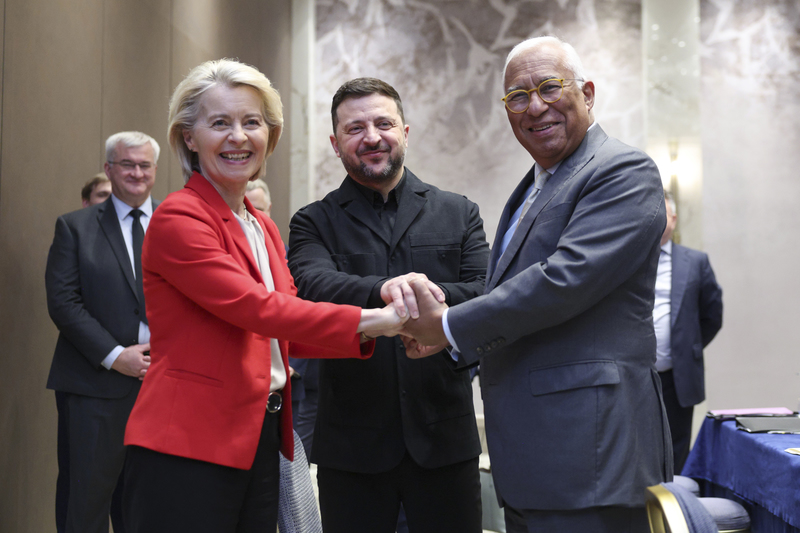
European leaders gathered in Nicosia for a high-level summit that mixed serious geopolitical debate with lighter, more human moments, offering a revealing snapshot of the European Union’s current political landscape.
Held away from the usual setting of Brussels, the summit unfolded under Mediterranean skies. Still, the change of scenery did little to mask the deep divisions that persist within the bloc, particularly over Ukraine, defense, and internal cohesion.
European leaders are good at talks. But are they still relevant in the Middle East? A summit in Cyprus raises questions about the EU’s influence in a region in turmoil.
Al Jazeera's @rorychallands reports. pic.twitter.com/d57ewij2d6
— Al Jazeera English (@AJEnglish) April 24, 2026
One of the most pressing issues was Ukraine’s future within the EU. Despite strong backing from President Volodymyr Zelenskyy, several member states remain skeptical about the timeline for accession. Croatian Prime Minister Andrej Plenković dismissed the idea of Ukraine joining by 2027 as unrealistic, highlighting ongoing disagreements even among allies.
The political atmosphere was notably altered by the absence of Viktor Orbán, who recently lost power in Hungary. His departure was quietly welcomed by several leaders, signaling what some described as a more cooperative environment within the Council. However, Ukraine’s leadership has yet to establish direct contact with Hungary’s incoming leadership under Péter Magyar.
Elsewhere, Polish Prime Minister Donald Tusk drew attention with a remark about the absence of “Russians in the room,” a comment delivered with a hint of humor but underscoring broader tensions within Europe’s eastern flank.
Defense cooperation also emerged as a key concern. European Commission President Ursula von der Leyen acknowledged that the EU’s mutual defense clause lacks clarity in practical implementation, raising questions about how member states would coordinate in the event of a crisis.
Economic issues were not far behind. Italian Prime Minister Giorgia Meloni openly criticized plans to spend €800 million renovating EU Council buildings in Brussels, arguing that such costs would be difficult to justify to citizens at a time of economic strain.
Beyond policy debates, the summit also reflected the social and political pressures facing the bloc. Protests by local farmers disrupted preparations, echoing similar demonstrations seen across Europe over agricultural policies and disease control measures.
Some moments broke the usual diplomatic tone. French President Emmanuel Macron sparked speculation about his political future after suggesting he might not remain in politics beyond his current mandate. Meanwhile, a brief 15-minute appearance by European Parliament President Roberta Metsola raised eyebrows, given the significance of the discussions taking place.
The setting itself offered contrasts. The summit venue at Ayia Napa Marina showcased luxury developments tied to Cyprus’s now-defunct “golden passport” program, a reminder of past controversies that continue to cast a shadow over EU governance.
Despite the informal setting, the summit underscored a serious reality: the European Union remains at a crossroads. While some divisions appear to be easing with leadership changes, fundamental disagreements over expansion, defense, and economic priorities persist.
As leaders departed Cyprus, the combination of strategic debate, political transition, and candid exchanges highlighted both the challenges and the evolving dynamics shaping the future of the European project.