
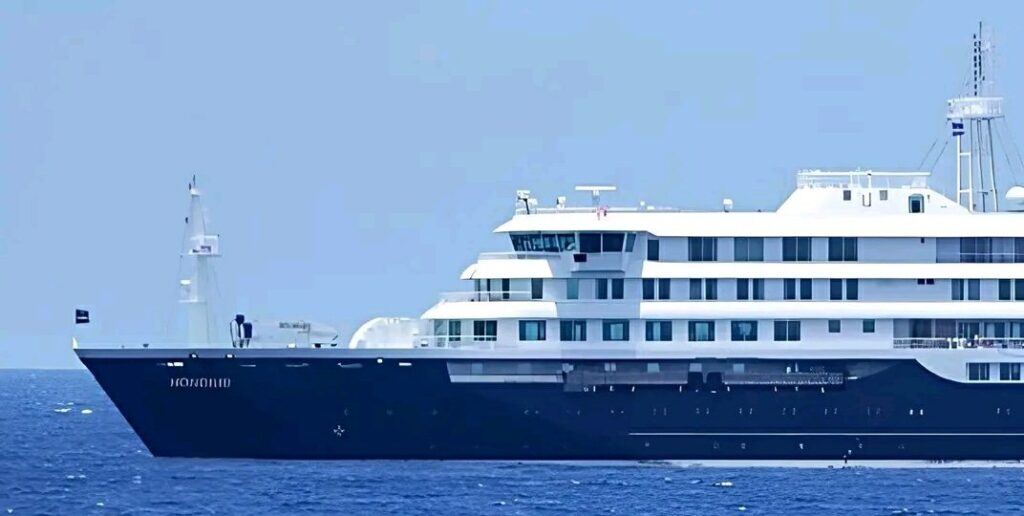
Image: from SIGNATURE TV X @TOWNCRYER_
By Open Chronicle with Agencies
Passengers infected with hantavirus aboard a cruise ship off the coast of Cape Verde have begun to be evacuated, as health authorities work to contain an outbreak that has already resulted in three deaths.
The affected individuals were transported from the vessel by boat late Tuesday before being transferred for air evacuation from Praia International Airport. They are expected to be repatriated to the Netherlands, where they reside.
The ship, identified as MV Hondius, was carrying 149 people, including passengers and crew from 23 different nationalities. The voyage began on March 20 in Ushuaia, Argentina, and was bound for the Canary Islands, with stops across the South Atlantic.
Health authorities monitor outbreak
International health bodies, including the World Health Organization, are closely monitoring the situation. Officials have emphasized that the outbreak remains contained and that the overall risk to the broader population is low.
Portugal’s Directorate-General of Health described the incident as limited in scope, noting that it poses minimal risk to the country. The World Health Organization also indicated that the infections likely occurred before the cruise began, rather than onboard.
The European Centre for Disease Prevention and Control echoed this assessment, stating that the risk to the European population is very low.
Symptoms and disease progression
According to health officials, the first reported cases appeared between April 6 and April 28. Initial symptoms included fever and gastrointestinal issues. In more severe cases, the illness progressed rapidly to pneumonia, acute respiratory distress, and shock.
Hantavirus infections can lead to serious complications, particularly in the Americas, where certain strains are associated with hantavirus pulmonary syndrome, a condition marked by severe respiratory failure.
Transmission and investigation
Experts note that hantaviruses are typically transmitted from animals to humans, most often through inhalation of particles contaminated by the droppings of infected rodents.
Human-to-human transmission is rare, although it has been documented in specific cases involving the Andes virus in South America. Authorities have not yet confirmed whether person-to-person transmission played any role in this outbreak.
Investigations are ongoing to determine the exact origin of the infections, the potential chain of transmission, and the specific strain of the virus involved.
Response and containment measures
Preventive measures have been implemented on board the ship to reduce the risk of further infections. These include enhanced health protocols for both passengers and crew.
Meanwhile, Spain has confirmed that the vessel will be allowed to dock in the Canary Islands. Officials said the decision was based on international law and humanitarian considerations, allowing authorities to continue managing the health situation effectively.
Despite the severity of some cases, health authorities stress that there is currently no indication of a broader public health threat. Monitoring efforts remain in place as the investigation continues.