
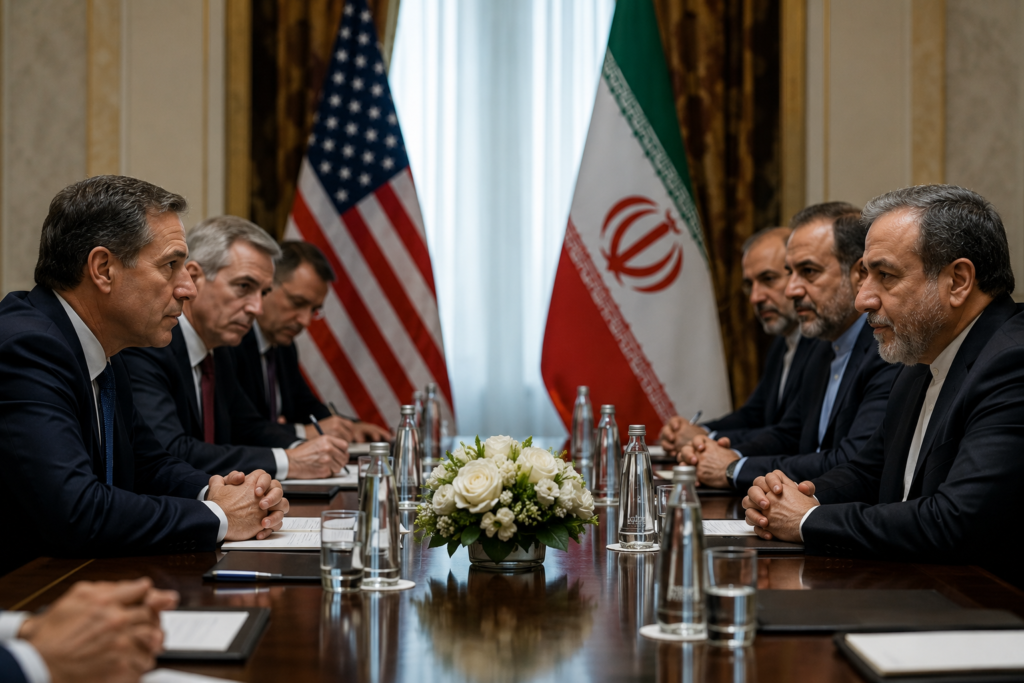
Image Credentials: Image Title: US and Iran Reportedly Near Preliminary Deal to End Conflict and Restart Nuclear Talks. Source: (chatgpt.com) Date: May 2026. Attribution: This image was created using AI-generated imagery (chatgpt.com) by Open Chronicle and does not depict a real-world scene.
By Open Chronicle with Agencies
The United States and Iran are reportedly moving closer to a preliminary agreement aimed at ending the ongoing conflict and launching a new phase of nuclear negotiations, according to a report published by Axios.
Citing US officials and sources familiar with White House discussions, the report said Washington expected a formal response from Tehran within 48 hours on several unresolved issues.
Although no final agreement has yet been secured, American officials reportedly believe the current discussions represent the closest the two sides have come to a diplomatic breakthrough since the conflict began.
Framework for ending the conflict
According to the report, the proposed memorandum would establish a temporary end to hostilities while creating a 30-day negotiation window for broader talks focused on security, sanctions, and Iran’s nuclear activities.
Future negotiations could reportedly take place in Geneva or in Islamabad.
The discussions would focus on several key issues, including reopening transit through the Strait of Hormuz, limiting Iran’s nuclear program, and easing US sanctions imposed on Tehran.
Under the draft framework, Iran would reportedly accept a temporary moratorium on uranium enrichment while the United States would gradually release frozen Iranian funds and reduce some sanctions measures.
The proposed arrangement would also involve easing restrictions related to maritime activity in the Strait of Hormuz, including both Iranian shipping limitations and the US naval blockade.
Nuclear negotiations remain sensitive
One of the central unresolved issues remains the duration of the proposed uranium enrichment freeze.
According to the report, Iran initially suggested a five-year moratorium while Washington pushed for 20 years.
Negotiators are now reportedly discussing a compromise lasting at least 12 years, with some sources indicating that 15 years could emerge as a middle-ground solution.
The draft agreement would also reportedly require Iran to commit not to pursue nuclear weapons or engage in weaponization-related activities.
Expanded inspections, including snap inspections by United Nations inspectors, are also expected to form part of any future agreement.
Sources cited by Axios said Tehran could additionally agree to transfer its stockpile of highly enriched uranium out of the country, a step Iranian authorities had previously resisted.
Uncertainty remains
Despite signs of progress, officials on both sides remain cautious.
The report noted that divisions persist within Iran’s leadership, while some US officials remain skeptical that negotiations will ultimately succeed.
Washington has reportedly warned that failure of the talks could result in the restoration of broader military operations or renewed blockade measures.
US Secretary of State Marco Rubio said Tuesday that a complete agreement was not expected immediately, but stressed that the United States required a credible diplomatic path and meaningful early concessions to continue negotiations.
Rubio also acknowledged uncertainty over whether Iran’s leadership would ultimately accept the proposed framework.
The latest diplomatic developments come amid ongoing instability in the Gulf region and continued global concern over maritime security, oil supplies, and the risk of wider regional escalation.