
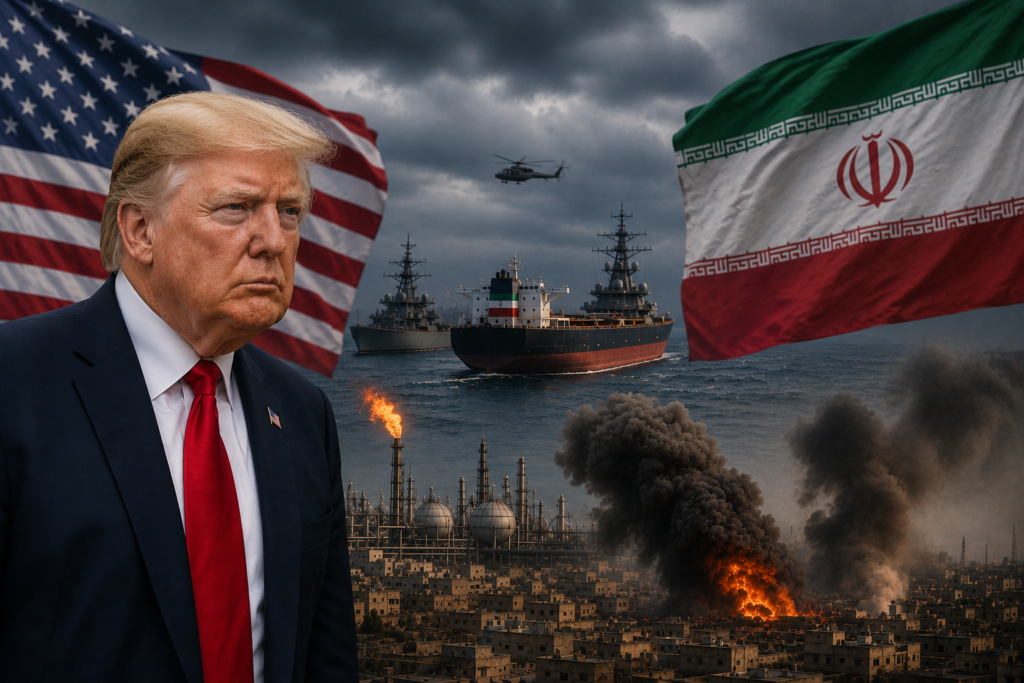
Image Credits: Image Title: Trump Calls Iran’s Response to U.S. Peace Proposal “Totally Unacceptable” Amid Rising Gulf Tensions. Source: (chatgpt.com) Date: May 2026. Attribution: This image was created using AI-generated imagery (chatgpt.com) by Open Chronicle and does not depict a real-world scene.
By Open Chronicle with agencies
Donald Trump has sharply rejected Iran’s response to Washington’s latest proposal aimed at ending the escalating conflict between the two countries, calling Tehran’s position “totally unacceptable.”
The American president made the remarks on his Truth Social platform but did not specify which aspects of the Iranian response were unacceptable or what steps the United States might take next.
The exchange comes amid growing instability across the Middle East, with tensions centered around the ongoing Iran conflict, maritime security in the Gulf and fears of wider regional escalation.
Iran Says It Demanded “Legitimate Rights”
Iranian officials defended their response Monday, insisting Tehran had not requested extraordinary concessions from Washington.
Speaking during a weekly press briefing, Iranian Foreign Ministry spokesperson Esmaeil Baqaei said Iran’s demands focused on ending regional conflict, lifting the U.S. naval blockade and securing the release of frozen Iranian assets held abroad.
“We did not demand any concessions. The only thing we demanded was Iran’s legitimate rights,” Baqaei said.
According to Iranian officials, Tehran’s response included calls for:
• An end to military confrontation in the region
• The lifting of the American maritime blockade
• The release of Iranian financial assets frozen in foreign banks
Iranian authorities maintain that the country’s negotiating position is based on national sovereignty and economic rights rather than political concessions.
Gulf Tensions Continue to Escalate
The diplomatic dispute unfolds against the backdrop of increasing military tensions in the Strait of Hormuz.
The Islamic Revolutionary Guard Corps warned Monday that American military facilities across the Middle East could become targets if Iranian oil tankers continue coming under attack.
The warning followed reports that U.S. forces fired on two Iranian-flagged oil tankers in an attempt to stop them from docking at an Iranian port in violation of Washington’s naval blockade.
The incident further heightened fears of direct military confrontation in one of the world’s most strategically important energy corridors.
Diplomatic Activity Intensifies
Meanwhile, regional diplomatic efforts continue behind closed doors.
Mohammed bin Abdulrahman Al Thani reportedly departed Miami after holding discussions with U.S. Middle East envoy Steve Witkoff, Secretary of State Marco Rubio and Vice President JD Vance.
Officials familiar with the meetings said efforts to de-escalate the Iran conflict were among the central topics discussed during the talks.
Uncertainty Over Next Phase
Despite ongoing diplomatic engagement, uncertainty continues surrounding the future direction of negotiations between Washington and Tehran.
The Trump administration has repeatedly warned that it will maintain economic and military pressure on Iran unless a broader agreement is reached concerning regional security, nuclear issues and maritime operations.
Iran, however, continues insisting that any agreement must recognize the country’s sovereignty and economic interests.
Analysts warn that the combination of military incidents, economic pressure and increasingly hostile rhetoric risks pushing the region toward a broader confrontation if negotiations fail to produce progress in the coming days.