
Image: from The Washington Times X @WashTimes
By Open Chronicle with agencies
A U.S. citizen evacuated from the hantavirus-hit cruise ship MV Hondius tested “mildly” positive for the Andes strain of the virus during a repatriation flight to the United States, according to the U.S. Department of Health and Human Services.
Health officials said another American passenger aboard the same evacuation flight also began showing symptoms associated with hantavirus while in transit.
Both individuals were transported inside specialized biocontainment units “out of an abundance of caution,” federal officials stated.
The evacuation aircraft landed in Omaha early Monday, where passengers were transferred to the University of Nebraska Medical Center for monitoring and quarantine procedures.
Patient Reportedly Asymptomatic
According to the medical center, the passenger who tested positive was not showing symptoms at the time of arrival.
Officials said the individual would remain in the Nebraska Biocontainment Unit while follow-up testing and observation continue.
Medical staff confirmed the infected passenger was managed separately from the other evacuees throughout the journey using strict containment measures.
The condition of the second American passenger who reportedly developed symptoms during the flight was not immediately clarified by health authorities.
International Evacuations Intensify
The developments came shortly after French officials confirmed that a French citizen began displaying hantavirus symptoms during a repatriation flight from the Canary Islands.
French authorities later confirmed the woman tested positive for hantavirus and said her condition deteriorated overnight.
Passengers from multiple countries began disembarking on Sunday after the MV Hondius docked in Tenerife following days of international negotiations and emergency planning.
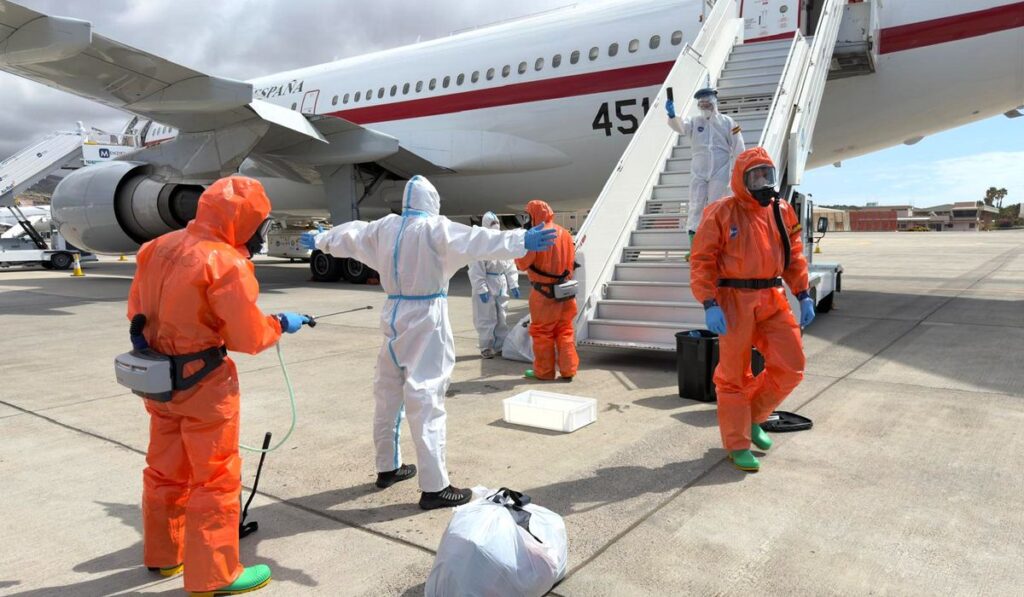
The evacuation operation involved military aircraft, strict quarantine procedures, and extensive protective measures overseen by Spanish authorities and international health agencies.
Outbreak Linked to Rare Andes Strain
Health officials confirmed that the outbreak aboard the cruise ship involves the rare Andes strain of hantavirus, the only known variant capable of human-to-human transmission through prolonged close contact.
The outbreak has already resulted in at least three deaths, including a Dutch couple and a German passenger.
According to the World Health Organization, at least nine confirmed or suspected cases have been linked to the vessel.
The MV Hondius had been carrying nearly 150 passengers and crew members from more than 15 countries during its voyage across the South Atlantic.
Complex Quarantine and Monitoring Effort
Authorities implemented a carefully controlled evacuation process after the ship reached Spain.
Passengers were transported in small groups using launch boats before being moved directly to quarantine flights without contact with the local population.
Images released by Spanish authorities showed evacuation aircraft equipped with plastic-covered interiors while medical personnel wore hazmat suits, respirators, and protective equipment.
U.S. health agencies said the 17 American passengers and one British resident living in the United States were flown home aboard a specialized aircraft operated by the Centers for Disease Control and Prevention and the Department of Health and Human Services.
CDC epidemiologists and medical teams were also deployed to the Canary Islands to conduct exposure assessments and determine appropriate monitoring levels for returning passengers.
Officials Say Public Risk Remains Low
Despite growing international attention, health authorities continue stressing that the overall risk to the public remains low.
The WHO and CDC both emphasized that hantavirus does not spread easily between humans and requires prolonged close exposure in rare cases involving the Andes strain.
“This is not another COVID,” WHO Director-General Tedros Adhanom Ghebreyesus said during a briefing, urging the public not to panic.
Experts say passengers returning from the ship are likely nearing the end of the virus’s incubation and transmission window, although monitoring procedures are expected to continue for several weeks.
Investigation Into Outbreak Continues
The origin of the outbreak remains under investigation.
WHO officials believe the Dutch couple who first became infected may have been exposed during bird-watching travel through parts of Argentina, Chile, and Uruguay before boarding the vessel in Ushuaia.
The cruise later traveled through remote South Atlantic destinations, including South Georgia, Tristan da Cunha, Gough Island, and St. Helena, before eventually reaching the Canary Islands.
Authorities in several U.S. states, including California, Texas, Arizona, Virginia, and Georgia, continue monitoring passengers who had previously left the ship before the outbreak was officially identified.