
Image: from Kurdistan 24 English X @K24English
By Open Chronicle with agencies
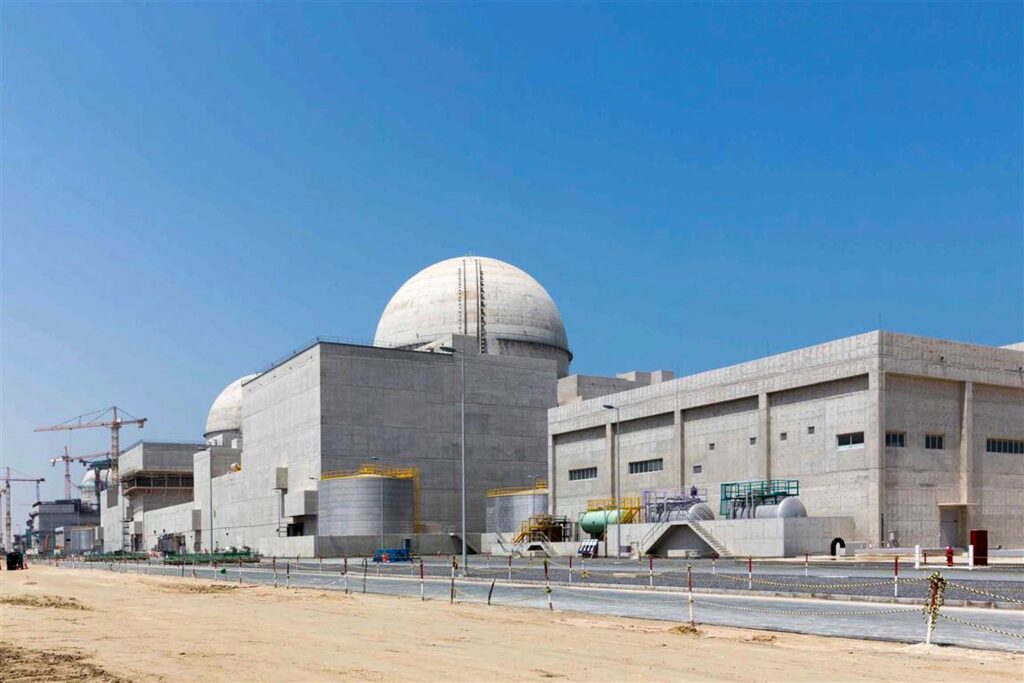
A drone strike targeted the United Arab Emirates’ Barakah nuclear power plant on Sunday, causing a fire near the facility’s perimeter and raising fears of a wider regional conflict as tensions surrounding Iran and the Strait of Hormuz continue to escalate.
Authorities said there were no injuries and no radiological leak following the incident, but the attack marked the first time the UAE’s nuclear facility has been directly targeted since the outbreak of the Iran war earlier this year.
The UAE described the incident as an “unprovoked terrorist attack” but stopped short of publicly accusing any country or group of responsibility.
According to the Emirati Defense Ministry, three drones crossed into UAE airspace from the western border with Saudi Arabia. Air defenses intercepted two of the drones, while another reached the area surrounding the Barakah nuclear plant before igniting a fire on the perimeter.
Officials said an investigation is underway to determine who launched the attack.
The strike comes as diplomatic efforts to preserve the fragile ceasefire between Iran, Israel, and the United States continue to falter amid growing military tensions across the region.
Trump warns Iran after call with Netanyahu
Shortly after speaking by phone with Israeli Prime Minister Benjamin Netanyahu on Sunday, US President Donald Trump issued a fresh warning directed at Tehran.
“For Iran, the Clock is ticking, and they better get moving, FAST, or there won’t be anything left of them,” Trump wrote on social media.
Israel and the United States launched coordinated strikes against Iran on Feb. 28, triggering weeks of retaliation involving missile and drone attacks across the Gulf region and escalating fears over the future of maritime security in the Strait of Hormuz.
The UAE has increasingly found itself caught between competing regional powers. Abu Dhabi hosts Western military infrastructure and air defense systems, including assets linked to Israel and the United States, which has made the country a growing target for Iran-aligned groups.
Concerns over nuclear infrastructure
The Barakah nuclear power plant, built with South Korean assistance at a reported cost of around $20 billion, became operational in 2020 and remains the only nuclear power facility in the Arab world.
The four-reactor complex provides roughly one quarter of the UAE’s electricity needs.
The UAE’s nuclear regulator said the attack did not compromise reactor safety and confirmed that all units continued operating normally.
The International Atomic Energy Agency later stated that the strike caused a fire involving an electrical generator and temporarily forced one reactor to rely on emergency diesel generators.
IAEA Director General Rafael Mariano Grossi expressed “grave concern” over the incident and spoke with UAE officials following the attack.
The strike has intensified concerns about the vulnerability of nuclear facilities during armed conflicts.
Iran tensions continue to deepen
Iranian Foreign Minister Abbas Araghchi later held discussions with his South Korean counterpart following the attack, though Tehran has not formally commented on allegations surrounding the incident.
Iran-backed groups across the region have previously launched drone operations targeting Gulf Arab states. Yemen’s Houthi movement had also threatened the Barakah facility during its construction phase in 2017, though Abu Dhabi denied those earlier claims.
Meanwhile, Iranian state television aired unusual broadcasts on Sunday featuring presenters holding rifles and discussing national defense preparedness.
One presenter publicly declared readiness to “sacrifice” for Iran, while another appeared alongside a masked Revolutionary Guard member during basic firearms demonstrations.
The broadcasts reflected the increasingly militarized atmosphere inside Iran as fears grew that the ceasefire could collapse entirely.
Ceasefire under mounting pressure
Israeli officials are reportedly coordinating closely with Washington regarding possible renewed military operations against Iran if diplomacy fails.
Prime Minister Netanyahu told his cabinet Sunday that Israel remained prepared “for any scenario” involving Tehran.
Regional tensions have also spread into Lebanon, where fighting between Israel and the Iran-backed Hezbollah movement has intensified despite an existing ceasefire agreement.
The latest developments further threaten stability in the Gulf and raise new concerns about the security of critical energy infrastructure and shipping routes tied to global oil markets.