
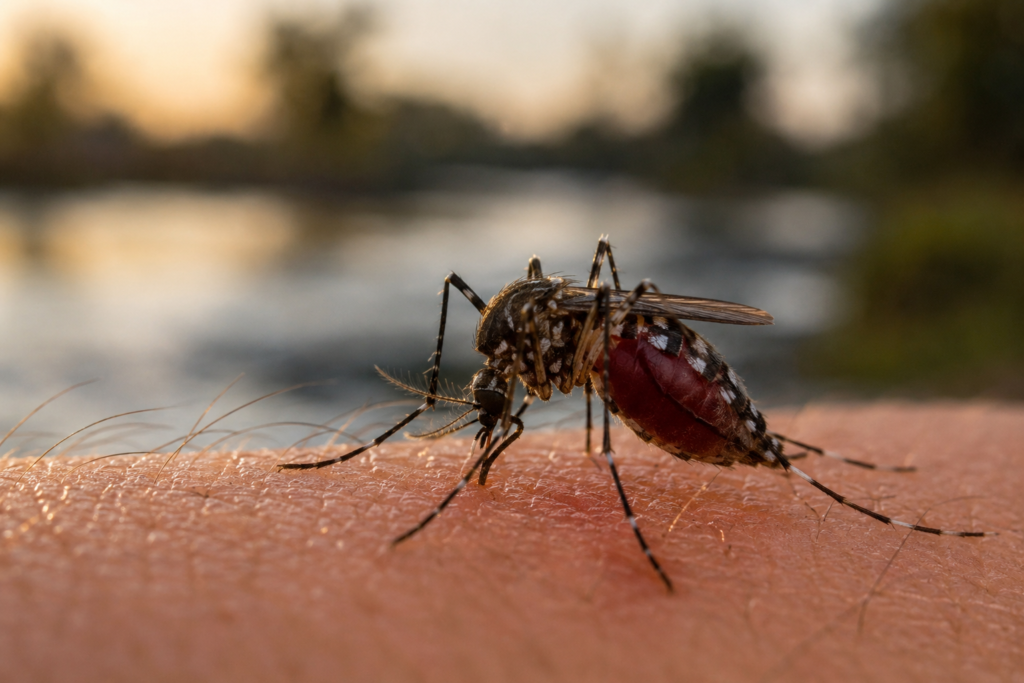
Image Credentials: Image Title: Two Die From Rare Mosquito-Borne Virus in Australia’s Northern Territory. Source: (chatgpt.com) Date: May 2026. Attribution: This image was created using AI-generated imagery (chatgpt.com) by Open Chronicle and does not depict a real-world scene.
By Open Chronicle with agencies
Health authorities in Australia’s Northern Territory have issued renewed warnings after two people died from Murray Valley encephalitis (MVE) in the town of Alice Springs over the past two months, according to local officials.
The Northern Territory Department of Health confirmed that the deaths occurred during April and May, though no further personal details about the victims were released. The announcement comes amid growing concerns over mosquito activity across the region after the virus was recently detected in mosquito populations in Darwin.
Murray Valley encephalitis is a rare but potentially deadly disease spread through the bite of infected mosquitoes. While infections remain uncommon, the virus can lead to severe neurological complications and, in some cases, death.
Health authorities warned that the risk period for transmission is typically highest between February and June, with infection rates generally peaking from March through May, when warmer, wetter conditions favor mosquito breeding.
Symptoms of MVE can include intense headaches, fever, nausea, vomiting, muscle pain, fatigue, confusion, drowsiness, and seizures. In severe cases, the virus can cause inflammation of the brain, leading to long-term neurological damage or death.
Officials are urging residents and tourists across the Northern Territory to take preventive measures as mosquito activity remains elevated. Recommended precautions include using insect repellents containing DEET or picaridin, wearing long sleeves and protective clothing, avoiding mosquito-prone areas after sunset, and ensuring tents and accommodation are properly screened against insects.
The renewed alert highlights broader public health concerns across northern Australia, where changing weather patterns and seasonal flooding often contribute to higher mosquito populations and increased risks of mosquito-borne illnesses.
Authorities continue to monitor mosquito surveillance data and encourage the public to seek medical attention immediately if severe flu-like or neurological symptoms develop after exposure to mosquitoes.