
Image: from Igor Sushko X @igorsushko
By Open Chronicle with agencies
A major Russian electronics facility involved in the production of missile guidance systems suffered severe damage after being struck by three missiles on June 22, in what analysts describe as one of Ukraine’s most significant long-range attacks on Russia’s defense industry.
The target was the Voronezh Semiconductor Devices Plant, located approximately 120 miles from the Ukrainian border. Video footage circulating on Russian social media showed multiple explosions followed by a large fire engulfing sections of the facility.
🚨🇺🇦🇷🇺 Reported strike on a key Russian electronics plant in Voronezh
Ukraine reportedly hit the Voronezh Semiconductor Devices Factory–Assembly (VZPP-S) in Voronezh with Storm Shadow missiles.
The facility is said to produce semiconductors, ICs, and electronic components used… pic.twitter.com/4CoMuMXHEY
— 🇵🇸 Arabian (@Arabian__KGB) June 22, 2026
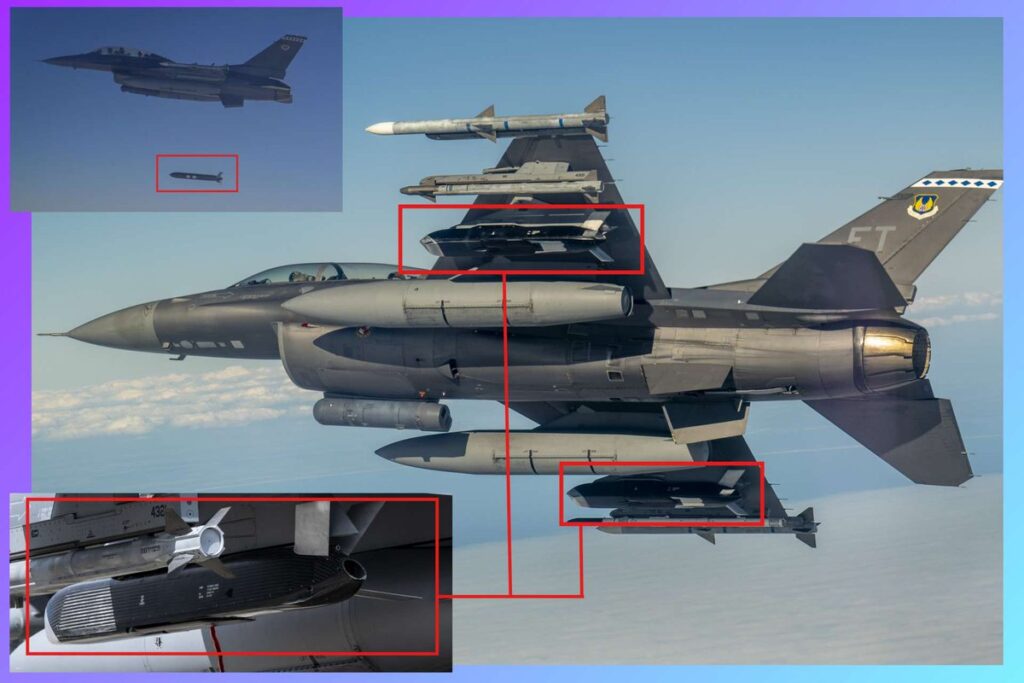
According to Russian reports and several defense analysts, the strike may have been carried out using newly supplied American AGM-188A “Rusty Dagger” precision weapons, a system reportedly developed and fielded for Ukraine in record time.
Strategic target
The Voronezh plant plays an important role in Russia’s military industrial complex. It manufactures electronic components and guidance systems used in several Russian missile programs, including the Kh-101 cruise missile, a weapon frequently employed in strikes against Ukrainian cities and infrastructure.
While attacks on oil refineries and fuel depots often generate greater visual impact, military experts note that strikes against electronics production facilities can have longer-term consequences by disrupting the supply chain for advanced weapons.
Industry specialists say the damage could be particularly severe because semiconductor manufacturing equipment is highly sensitive to shockwaves, vibration, contamination, and fire. Even if portions of the building remain standing, the destruction of specialized machinery could take considerable time and resources to replace.
The rise of the Rusty Dagger
The AGM-188A Rusty Dagger has emerged as one of the newest additions to Ukraine’s growing arsenal of long-range strike capabilities.
The powered glide weapon reportedly has a range exceeding 285 miles and incorporates advanced anti-jamming technology designed to operate in heavily contested electronic warfare environments. With an estimated cost of around $246,000 per unit, it provides a relatively affordable option for precision strikes against high-value targets.
The missile allows Ukrainian F-16 fighter aircraft to launch attacks from significant distances while remaining outside the reach of many Russian air defense systems, enhancing both survivability and operational flexibility.
The reported strike on Voronezh would represent one of the most prominent combat uses of the system to date.
Ukraine expands domestic weapons production
At the same time, Ukraine is accelerating the development of its own indigenous strike systems.
Officials and defense industry sources have highlighted the rapid development of a Ukrainian 500-pound glide bomb, reportedly designed and produced within just 17 months. The weapon is intended to meet the demands of modern high-intensity warfare while reducing dependence on foreign suppliers.
Analysts believe that as Ukraine’s domestic defense sector expands, locally produced precision munitions could become increasingly important due to lower costs and greater production flexibility.
Growing pressure on Russia’s military industry
The attack on the Voronezh facility forms part of a broader Ukrainian strategy aimed at weakening Russia’s defense industrial base. Rather than focusing solely on frontline operations, Kyiv has increasingly targeted factories, ammunition depots, fuel infrastructure, and logistics hubs deep inside Russian territory.
These strikes are designed to complicate Russia’s ability to sustain military operations by disrupting production chains and increasing the cost of replacing critical equipment.
As both sides continue to invest heavily in long-range precision weapons, the battle between military industries has become an increasingly important dimension of the war, one that may prove just as consequential as developments on the battlefield itself.