
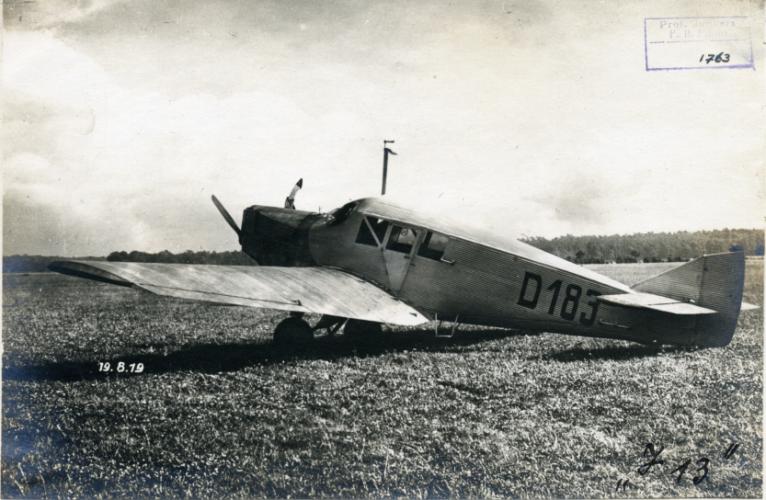
Image: from Ron Eisele X @ron_eisele
By Open Chronicle
June 25, 1919
On this day in 1919, the Junkers F13 took to the skies for the first time, marking a major milestone in the history of aviation. Developed in Germany by engineer Hugo Junkers, the aircraft was the world’s first all-metal transport airplane designed specifically for commercial passenger service.
The years immediately following the First World War saw rapid experimentation in aviation technology. Most aircraft of the era were constructed from wood and fabric, materials that limited durability and performance. The Junkers F13 broke with convention by using an all-metal structure made primarily of duralumin, a lightweight yet strong aluminium alloy. This innovative design greatly improved reliability and set a new standard for aircraft construction.
The F13 was a low-wing monoplane, another feature that distinguished it from many contemporary aircraft. Its streamlined shape reduced drag and improved efficiency, while its enclosed cabin offered passengers an unprecedented level of comfort. At a time when many travelers still endured open cockpits and exposure to the elements, the F13 represented a significant step toward modern air travel.
Powered by a single engine mounted at the front of the aircraft, the F13 could carry several passengers and operate on routes that would have been difficult or impractical for earlier designs. Its versatility allowed it to serve as a passenger aircraft, mail carrier, cargo transporter, and even a floatplane in certain configurations.
The success of the Junkers F13 demonstrated that commercial aviation could become a practical and sustainable industry. Airlines across Europe and beyond adopted the aircraft, and its reputation for reliability helped build public confidence in air travel during the early decades of the twentieth century.
More than 300 examples were produced between 1919 and 1932, serving in numerous countries across Europe, Asia, Africa, and South America. The aircraft’s influence extended far beyond its operational career, as its all-metal construction and advanced engineering principles became the foundation of future airliner development.
Today, aviation historians regard the Junkers F13 as one of the most important aircraft ever built. Its maiden flight on June 25, 1919, signaled the beginning of a new era in transportation and helped pave the way for the global airline networks that connect the world today.