
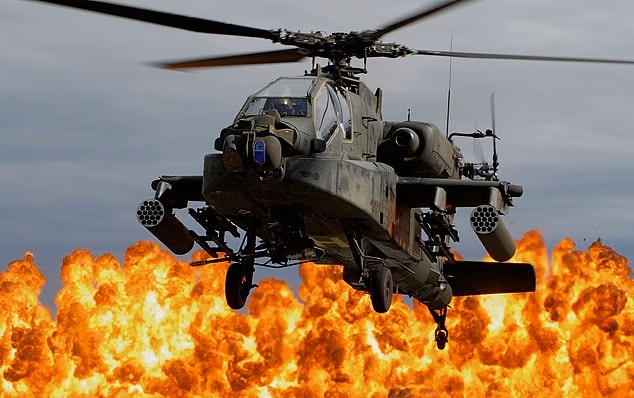
Image: from News News News X @NewsNew97351204
By Open Chronicle with Agencies
The United States has carried out another large-scale military operation against Iran, striking approximately 90 military targets after President Donald Trump declared that the ceasefire between Washington and Tehran was “over.”
The latest escalation marks one of the most significant exchanges of military force since the conflict reignited around the Strait of Hormuz, raising fears that the confrontation could expand into a broader regional war.
Good Wednesday 𝕏🌍
Donald Trump gave Iran a choice.
Make a deal with the United States… or find out if he was bluffing.
It looks like Iran chose the second option.
After renewed attacks on U.S. military sites in Bahrain and Kuwait, Trump now says the agreement meant to end… pic.twitter.com/0gUN0UzGwz
— fOx (@fOx1257067) July 8, 2026
CENTCOM Targets Iranian Military Infrastructure
According to U.S. Central Command (CENTCOM), American forces struck a wide range of military installations along Iran’s southern coastline.
The operation targeted air defence systems, coastal surveillance facilities, missile and drone storage sites, naval assets and military logistics infrastructure.
CENTCOM said the objective was to reduce further Iran’s ability to threaten international shipping through the Strait of Hormuz, one of the world’s most strategically important maritime corridors, through which around one-fifth of global oil and natural gas supplies normally transit.
“US forces remain vigilant, lethal, and prepared to execute operations directed by the commander in chief,” CENTCOM said in a statement.
The command also confirmed that more than twenty U.S. Navy warships are currently deployed across the Middle East to support regional operations.
Explosions Reported Across Southern Iran
Iranian state media reported multiple explosions overnight in several locations across southern Iran.
Among the affected areas were Bushehr, home to Iran’s only operational nuclear power plant, as well as the ports of Bandar Abbas, Chabahar, Konarak, and Sirik.
The extent of the damage has not yet been independently confirmed.
Iran Responds with Missile and Drone Attacks
Iran retaliated shortly after the American strikes by launching missiles and drones toward Bahrain, Kuwait and Qatar.
Air raid sirens sounded across the Gulf states as air defence systems were activated.
Kuwait’s military confirmed it was intercepting incoming projectiles, while authorities in Bahrain and Qatar also responded to the attacks.
The three countries released no immediate reports of casualties or significant damage.
Trump Says Iran Wants a Deal
Speaking aboard Air Force One after departing the NATO Summit in Ankara, President Trump said Iranian leaders had contacted him seeking negotiations.
“I received a call from the Iranian leadership. They want to make a deal so badly,” Trump told reporters.
Only hours earlier, Trump had declared the ceasefire agreement effectively dead.
“To me, I think it’s over. I don’t want to deal with them anymore,” the president said.
He also renewed previous warnings that the United States could target Iranian civilian infrastructure, including electrical facilities, desalination plants and the strategic oil export terminal on Kharg Island if hostilities continue.
Strait of Hormuz Remains at the Centre of the Crisis
The renewed conflict began after three commercial tankers were attacked near the Strait of Hormuz, prompting the initial U.S. military response.
Iran continues to argue that the previous memorandum of understanding gives Tehran the authority to regulate maritime traffic through the strategic waterway.
Iranian Parliament Speaker Mohammad Bagher Qalibaf warned Washington against further military action.
“America still hasn’t learned that bullying and breaking promises are no longer cost-free,” he wrote on social media.
“If you strike, you’ll get hit.”
He also insisted that shipping through the Strait of Hormuz would operate according to what he described as “Iranian arrangements, not American threats.”
Growing Fears of Wider Regional Conflict
The latest exchange of strikes has further heightened concerns that the confrontation could spread beyond the Gulf.
Governments across Europe, the Middle East and Asia continue to urge restraint, warning that prolonged disruption to maritime traffic through the Strait of Hormuz could have serious consequences for global energy markets and international trade.
With both Washington and Tehran maintaining aggressive military postures while leaving limited diplomatic channels open, uncertainty continues to surround the prospects for de-escalation.