
Image: from NEXTA X @nexta_tv
By Open Chronicle News Desk with Agencies
U.S. President Donald Trump announced that American commercial airlines will once again be permitted to operate flights to Lebanon, marking the first time since 1985 that U.S. carriers have been authorized to serve the country.
The decision follows months of improving security conditions and renewed diplomatic engagement between Washington and Beirut. It represents a significant milestone in U.S.-Lebanon relations and could pave the way for increased business travel, tourism and investment after more than four decades of restrictions.
A historic policy reversal
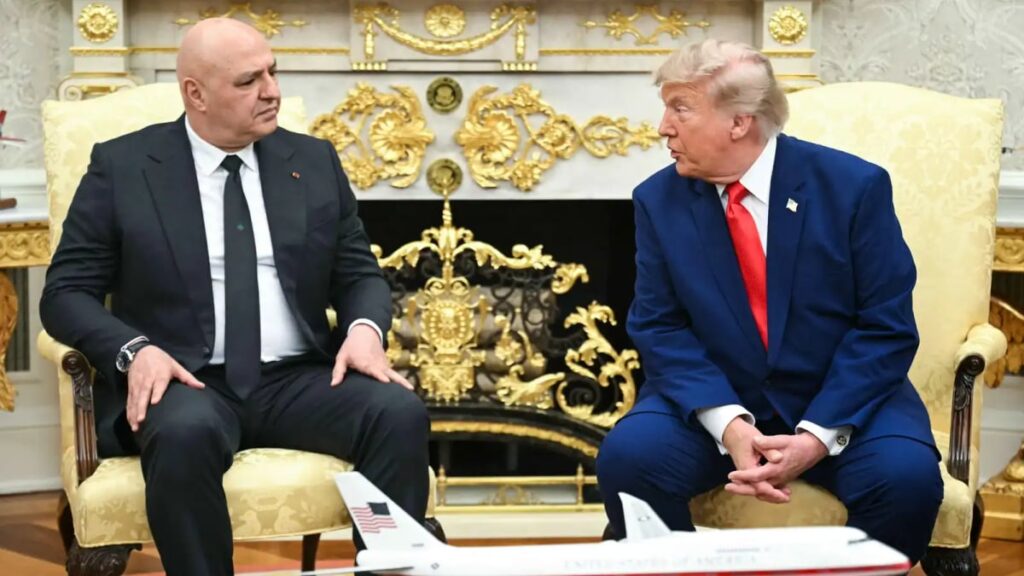
Speaking after meeting Lebanese President Joseph Aoun at the White House, Trump said the United States had concluded that security conditions had improved sufficiently to allow the resumption of commercial air services.
“For the first time since 1985, U.S. airlines can fly to Lebanon,” Trump said, describing the decision as a sign of growing confidence in Lebanon’s stability and in the country’s ongoing security reforms.
The announcement ends one of the longest-standing aviation restrictions involving a Middle Eastern nation.
Why flights were suspended
American Airlines ceased flying to Lebanon during the mid-1980s after a series of security incidents, including airline hijackings, attacks on Western interests and the deterioration of Lebanon’s civil war.
The hijacking of TWA Flight 847 in June 1985, during which a U.S. Navy diver was murdered, and passengers were held hostage for more than two weeks, became a defining event that reinforced concerns over the safety of commercial aviation in Lebanon.
Since then, U.S. authorities have maintained strict aviation security assessments, and no American carrier has operated scheduled passenger flights to Beirut.
Security improvements
The decision follows sustained efforts by the Lebanese government to strengthen airport security and expand the role of the Lebanese Armed Forces (LAF) in maintaining national stability.
Washington has remained one of the principal supporters of the Lebanese military, providing training, equipment and financial assistance over many years.
Recent diplomatic discussions between Trump and President Aoun focused heavily on enhancing state authority, implementing security arrangements in southern Lebanon and strengthening cooperation between the two countries.
U.S. officials indicated that these developments contributed to the decision to permit commercial flights.
Opportunities for travel and business
The restoration of direct U.S. air services could significantly improve connectivity between Lebanon and the United States.
Lebanon is home to a large diaspora community in North America, and many families currently rely on connecting flights through Europe or the Gulf to travel between the two countries.
Direct services would likely reduce travel times, facilitate business exchanges and encourage greater tourism once airlines begin establishing routes.
No American carrier has yet announced a timetable for launching flights, and regulatory approvals, commercial planning and operational arrangements will still be required before services begin.
Economic significance
Lebanon’s economy has endured years of financial crisis, political instability and conflict-related damage.
Officials in Beirut hope that renewed aviation links will encourage foreign investment, improve commercial activity and support the country’s fragile recovery.
The move is also viewed as a positive signal for international investors, suggesting growing confidence in Lebanon’s long-term security environment.
Industry analysts note that while direct flights alone will not solve Lebanon’s economic challenges, improved international connectivity could become an important component of broader recovery efforts.
A new chapter in U.S.-Lebanon relations
The aviation announcement follows a series of diplomatic initiatives aimed at strengthening ties between Washington and Beirut.
Recent discussions have covered military cooperation, reconstruction assistance, regional security and support for Lebanese state institutions.
Although challenges remain—including ongoing regional tensions and the need for continued political and economic reforms—the resumption of U.S. commercial flights represents one of the clearest signs yet of renewed confidence in Lebanon’s future.
If American Airlines begins operating scheduled services in the coming months, the flights would symbolize not only a practical transportation link but also a significant diplomatic milestone, ending more than forty years of direct aviation separation between the two countries.