
Image: from India Today Global X @ITGGlobal
By Open Chronicle News Desk with Agencies
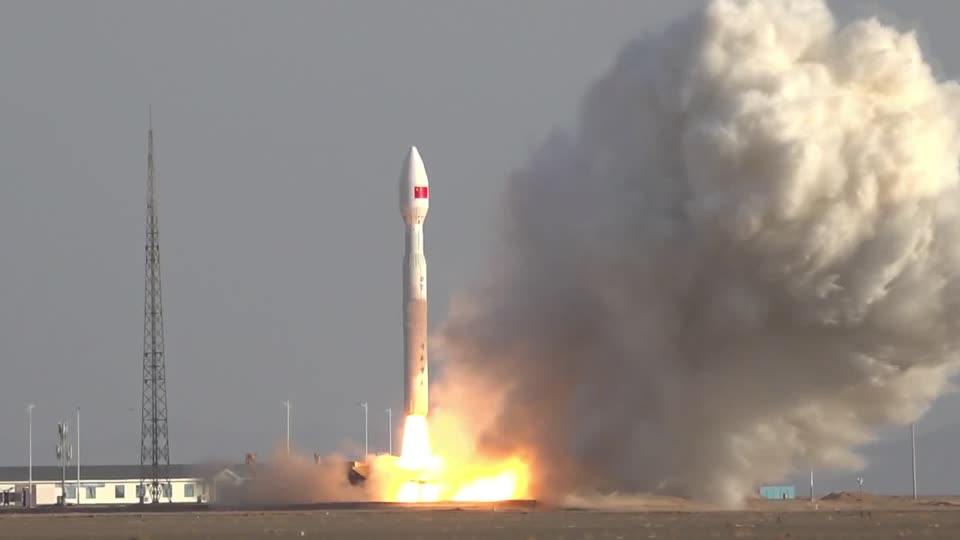
China successfully launched a Lijian-1 Y15 commercial carrier rocket on Friday, placing five satellites into orbit in the latest milestone for the country’s rapidly expanding commercial space industry.
The mission highlights Beijing’s continued investment in commercial launch capabilities, complementing its national space program and supporting the growing demand for satellite deployment across communications, Earth observation and scientific research.
Blastoff! A #Lijian1 (or Kinetica-1) Y15 carrier rocket carrying five satellites blasted off at 7:33 am (Beijing Time) on July 24 from the #Dongfeng commercial space innovation pilot zone in northwest China, delivering five satellites into their orbits. pic.twitter.com/zzTnJ4oKpH
— Wu Lei (@wulei2020) July 24, 2026
Successful launch from Gansu
The Lijian-1 Y15 rocket lifted off at 7:33 a.m. Beijing time (2333 GMT Thursday) from the Dongfeng Commercial Space Innovation Pilot Zone in Gansu Province, northwestern China.
According to China’s state-run news agency Xinhua, all five satellites were successfully deployed into their planned orbits shortly after launch.
Officials did not immediately release the identities of the satellites or provide details regarding their specific missions.
The successful mission marked the 15th flight of the Lijian-1 launch vehicle.
A key player in China’s commercial space sector
The Lijian-1, internationally known as Kinetica-1, is a solid-fuel commercial launch vehicle developed by CAS Space, one of China’s leading commercial aerospace companies.
Designed primarily for launching small- and medium-sized satellites, the rocket has become an important component of China’s growing commercial launch market.
Solid-fuel rockets offer rapid launch preparation and operational flexibility, making them attractive for commercial customers seeking efficient deployment of satellite constellations and specialized payloads.
The increasing reliability of the Lijian-1 has strengthened China’s ability to provide domestic commercial launch services while expanding its presence in the global space industry.
Expanding launch activity
China has significantly increased the pace of both government and commercial space missions over the past several years.
Commercial launch providers are playing an increasingly important role in deploying satellites that support:
- telecommunications;
- Earth observation;
- environmental monitoring;
- navigation;
- scientific research;
- commercial data services.
The growth of private aerospace companies forms part of China’s broader strategy to develop a competitive commercial space economy alongside major state-led projects, including lunar exploration, space station operations and deep-space missions.
Second successful commercial mission this week
Friday’s launch followed another successful commercial mission earlier in the week.
A Gravity-1 rocket lifted off from a sea-based launch platform off the coast of Shanghai, successfully placing nine satellites into orbit.
The back-to-back launches demonstrate the increasing frequency of China’s commercial space operations and the growing diversity of its launch infrastructure, which now includes both land-based and offshore launch facilities.
China’s growing ambitions in space
China continues to expand one of the world’s most active space programs.
Alongside commercial launches, the country has invested heavily in its independently operated Tiangong space station, lunar exploration missions, planetary probes and next-generation launch systems.
Officials have also outlined long-term plans that include crewed lunar missions, expanded satellite constellations and deeper cooperation between state agencies and commercial aerospace companies.
As launch activity accelerates, commercial rockets such as the Lijian-1 are expected to play an increasingly important role in supporting China’s broader space ambitions while meeting rising domestic demand for satellite deployment.