
By Open Chronicle Newsdesk with agencies
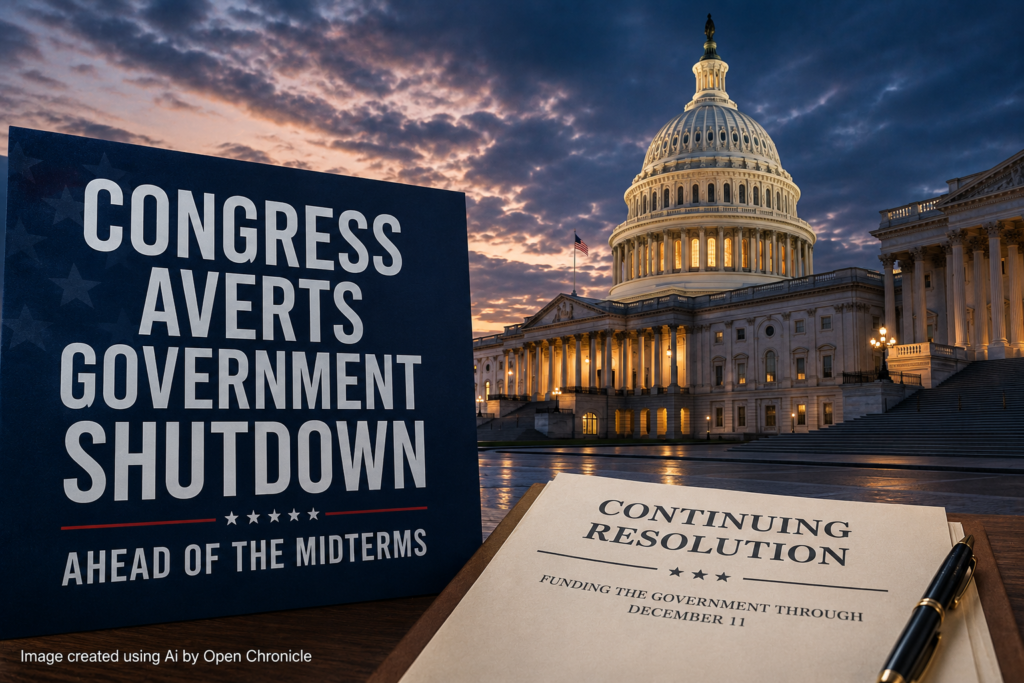
Congress has removed the immediate threat of another US government shutdown, approving a temporary spending measure that will keep federal agencies funded until after the November midterm elections.
The House of Representatives voted Tuesday to extend federal spending largely at current levels through December 11, postponing the next major budget confrontation until after voters have gone to the polls.
The measure passed by an overwhelming 370 to 48 vote, reflecting broad bipartisan support for avoiding another politically damaging funding crisis.
Federal funding had been scheduled to expire on September 30.
Funding Battle Postponed Until December
The legislation is a continuing resolution, a temporary measure allowing the federal government to continue operating when Congress has not completed the regular appropriations process for the new fiscal year.
The Senate had already approved the legislation in August with strong support.
The White House encouraged lawmakers to back the measure, and President Donald Trump is expected to sign it into law.
Its passage means federal agencies can continue operating without the immediate prospect of workers being furloughed, government services being interrupted or another prolonged political confrontation over spending.
The agreement does not resolve the underlying disputes over federal spending. Instead, it moves the deadline to December 11, when Congress will once again have to decide how to fund the government.
Midterms Change the Political Calculation
The approaching midterm elections played an important role in encouraging lawmakers from both parties to reach an agreement.
With voters preparing to decide control of Congress in November, neither Republicans nor Democrats appeared eager to risk responsibility for another shutdown.
Congressional leaders turned to the temporary funding measure after bipartisan Senate negotiations over appropriations for the full fiscal year broke down.
The continuing resolution effectively freezes much of federal spending while giving lawmakers additional time to negotiate a longer term agreement.
That means the most difficult decisions will now be made after the election, when the political balance of power in Washington may be clearer.
Two Historic Shutdowns in a Year
The determination to avoid another confrontation comes after Congress experienced two exceptionally long government shutdowns during the past year.
The first lasted 43 days, ending in November after Democrats withheld votes in an effort to pressure Republicans into extending expiring subsidies for health insurance premiums.
The dispute became one of the longest federal shutdowns in US history and pushed healthcare costs into the center of the national political debate.
Another confrontation followed at the Department of Homeland Security.
That shutdown lasted 76 days before ending in April, after Democrats sought legislation restricting some of the tactics used by federal immigration officers.
The dispute reflected the growing political battle surrounding the Trump administration’s immigration policies and enforcement strategy.
Democrats Failed to Secure Major Concessions
Both shutdowns gave Democrats an opportunity to elevate healthcare and immigration policy as major national issues.
However, despite the lengthy confrontations, Democrats ultimately failed to obtain the concrete policy concessions they had sought.
Lawmakers eventually voted to reopen the government and approved bipartisan appropriations legislation covering federal agencies.
The experience appears to have reduced enthusiasm in Congress for another funding confrontation immediately before a national election.
Government shutdowns can disrupt federal services, delay administrative work and leave hundreds of thousands of government employees facing furloughs or working temporarily without pay.
They can also create significant political risks for whichever party voters believe is responsible for the confrontation.
December Could Bring Another Funding Battle
The legislation approved Tuesday provides only temporary stability.
Once the midterm elections are over, Congress will still have to address the broader disagreements that prevented lawmakers from reaching a full fiscal year spending agreement.
The December 11 deadline could therefore produce another difficult negotiation over federal spending priorities.
The political circumstances, however, may be substantially different by then.
The results of the midterm elections will determine the balance of power in Congress and could influence how Republicans, Democrats and the Trump administration approach the next round of budget negotiations.
For now, the bipartisan House vote ensures that the federal government will remain funded through the election campaign, removing one potentially disruptive political crisis from Washington’s agenda as Americans prepare to vote.