
Image: History & Stats Daily X@HistoryNStats
By Open Chronicle Business Desk
NEW DELHI/BRUSSELS — In a monumental shift for one of the world’s most protected automotive markets, India has agreed to a historic reduction in import tariffs for European cars. The breakthrough comes as part of a long-awaited Free Trade Agreement (FTA) with the European Union, which officials are calling the “mother of all deals.”
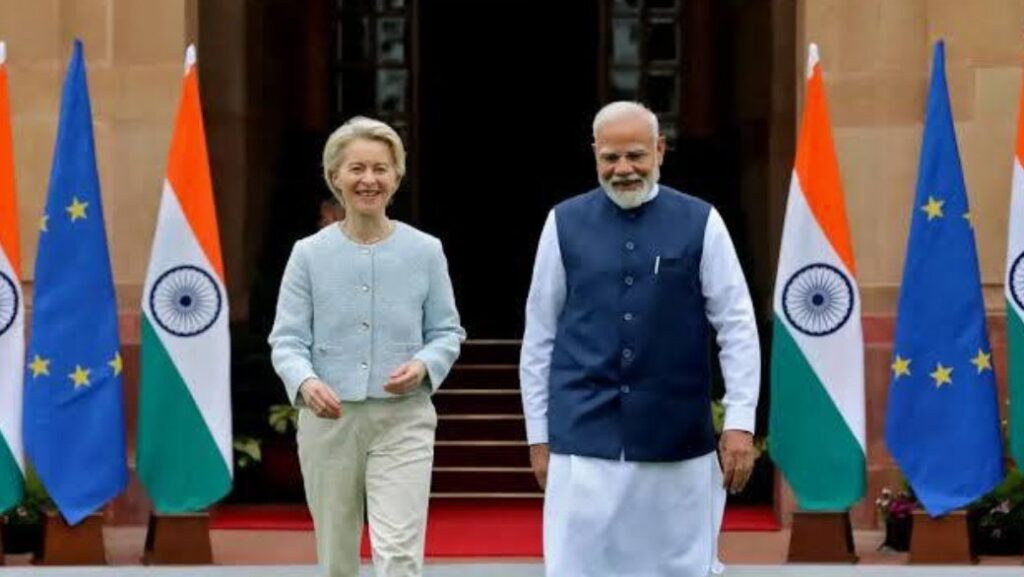
As of Monday, January 26, 2026, the Indian government has committed to slashing import duties on select European vehicles from a staggering peak of 110% down to 40%. This move is expected to be formally announced on Tuesday, January 27, during a high-profile summit between Prime Minister Narendra Modi and European Commission President Ursula von der Leyen.
JUST IN: 🇮🇳🇪🇺 India–EU Trade Deal
Car Tariffs CutTariff Change
• From 110% → 40%
• Later reduced further to 10%Key Benefits:-
1. Lower Car Prices
• European cars become cheaper in India
• More choices for consumers2. Technology Transfer
• Advanced EU tech in EVs,… pic.twitter.com/3n08NXkpOR— History & Stats Daily (@HistoryNStats) January 25, 2026
Key Details of the Agreement
The tariff reduction is designed to balance market opening with the protection of India’s domestic industry. The specifics of the deal include:
-
Immediate 40% Tariff: Applicable to a limited quota of 200,000 internal combustion engine (ICE) vehicles per year.
-
Minimum Price Threshold: The cuts apply to cars with an import price exceeding €15,000 (approx. ₹16.3 lakh), targeting the mid-to-luxury segments rather than the mass-market popular brands.
-
Future Reductions: Tariffs are scheduled to be phased down further to 10% over the next decade.
-
EV Protection: Battery electric vehicles (EVs) are excluded from duty cuts for the first five years to safeguard multi-billion dollar investments by domestic giants like Tata Motors and Mahindra & Mahindra.
Goodbye🇺🇸:India and the EU are preparing to sign the "mother of all agreements"on free trade, — Reuters
India proposed to immediately reduce import duties on internal combustion engine cars from110% to40%per year- as the country's most aggressive step on opening up the sector . pic.twitter.com/RGMnkF149A
— Maria Schmid – 🇵🇹 (@MariaSc90701399) January 26, 2026
Winners in the European Market
The deal is a massive victory for European automakers, who have struggled to gain more than a 4% share of the Indian market due to prohibitive barriers. The primary beneficiaries include:
-
Volkswagen Group (including Skoda): Now able to test the market with broader imported portfolios before committing to local production.
-
Mercedes-Benz, BMW, and Audi: High-end performance and luxury models are expected to see significant price drops, making them more competitive against locally assembled rivals.
-
Stellantis & Renault: Easing the path for a wider range of European-built models to enter the Indian market.
Geopolitical Strategy
Analysts suggest the timing of the deal is critical. By securing a massive new trade route with the EU, India aims to offset the economic impact of 50% U.S. tariffs imposed on Indian textiles and jewelry since August 2025. For the EU, the deal provides a vital entry point into the world’s third-largest car market (currently selling 4.4 million units annually and projected to reach 6 million by 2030) at a time when global trade remains volatile.
“This is the biggest opening of our auto sector in history,” a senior Indian trade official noted. “It proves that even in an era of global protectionism, there is a path forward for mutually beneficial trade.”