
Image: from Kurdistan 24 English X@K24English
By Open Chronicle News Desk
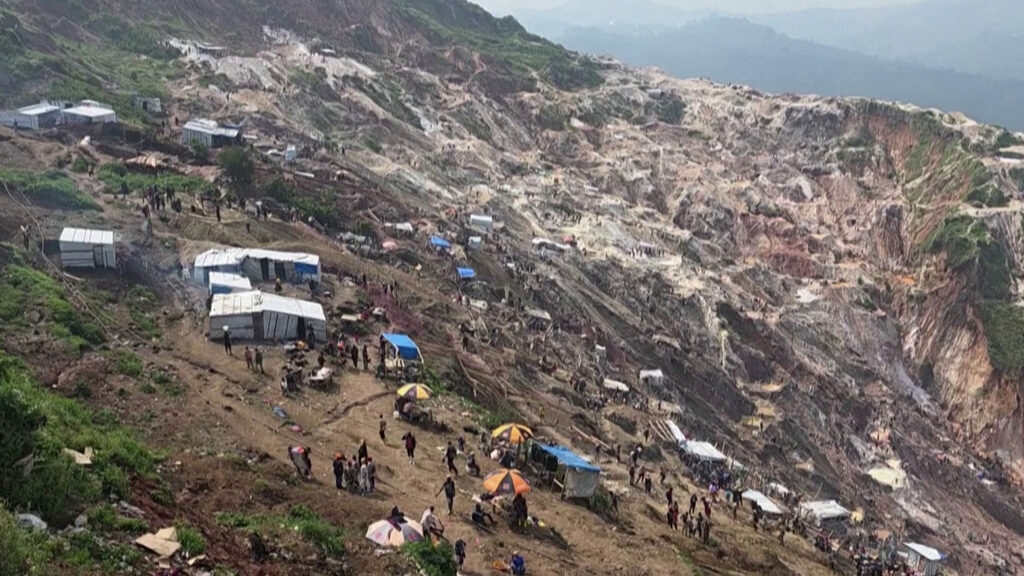
GOMA, CONGO – A catastrophic landslide has triggered the collapse of several mines in eastern Congo’s mineral-rich North Kivu province, leaving at least 200 people dead and many others trapped beneath the mud.
The incident occurred on Wednesday at the Rubaya mines, a major site for the extraction of coltan, but the scale of the tragedy only became clear on Saturday as rebel authorities and local responders began the grim task of recovering bodies.
DRC blames Rwanda for cobalt mine collapse that killed 200+ people in M23/AFC-controlled Rubaya. CNN has asked Kigali for comment.
"Mainly artisanal diggers, forced to carry out intense work due to the wild & illegal exploitation of Congolese natural resources by Rwanda/M23" pic.twitter.com/VobmbIs1G6
— Larry Madowo (@LarryMadowo) February 1, 2026
A Scene of Devastation
According to Lumumba Kambere Muyisa, a spokesperson for the rebel-appointed governor of the province, torrential rains weakened the hillsides, causing a massive earth movement that buried numerous artisanal tunnels.
“For now, there are more than 200 dead,” Muyisa told reporters. “Some are still in the mud and have not yet been recovered.”
Rescue efforts have been severely hampered by the remote terrain and ongoing heavy rainfall. Surviving miners and residents worked by hand and with basic tools to reach those buried, while ambulances were dispatched on Saturday to transfer the critically injured to Goma, located roughly 50 kilometers away.
The High Cost of Tantalum
The Rubaya mines are a critical global source of coltan, an ore containing tantalum, which is essential for the production of smartphones, computers, and electric vehicles. However, the site has been under the control of the M23 rebel group since May 2024.
Industry experts and former miners point to a total lack of safety standards as a primary factor in the high death toll. “The tunnels are dug by hand and run parallel to one another,” said Clovis Mafare, a former worker at the site. “When one collapses, it triggers a chain reaction. There can be up to 500 people in a single pit.”
Geopolitical Friction
The disaster has reignited the war of words between the Congolese government in Kinshasa and the M23 rebels. The central government issued a statement expressing solidarity with the victims while accusing the rebels of “illegally and unsafely exploiting” the country’s natural resources to fund their insurgency.
Meanwhile, a recent diplomatic deal brokered by the U.S. between the Congolese and Rwandan governments aims to stabilize the region and secure Western access to these critical minerals—a deal that critics say is complicated by the continued rebel control of sites like Rubaya.
As the death toll continues to rise, the tragedy serves as a stark reminder of the human cost behind the global electronics supply chain.