
Image: from Iran English X @iranEnglish5
The Open Chronicle | Independent. Incisive. Global.
By Chronicle Staff February 17, 2026
GENEVA — In a calculated display of brinkmanship, Iran today temporarily closed sections of the Strait of Hormuz for live-fire military exercises, just as high-stakes nuclear negotiations with the United States commenced in Switzerland. The move, described by Tehran as a “safety precaution,” has sent shockwaves through global energy markets and cast a long shadow over the diplomatic efforts to avert a wider conflict.
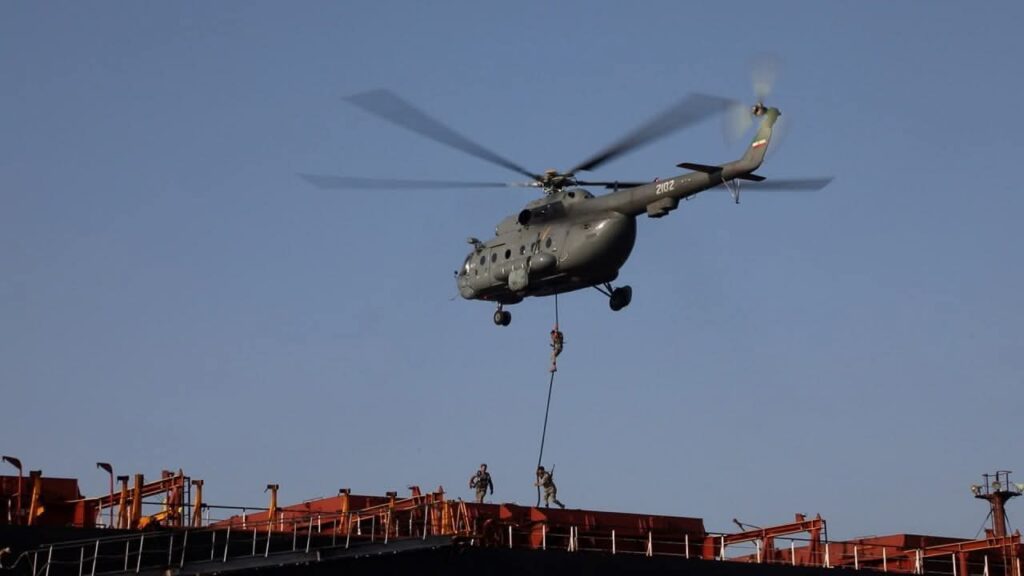
The “Smart Control of the Strait of Hormuz” drills, conducted by the Islamic Revolutionary Guard Corps (IRGC), involved the launch of anti-ship missiles and the deployment of advanced strike drones. It marks the first time in recent history that Iran has formally obstructed traffic in the strategic chokepoint—through which 20% of the world’s petroleum flows—specifically in response to U.S. military posturing.
The #IRGC has launched a large-scale naval exercise in the Strait of Hormuz, including closure of the inbound leg of the SoH TSS 🚨
The drill, named 'Smart Control of the #StraitofHormuz,' aims to test the IRGC's naval "security plans and counter-military action in the face of… pic.twitter.com/RHwXkTMAwt
— Martin Kelly (@_MartinKelly_) February 16, 2026
Diplomacy Under Duress
The closure coincided with the second round of indirect talks in Geneva, mediated by Omani officials. Despite the military flare-up, both sides appeared determined to keep the diplomatic channel open. Iranian Foreign Minister Abbas Araghchi stated that an understanding of “guiding principles” had been reached, though he cautioned that a final deal remains distant.
“The issues are complicated, and there is no trust,” noted Iranian Foreign Ministry spokesperson Esmaeil Baghaei. “But we are prepared to stay as long as it takes to ensure the lifting of these crippling sanctions.”
The Shadow of “Maximum Pressure”
The backdrop to today’s escalation is a significant buildup of U.S. naval power in the Persian Gulf. Following President Donald Trump’s return to a “Maximum Pressure” doctrine in early 2025, the USS Gerald R. Ford and the USS Abraham Lincoln carrier strike groups have been deployed to the region.
In a televised address as the drills began, Supreme Leader Ayatollah Ali Khamenei issued a defiant warning to Washington: “A warship is a dangerous apparatus, but more dangerous is the weapon that can sink it into the depths of the sea.” His comments underscore the “offensive” shift in Iran’s military doctrine, which experts say is designed to deter a repeat of the U.S. strikes on Iranian nuclear facilities at Fordow and Natanz that occurred in June 2025.
⚡ Newly released images of the 'Smart Control of the Strait of Hormuz' military drills by Iranian armed forces pic.twitter.com/xoW11SMXo3
— Iran English (@iranEnglish5) February 17, 2026
Economic Tremors
The partial blockade, though lasting only a few hours, served as a potent reminder of the fragility of global trade. Oil analysts warned that even a brief disruption could drive prices toward $200 a barrel if the situation spirals. “There is no alternative route to the Strait of Hormuz,” remarked one industry official, noting that previous attempts to reroute ships through the Red Sea have been hampered by regional instability.
White House Press Secretary Karoline Leavitt emphasized that while the U.S. remains focused on a diplomatic resolution, “all options remain on the table” to ensure the freedom of navigation.
As the delegations return to their respective capitals for consultations, the world watches the narrow waters of the Gulf. For now, the missiles have stopped flying, but the tension remains as thick as the heat over the Arabian Sea.