
Image: from Katy X @KatyKray73
By Chronicle Staff February 17, 2026
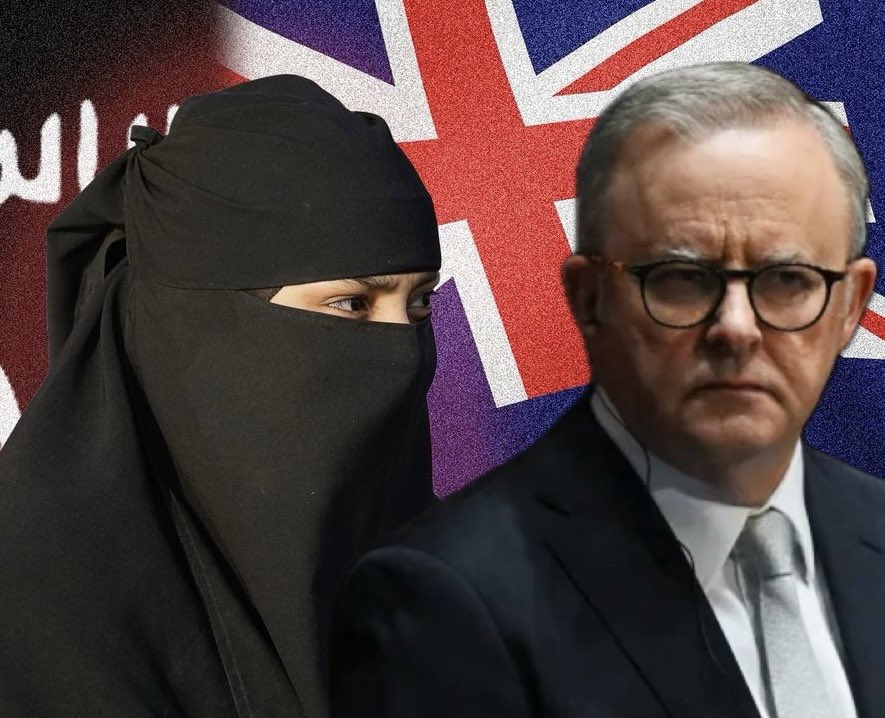
CANBERRA — The Australian government has sparked international debate by formally refusing to repatriate a remaining group of its nationals currently detained in Northeast Syria over alleged links to the Islamic State (ISIS). The decision marks a significant hardening of Canberra’s national security policy, leaving dozens of women and children in a state of legal and humanitarian limbo.
The announcement comes despite mounting pressure from human rights organizations and the Kurdish-led Syrian Democratic Forces (SDF), who have repeatedly urged Western nations to take responsibility for their citizens languishing in overcrowded detention camps like Al-Hol and Roj.
A Policy of “National Interest”
In a briefing from the capital, Australian officials cited “significant security risks” as the primary reason for the refusal. While a small number of families—mostly women and children deemed “low risk”—were brought home in a high-profile mission in late 2022, the government now signals that the window for further extractions has effectively closed.
“Our first priority is the safety and security of the Australian community,” a spokesperson for the Department of Home Affairs stated. The government argued that the logistical complexities of vetting those with deeper ties to the caliphate, combined with the lack of a diplomatic presence on the ground in Syria, make further repatriations “untenable.”
Despair in the Desert
An estimated 40 Australian citizens, including roughly 30 children, remain in the camps. Conditions in Al-Hol have been described by the Red Cross as “apocalyptic,” characterized by rampant malnutrition, disease, and radicalization.
Advocacy groups, including Save the Children Australia, have condemned the decision, arguing that the children, many of whom were born in the conflict zone, are innocent victims of their parents’ choices. “By leaving these children in a war zone, the government is essentially abandoning its own citizens to a slow death or recruitment by extremist remnants,” said a representative for the group.
The Global Precedent
Australia’s stance stands in contrast to several European neighbors. Countries like France, Spain, and Belgium have accelerated their repatriation efforts in recent months, fearing that the collapse of security in Northern Syria could lead to mass prison breaks and the resurgence of ISIS.
However, Canberra appears to be following a domestic political calculus. Public opinion in Australia remains sharply divided, with many voters wary of bringing back individuals who traveled voluntarily to join a terrorist organization. Critics of the government’s move warn that “outsourcing” the problem to an unstable region only kicks the security threat further down the road.
Legal Challenges Ahead
Lawyers representing the detained families have vowed to challenge the decision in the High Court, arguing that the government has a constitutional duty to protect its citizens abroad. For now, however, the barbed wire fences of Roj and Al-Hol remain the definitive boundary of Australian citizenship.
As the geopolitical situation in the Middle East remains volatile, the fate of those left behind serves as a grim reminder of the enduring, messy legacy of the war against the caliphate.