
By Open Chronicle Staff with Agencies
Escalating military action between the United States, Israel, and Iran dominates the start of the week, raising fears of a broader regional conflict across the Middle East. Fresh strikes, retaliatory missile attacks, and mounting diplomatic pressure are unfolding alongside major disruptions to global energy and shipping routes.
Trump Says Iran Strikes Could Last ‘Four Weeks or Less’
US President Donald Trump said the joint US Israeli military campaign against Iran is expected to last around four weeks.
Speaking to the Daily Mail on Sunday, Trump described the operation as a “four-week process,” adding that it could conclude sooner despite Iran’s size and military capacity. The remarks came as the campaign entered its second day.
According to the United States Central Command, American forces struck Iranian command centers, ballistic missile installations, naval vessels, and air defense systems within the first 24 hours. The operation reportedly involved B-2 stealth bombers, fighter aircraft, nuclear-powered aircraft carriers, and guided missile destroyers.
Israel Launches New Wave of Strikes on Tehran
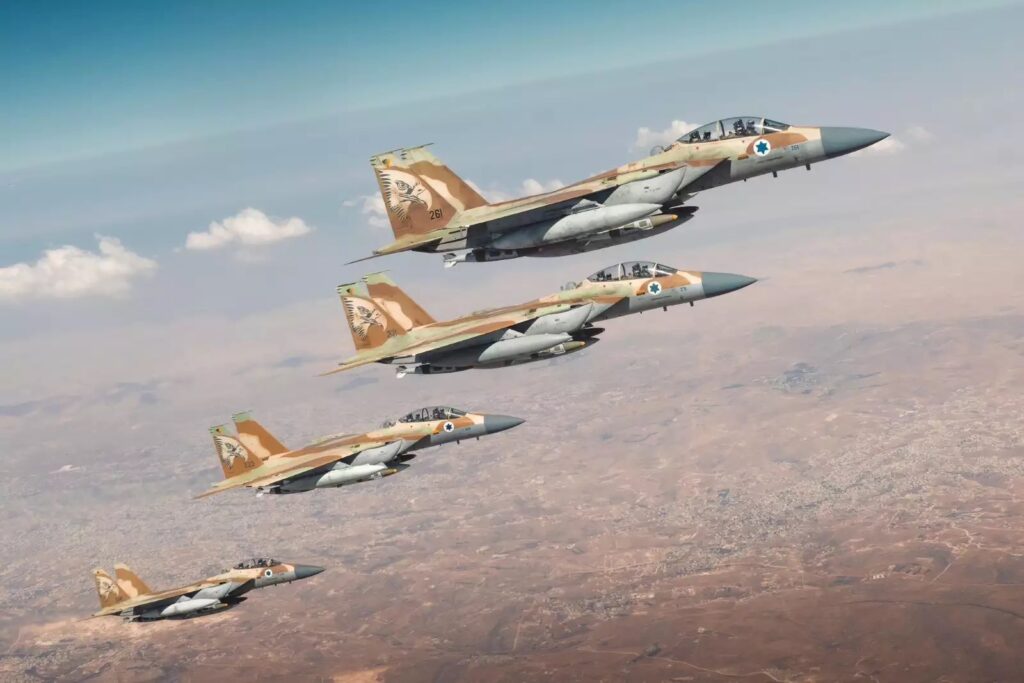
The Israeli military confirmed a fresh wave of airstrikes targeting central Tehran, stating that the Israel Air Force had initiated attacks “in the heart of Tehran.” Explosions were reported across the capital and nearby Karaj.
The escalation follows Saturday’s coordinated US-Israeli assault that reportedly killed several senior Iranian figures, including Supreme Leader Ali Khamenei. Tehran responded with drone and missile attacks aimed at Israel, US assets, and several Gulf states, intensifying fears of a wider confrontation.
Missile launches from Iran triggered explosions in Jerusalem and Tel Aviv, while Israeli officials said additional strikes targeted what they described as Iranian regime sites.
UK Allows US Use of Bases for Defensive Operations
British Prime Minister Keir Starmer said the United Kingdom will permit the US to use British bases for specific and limited defensive purposes in response to Iranian missile activity.
Starmer said the decision was taken to prevent missile attacks across the region that could endanger civilians and British personnel. The move signals London’s alignment with Washington amid growing instability.
Leaders of the E3 group, Britain, France and Germany, also said they were prepared to take necessary and proportionate defensive measures to protect their interests and allies in the Middle East.
Regional Spillover and Retaliatory Strikes
The conflict’s impact is spreading across neighboring states.
In Lebanon, Prime Minister Nawaf Salam called an emergency Cabinet meeting following intense Israeli strikes, including in Beirut. He described rocket launches from southern Lebanon as irresponsible and dangerous.
The Lebanese group Hezbollah said it carried out a rocket barrage and drone attack targeting an Israeli missile defense site south of Haifa.
In Iraq, two drones reportedly targeted the US Victoria base near Baghdad International Airport, while separate airstrikes hit positions belonging to the Popular Mobilization Forces in western Iraq, causing casualties.
Kuwait’s Defense Ministry said its air defenses intercepted multiple hostile aerial targets. Bahrain reported an Iranian strike targeting a maritime facility near Mina Salman Port.
Omani Foreign Minister Badr bin Hamad al-Busaidi said the door to diplomacy remains open, urging a return to negotiations despite ongoing hostilities.
Former Iranian President Mahmoud Ahmadinejad was reported alive and unharmed after speculation surrounding attacks on senior Iranian leadership and infrastructure, including state television facilities in Tehran.
Business and Energy Markets React
Global trade routes are already feeling the consequences of the escalating conflict.
Danish shipping giant Maersk announced it is suspending vessel crossings through the Strait of Hormuz until further notice, citing safety concerns. The company said it will reroute Middle East India to Mediterranean and Middle East India to US East Coast services around the Cape of Good Hope due to the deteriorating security environment.
Energy markets are also adjusting. Eight members of the OPEC+ group agreed to increase oil production by 206,000 barrels per day in April, partially reversing voluntary cuts introduced in 2023. The decision, reached during a virtual meeting, reflects what the group described as stable global economic conditions and relatively healthy market fundamentals, even as geopolitical risks mount.
Rising Fears of Broader Conflict
With missile exchanges, cross-border attacks, and naval tensions intensifying, regional governments are heightening security measures while diplomatic channels struggle to regain traction.
As military operations continue and global markets react, the coming days will be critical in determining whether the confrontation remains contained or evolves into a wider regional war with far-reaching economic and geopolitical consequences.