
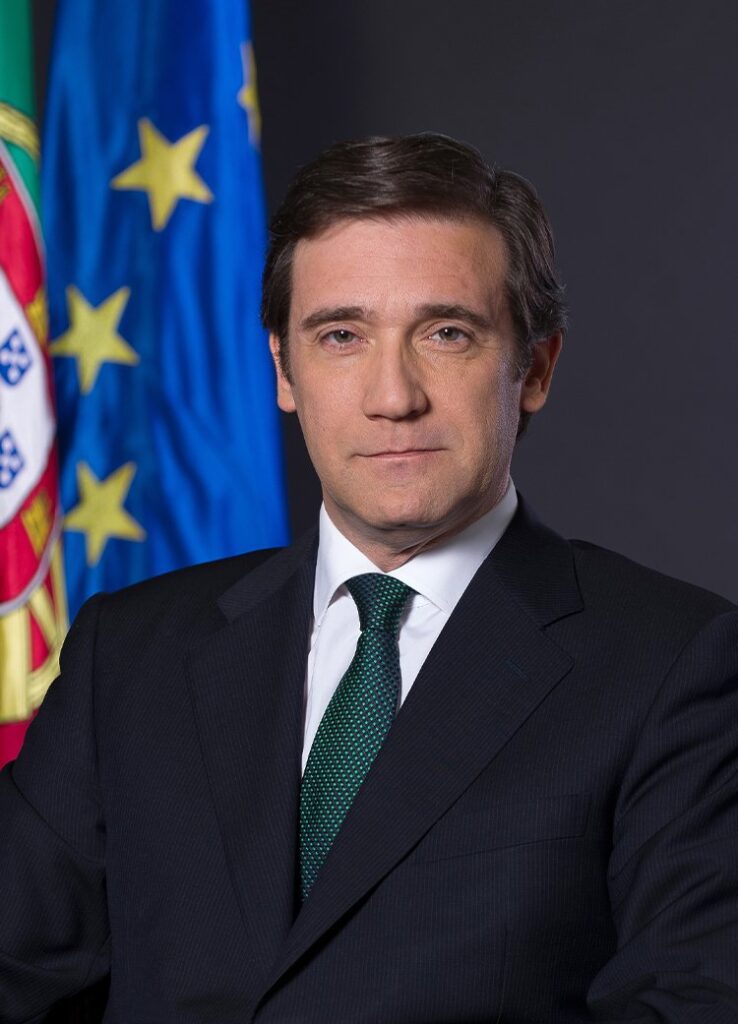
Image: Pedro P. X @PedroBa60863528
OPEN CHRONICLE | “The Truth in Every Detail”
By Open Chronicle Staff with Agencies
LISBON — Former Portuguese Prime Minister Pedro Passos Coelho has dramatically re-entered the political spotlight, asserting his independence from current party leadership and advocating for a formal alliance between the PSD, Chega, and Iniciativa Liberal (IL).
In an extensive and candid interview with the newspaper ECO published this Monday, the former social-democratic leader addressed long-standing speculation regarding a potential bid for the Presidency or a return to the PSD leadership.
“When I want to run, I will run, and I will announce that I am running,” Passos Coelho stated, dismissing claims that he is operating with hidden motives. “I am at peace with myself, with life, and with the world. I don’t feel the need to chase anything, but I see no reason to exclude anything I might do in the future.”
A Warning to the Right
Passos Coelho’s most pointed remarks were directed at the current “engineered” stability of the minority Democratic Alliance (AD) government led by Luís Montenegro. He argued that the executive missed a vital opportunity to secure a legislative agreement with the right-wing parties Chega and IL.
-
On Stability: “It would have been preferable to seek a path of stability… a legislative agreement should have been attempted.”
-
On the Chega Threat: He warned that if the PSD fails to integrate the right, Chega will be the primary beneficiary. “I find it very unlikely that, on the day the PSD loses the election, it will be the PS (Socialists) who win… it will most likely be Chega.”
-
On “Pacification”: He criticized the current government’s focus on “pacifying” sectors like teachers and pensioners, suggesting that the “reformist project” the PSD was elected to lead has been overshadowed by media-driven narratives of social peace.
Political Aftershocks
The interview has sent ripples through the Portuguese political landscape. André Ventura, leader of Chega, responded by proposing a parliamentary commission for State Reform and suggesting that Passos Coelho himself should chair it. Meanwhile, the PCP (Communist Party) dismissed the former PM’s comments as a “smoke screen” intended to mask further dismantling of the social state.
Passos Coelho, who led Portugal through the Troika bailout years (2011–2015), remains a polarizing but titan-like figure within the center-right. His refusal to “stay in the shadows” signals a potential challenge to Montenegro’s “no is no” policy regarding André Ventura’s party, just as the country looks toward the 2026 Presidential race.