
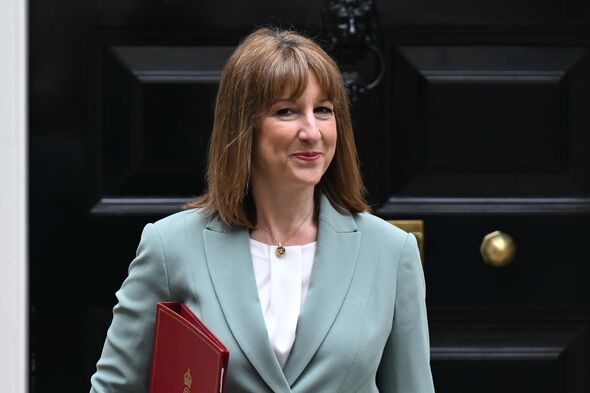
Image: from GET LABOUR OUT X @QprEver
By Open Chronicle Staff March 4, 2026
LONDON — Just hours after Chancellor Rachel Reeves delivered an optimistic Spring Statement to the House of Commons, economists and policy experts are warning that the rapidly escalating conflict in the Middle East could render the government’s fiscal projections obsolete.
While the Chancellor championed falling inflation, forecast to hit 2.3% in 2026, and a “keep calm and carry on” approach to the British economy, the reality of Operation Epic Fury is beginning to bite at the petrol pumps and on utility ledgers. As U.S. and Israeli forces continue their campaign against the Iranian regime, the global energy market has been plunged into a state of high volatility.
🚨 NEW: Rachel Reeves concludes her Spring Statement:
"My plan is the right one. I am in no doubt about how great the rewards can be if we stay the course. The forecasts confirm the choices I've made are the right ones"#SpringStatement pic.twitter.com/uggGfajHV4
— Politics UK (@PolitlcsUK) March 3, 2026
The Return of the ‘Price Spiral’
Economic analysts warn that the UK’s recent progress in cooling the cost-of-living crisis is at immediate risk. Susannah Streeter, chief investment strategist at Wealth Club, noted that the Chancellor’s forecasts failed to account for the “rapidly developing situation” in Iran.
“There’s a clear and present danger of the price spiral taking off again,” Streeter warned. She noted that the “wiggle room” identified by the Office for Budget Responsibility (OBR) could be swallowed whole by the economic repercussions of war, potentially scuppering hopes for an interest rate cut later this month.
🚨 WATCH: Shadow Chancellor Mel Stride responds to Rachel Reeves' Spring Statement:
"Is that it? What utter complacency. A Chancellor in denial. She speaks of stability – what planet is the right honourable lady on?"#SpringStatement pic.twitter.com/Z97rGXLI4k
— Politics UK (@PolitlcsUK) March 3, 2026
Beyond the Energy Bill
While the UK has diversified its gas supply since the war in Ukraine, experts argue that the secondary impacts of the Middle East conflict will be felt in every British cupboard. Sam Alvis of the IPPR highlighted that food prices, already a pain point for millions, could spike further as essential inputs like fertilizer, which often travel through the now-precarious Strait of Hormuz, face massive shipping delays and insurance hikes.
“Gas prices are currently rising faster than around the Ukraine war,” Alvis told reporters. While the energy price cap may keep domestic bills flat through the current quarter, the outlook for July and beyond is described as “highly uncertain.”
Resilience Under Pressure
Dr. Daniella Jenkins of the Women’s Budget Group emphasized that the “volatile external economic environment” proves the need for deeper structural reform. She noted that while falling inflation brought temporary relief to low-income families, the military action in Iran shows how quickly the “foundations of our economy continue to buckle” under external shocks.
As the Spring Statement’s ink dries, the UK public remains caught between the government’s message of stability and the looming shadow of a global conflict that threatens to drive energy prices back to record highs.