
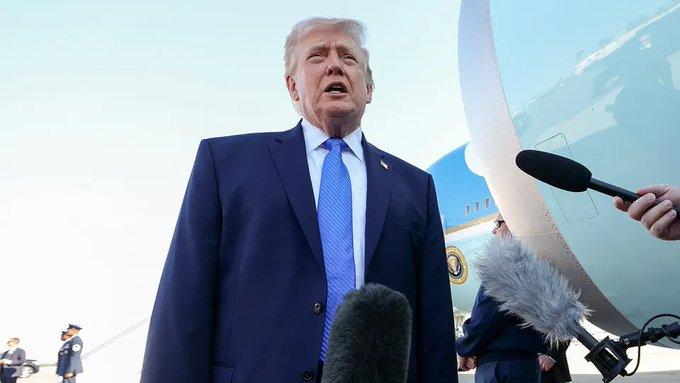
Image: from Washington Eye X @washington_EY
By Open Chronicle Staff with Agencies | March 24, 2026
TEL AVIV, Israel — Fresh waves of Iranian missiles and drones targeted Israel and Gulf Arab states on Tuesday morning, casting a dark shadow over President Donald Trump’s claims that a “total resolution” to the four-week war was within reach. Even as the White House signaled progress in backchannel diplomacy, the reality on the ground remained one of escalating violence and defiant rhetoric from Tehran.
Smoke billowed from central Tel Aviv following impacts that blew out windows of high-rise apartment buildings. It remains unclear if the damage was caused by direct hits or debris from Israel’s overburdened Iron Dome interceptors. Simultaneously, the United Arab Emirates and other Gulf partners reported new attempts to neutralize incoming fire aimed at critical infrastructure.
The “Fake News” Rebuttal
The military escalation serves as a kinetic rejection of President Trump’s recent optimism. On Monday, Trump extended a deadline for striking Iran’s power grid by five days, citing “very good and productive conversations” with a “respected” Iranian leader.
However, Iranian Parliament Speaker Mohammad Bagher Qalibaf took to social media to flatly deny any such negotiations. “No negotiations have been held with the U.S.,” Qalibaf posted on X. “Fake news is used to manipulate the financial and oil markets and escape the quagmire in which the U.S. and Israel are trapped.”
Iranian state television echoed this sentiment, framing Trump’s five-day reprieve as a “backing down” caused by “Iran’s firm warning” rather than a diplomatic breakthrough.
Netanyahu: “More to Come”
Israeli Prime Minister Benjamin Netanyahu further complicated the prospect of a ceasefire. Despite being briefed on the U.S. diplomatic efforts, Netanyahu signaled that Israel has no intention of pausing its campaign.
“There’s more to come,” the Prime Minister stated Tuesday, confirming that Israel would continue to strike targets in both Iran and Lebanon. This stance highlights a growing tactical rift between Washington, which seeks to stabilize global energy prices, and Jerusalem, which remains focused on the total degradation of Iranian military and nuclear capabilities.
Regional “Zero Restraint”
The conflict, which has already claimed over 2,000 lives and displaced millions, is entering what analysts describe as an “irrational” phase. Having already seen the killing of its former Supreme Leader and the bombing of its South Pars gas field, the Iranian regime appears to be following through on its vow of “zero restraint.”
By targeting Gulf Arab states, nations that have largely sought to remain defensive, Tehran is striking at the world’s most sensitive energy nodes. The continued closure of the Strait of Hormuz and the threat to desalination plants have left the region “between a rock and a very hard place,” according to regional experts.
Economic Whiplash
The mixed signals from the warring parties have created extreme volatility in global markets. While oil prices briefly dipped following Trump’s announcement of a deadline extension, they began to climb again on Tuesday as reports of the strikes on Tel Aviv and the Gulf reached trading floors.
With interceptor stocks reportedly running low across the Middle East and the U.S. deploying more amphibious assault ships to the region, the five-day window offered by the White House appears less like a bridge to peace and more like a brief pause before a potentially catastrophic expansion of the war.