
Image Credentials: Image Title: Blueprint for Broadcast-Quality Digital Content: Architecture of a Killer Talking Head Setup Source: (sora.openai) Date: November 2025. Attribution: This image was created using AI-generated imagery (sora.openai) and does not depict a real-world scene.
By Julian Thorne | Open Chronicle Tech
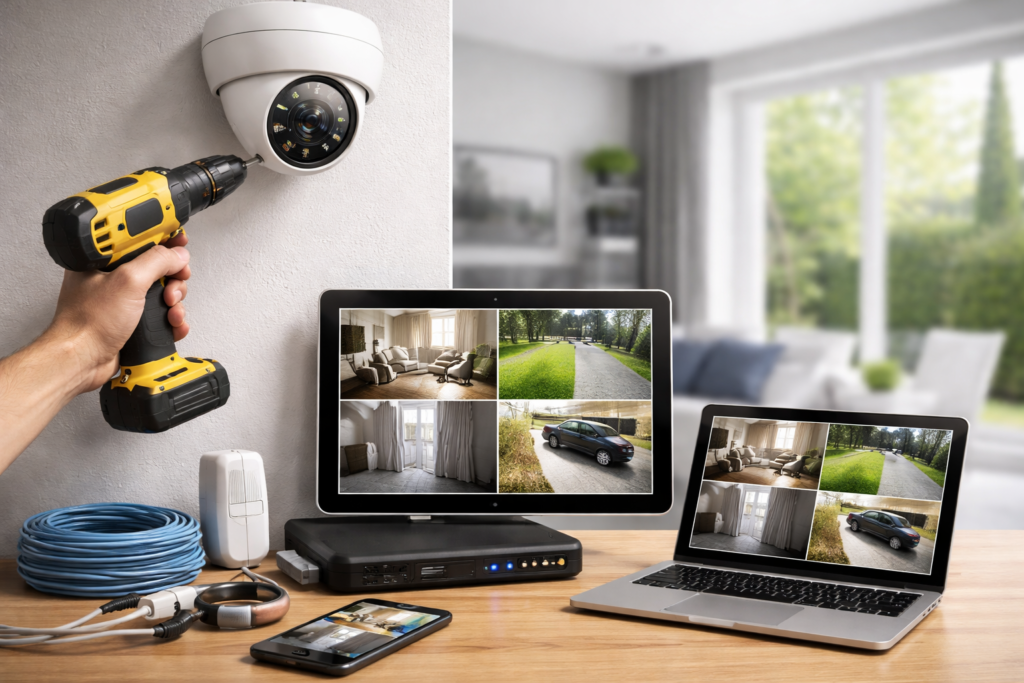
Professional-grade home security no longer requires a network of cameras and complex installations. With the right setup, a single smart camera can provide reliable, real-time protection for an apartment or small home. The difference lies not in quantity, but in intelligent configuration.
1. Choose the Right Camera


Image Credentials: Image Title: Blueprint for Broadcast-Quality Digital Content: Architecture of a Killer Talking Head Setup Source: (sora.openai) Date: November 2025. Attribution: This image was created using AI-generated imagery (sora.openai) and does not depict a real-world scene.
Start with a camera that offers the essential features for full coverage:
- Wide-angle lens, at least 120°, to maximize field of view
- PTZ capability, allowing remote pan, tilt, and zoom control
- Night vision, preferably infrared or color night mode
- Two-way audio, useful for deterrence or communication
- AI detection, especially person recognition
Brands like TP-Link with Tapo, Xiaomi, and Ring offer strong entry-level options with these capabilities.
2. Master Strategic Placement


Image Credentials: Image Title: Blueprint for Broadcast-Quality Digital Content: Architecture of a Killer Talking Head Setup Source: (sora.openai) Date: November 2025. Attribution: This image was created using AI-generated imagery (sora.openai) and does not depict a real-world scene.
With a single camera, placement is everything.
- Position it 2 to 2.5 meters high to prevent tampering
- Aim at entry points, like the front door or hallway
- Cover a central node, such as an open-plan living room
- Avoid backlighting from windows that can obscure faces
A well-placed camera can simultaneously monitor movement across multiple zones.
3. Use AI to Reduce False Alerts
Modern cameras have shifted from passive recording to active monitoring.
- Enable person detection to avoid alerts from pets or shadows
- Set up activity zones to focus on critical areas only
- Adjust sensitivity to match your environment
This ensures you only get alerts that matter, avoiding notification fatigue.
4. Secure Your Footage with Dual Storage


Image Credentials: Image Title: Blueprint for Broadcast-Quality Digital Content: Architecture of a Killer Talking Head Setup Source: (sora.openai) Date: November 2025. Attribution: This image was created using AI-generated imagery (sora.openai) and does not depict a real-world scene.
A reliable system needs redundancy:
- Use a high-endurance microSD card for local recording
- Add a cloud subscription for off-site backup
This dual approach ensures footage is محفوظ, even if the camera is damaged or stolen.
5. Enable Remote Monitoring
Connect your camera to your smartphone for real-time access:
- Live view anytime, anywhere
- Instant motion alerts
- Playback and download recordings
Most systems integrate easily with mobile apps, turning your phone into a control center.
6. Integrate with Smart Home Systems


Image Credentials: Image Title: Blueprint for Broadcast-Quality Digital Content: Architecture of a Killer Talking Head Setup Source: (sora.openai) Date: November 2025. Attribution: This image was created using AI-generated imagery (sora.openai) and does not depict a real-world scene.
A single camera becomes far more powerful when connected to a smart ecosystem:
- Link with Google Home or Amazon Alexa
- Use IFTTT to create triggers
Example automation:
Motion detected at night → lights turn on → intruder deterred
This transforms your system from reactive to preventative.
7. Optimize for Daily Use
To maintain effectiveness over time:
- Regularly check the camera angle and cleanliness
- Update firmware for security patches
- Test alerts and automations monthly
Consistency ensures your system stays reliable.
Final Insight
A single-camera surveillance system is no longer a compromise. With the right combination of placement, AI, storage, and smart integration, it can rival more complex setups.
The modern approach to home security is not about watching everything; it is about watching the right things, intelligently.