
Image: Archdiocese of Denver X @ArchDenver
By OPEN CHRONICLE STAFF with Agencies
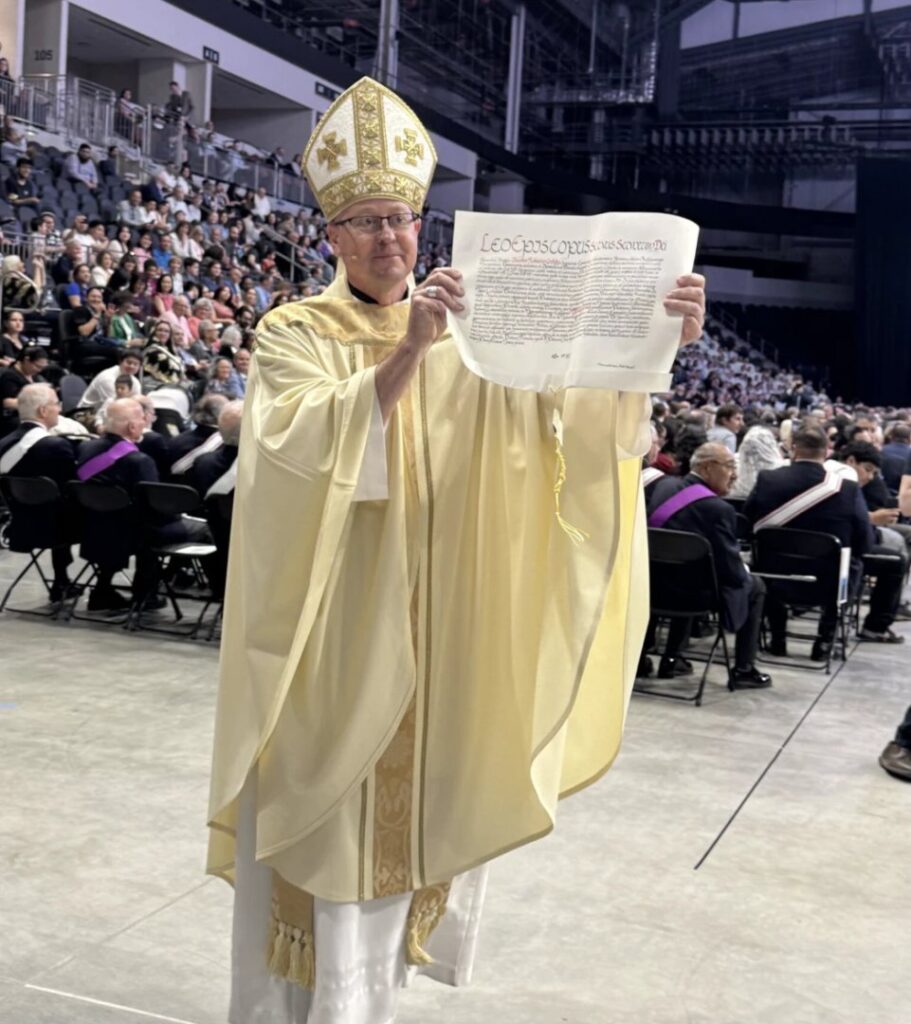
DENVER — The Mile High City witnessed a historic shift in its religious landscape this Wednesday as Archbishop James R. Golka was formally installed as the leader of the Archdiocese of Denver. The ceremony, held at the CoBank Arena, was more than a local transition. It marked the first major American appointment by Pope Leo XIV, signaling the dawn of a new era for one of the most famously conservative Catholic hubs in the United States.
For decades, Denver has served as a bastion of traditionalism. Under the leadership of previous archbishops like Charles Chaput and Samuel J. Aquila, the region became a global center for orthodox media and evangelical movements. It is the home of the Fellowship of Catholic University Students (FOCUS) and the Augustine Institute, institutions that have defined the “Denver Model” of muscular, unapologetic Catholicism.
A Contrast in Style. Archbishop Golka, 59, succeeds Samuel Aquila at a time when the global Church is navigating the “Leo Era,” a papacy focused on pastoral dialogue and reducing the intensity of cultural conflicts. While Golka’s predecessor was known for a firm, often combative defense of doctrine, the new archbishop arrives with a reputation for a “softer” approach.
As the former Bishop of Colorado Springs, Golka earned praise for his calm leadership following the 2022 Club Q shooting. His emphasis on the “intrinsic dignity” of all people was seen by many as a bridge-building gesture toward the LGBTQ+ community, a group that had often felt alienated by the archdiocese’s previous directives regarding gender identity in schools.
The Weight of Tradition. The challenge for Golka will be balancing this pastoral warmth with the expectations of a deeply entrenched conservative base. Denver’s Catholic community is highly organized and intellectually rigorous. Many local parishioners have expressed concern that a shift in tone might lead to a dilution of the clear, traditionalist identity they have spent thirty years building.
The archdiocese has also faced internal pressures, including the controversial closure of Bishop Machebeuf High School and tensions in diverse parishes where traditionalist liturgical changes were not always met with universal approval.
A Nebraska Native’s Mission: One of ten children from a Nebraska family, Golka’s background is rooted in the Midwestern values of hard work and community. During his installation, he focused on the concept of “stewardship.” He did not promise a revolution in doctrine, but he did suggest a revolution in encounter.
“If someone shows up at my door in need,” Golka has previously stated, “I care for them as best as I can.”
Whether this “Leo Era” in Denver will result in a lasting peace between the Church’s warring factions remains to be seen. For now, the installation of James Golka represents a significant pivot point, a moment where the “fortress” of Denver Catholicism may be opening its gates to a more collaborative future.