
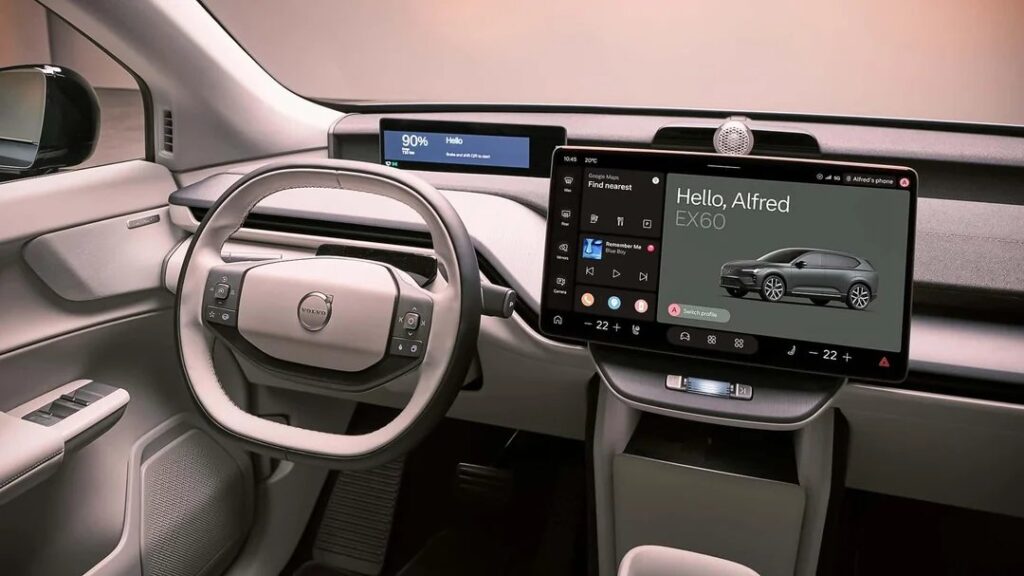
Image: from Link Technologies X @LinkTechnlogies
By Julian Thorne | Open Chronicle Tech
MOUNTAIN VIEW, Calif. — Google is significantly deepening the integration of its Android Automotive Operating System (AAOS), moving beyond the dashboard infotainment screen to control more of the vehicle’s essential hardware and safety features.
Unlike “Android Auto,” which mirrors a smartphone onto a car’s display, Android Automotive is a standalone operating system built directly into the vehicle’s computer. According to new technical documentation and industry reports, Google is now expanding the platform’s reach to include instrument clusters, climate control, and even advanced driver-assistance systems (ADAS).
Beyond Infotainment
The expansion aims to create a more unified digital experience for drivers. By taking over the instrument cluster, the screen behind the steering wheel, Android Automotive can now display Google Maps navigation, media playback, and critical vehicle data like speed and battery range in a cohesive visual style.
Furthermore, Google is working on “Car UI” libraries that allow automakers to customize the look and feel of these systems while maintaining the underlying stability of the Android platform. This allows brands like Volvo, Polestar, and Ford to keep their unique identities while benefiting from Google’s vast ecosystem of apps and voice-controlled Assistant features.
Deeper Hardware Integration
One of the most significant shifts is the platform’s increased ability to communicate with the car’s “Body Control Module.” This allows users to adjust air conditioning, seat heating, and door locks directly through the Android interface or via voice commands.
Industry experts note that this move places Google in more direct competition with Apple’s “next-generation CarPlay,” which also seeks to take over every screen in the vehicle. However, because Android Automotive is the underlying OS rather than a projected interface, it offers deeper “native” control that functions even when a smartphone is not present.
The Data and Safety Frontier
As Android Automotive begins to interact with safety sensors and cameras, Google is implementing stricter “Vehicle Hardware Abstraction Layer” (VHAL) protocols. These ensure that critical safety functions, such as airbag deployment or braking, remain isolated from the infotainment apps to prevent system crashes from affecting the car’s drivability.
The expansion also presents a massive data opportunity for Google. By powering the entire vehicle experience, the company can gain insights into driving habits, EV charging efficiency, and vehicle health, which can be used to improve future software updates and personalized services.
As more manufacturers sign on to the “Google Built-In” program, the car is rapidly evolving from a mechanical machine into a “computer on wheels,” with Android serving as the primary brain.