
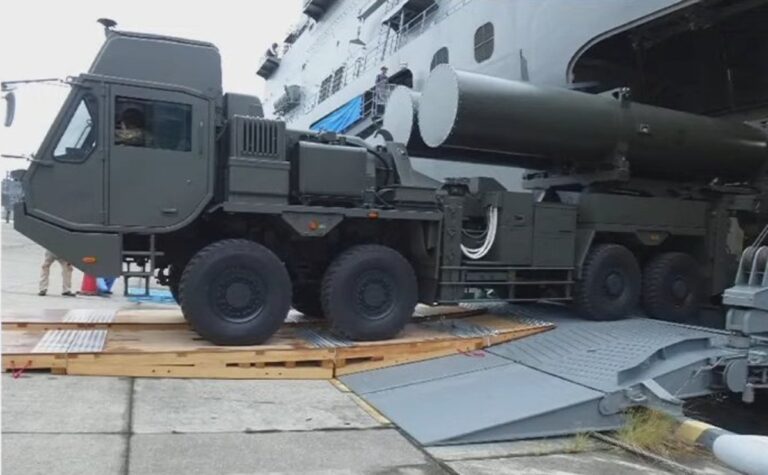
Image: for Defence Index X @Defence_Index
By Open Chronicle Staff with Agencies
TOKYO — The Japanese Ground Self-Defense Force (GSDF) began the historic deployment of long-range missiles on Tuesday, March 31, marking a definitive end to the nation’s strictly “defense-only” post-war military posture. The move is designed to establish a credible “counterstrike capability,” allowing Japan to strike enemy bases and naval vessels if an attack is deemed imminent.
The deployment centers on the upgraded Type 12 surface-to-ship guided missile, which has a range of approximately 1,000 kilometers. These units were stationed today at Camp Kengun in Kumamoto, placing Chinese coastal areas and the waters surrounding Taiwan within reach.
A New “Pillar” of Defense
Under revised national security documents, the Self-Defense Forces (SDF) are no longer required to wait for an initial strike to land on Japanese soil before responding. If the government determines an adversary’s attack is certain, the SDF is now authorized to hit targets within that opponent’s territory.
In addition to the Type 12 missiles, the GSDF deployed “hyper-velocity gliding projectiles” to Camp Fuji in Shizuoka Prefecture. These projectiles, designed for island defense, fly on irregular trajectories to bypass enemy missile defense systems. Plans are already in place to upgrade these projectiles to a 2,000 km range, with additional batteries slated for Miyazaki and Hokkaido.
Closing the Missile Gap
The rapid buildup is a direct response to the massive regional disparity in strike power. Military analysts estimate that China possesses nearly 2,000 ground-launched missiles with ranges between 500 and 5,500 km.
“We need to make potential adversaries realize that attacking Japan would not be worth the cost,” a senior SDF official stated. “The goal is to break their resolve before a conflict even begins.”
To further bridge this gap, the Maritime SDF announced last week the modification of the Aegis destroyer Chokai to carry U.S.-made Tomahawk cruise missiles, which boast a 1,600 km range. Simultaneously, the Air SDF has begun taking delivery of Norwegian-made Joint Strike Missiles for its fleet of F-35A stealth fighters.
Domestic and Strategic Hurdles
Despite the military’s rapid advancement, the Defense Ministry faces significant domestic challenges. Many residents in deployment areas have expressed fears that their neighborhoods will now become primary targets for enemy retaliation.
Furthermore, the SDF must still solve logistical hurdles, including the construction of secure ammunition depots and the integration of real-time targeting data between Japan’s branches and the U.S. military. The government plans to continue the mass production of these long-range systems through 2032 to ensure the “counterstrike” pillar remains a permanent fixture of Japanese sovereignty.