
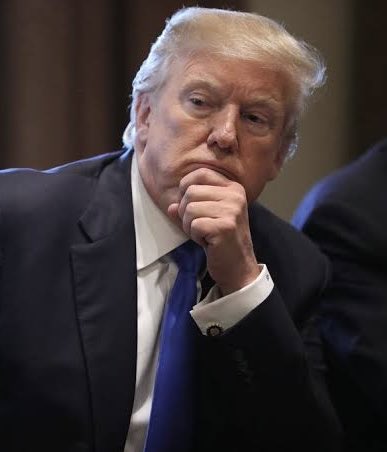
Image Credentials: Image Title: TRUMP WEIGHS NATO EXIT IN HIGH-STAKES SHOWDOWN WITH RUTTE Source: (sora.openai) Date: April 2026. Attribution: This image was created using AI-generated imagery (sora.openai) and does not depict a real-world scene.
By Open Chronicle Staff with Agencies
WASHINGTON — In a meeting described as “pivotal for the future of Western security,” President Donald Trump held closed-door talks on Wednesday with NATO Secretary-General Mark Rutte. The discussion comes as the White House explicitly considers withdrawing from the 77-year-old alliance, following what the President characterizes as a “betrayal” by European allies during the current war with Iran.
The high-stakes visit occurs just 24 hours after a fragile two-week ceasefire was brokered between Washington and Tehran, a truce that has already been tested by a massive Israeli bombardment of Lebanon.
Leavitt: Trump to Discuss Possible NATO Exit with Secretary-General Today
Press Secretary Karoline Leavitt said President Trump will discuss the possibility of the United States leaving NATO during talks with Secretary-General Mark Rutte later today, raising fresh uncertainty… pic.twitter.com/JupKQJ8XER
— Washington Eye (@washington_EY) April 8, 2026
“Tested and They Failed”
White House Press Secretary Karoline Leavitt did not mince words ahead of the meeting, stating that President Trump believes NATO was “tested and failed” during Operation Epic Fury. The administration’s primary grievance stems from the refusal of major NATO members to join the military coalition to reopen the Strait of Hormuz or to allow U.S. forces unrestricted use of European bases for the Iran campaign.
“It’s quite sad that NATO turned their backs on the American people over the course of the last six weeks when it’s the American people who have been funding their defense,” Leavitt told reporters.
When asked directly if a total withdrawal was on the table, Leavitt confirmed: “It’s something the president has discussed, and I think it’s something the president will be discussing… with Secretary-General Rutte.”
The WSJ Report: Punishing “Unhelpful” Allies
While a full exit would face significant legal hurdles—including a 2024 U.S. law requiring a two-thirds Senate majority to withdraw—the Wall Street Journal reports that the administration is actively drafting an alternative “punishment” plan.
Under this proposal, the U.S. would:
-
Relocate Troops: Pull U.S. forces out of “uncooperative” NATO countries like Spain and France, which restricted airspace during the initial strikes on Iran.
-
Reward “Loyalists”: Station those troops in member states that offered more vocal or logistical support for the Iran conflict.
-
Base Restrictions: Limit future military investments in nations that branded the U.S.-Israeli offensive a “war of choice.”
“The Trump Whisperer” Faces His Toughest Test
Mark Rutte, known in diplomatic circles as the “Trump whisperer” for his ability to mollify the U.S. leader, arrived at the West Wing through a side gate, avoiding the public eye. Rutte has sought to “thread the needle” by publicly applauding U.S. efforts to degrade Iranian military capabilities while privately trying to preserve the core of the alliance.
Before meeting Trump, Rutte met with Secretary of State Marco Rubio to discuss “burden shifting” and the ongoing negotiations to end the Russia-Ukraine war. Diplomats say Rutte’s goal is to convince Trump that the alliance can be “re-tooled” for the Middle East and the Indo-Pacific, rather than abandoned entirely.
A Global Shift
Adversaries and allies alike are watching the Washington talks with intense scrutiny:
-
Russia & China: Analysts note that Moscow and Beijing have viewed the transatlantic rift with “glee,” as Trump previously branded NATO a “paper tiger.”
-
Greenland Factor: Trump reignited tensions earlier this week by claiming his disillusionment with NATO began with Denmark’s refusal to discuss the sale of Greenland, a move he says was a “national security necessity.”
-
Keir Starmer: The President has also taken personal aim at UK Prime Minister Keir Starmer, mockingly referring to Britain’s aircraft carriers as “toys” after London refused to be drawn into the ground phase of the Iran war.
As Rutte prepares to meet with Pentagon chief Pete Hegseth next, the future of the North Atlantic Treaty remains in the balance. For Trump, the question is no longer just about defense spending—it is about whether an alliance built for the Cold War is willing to follow him into the heat of a new Middle Eastern conflict.