
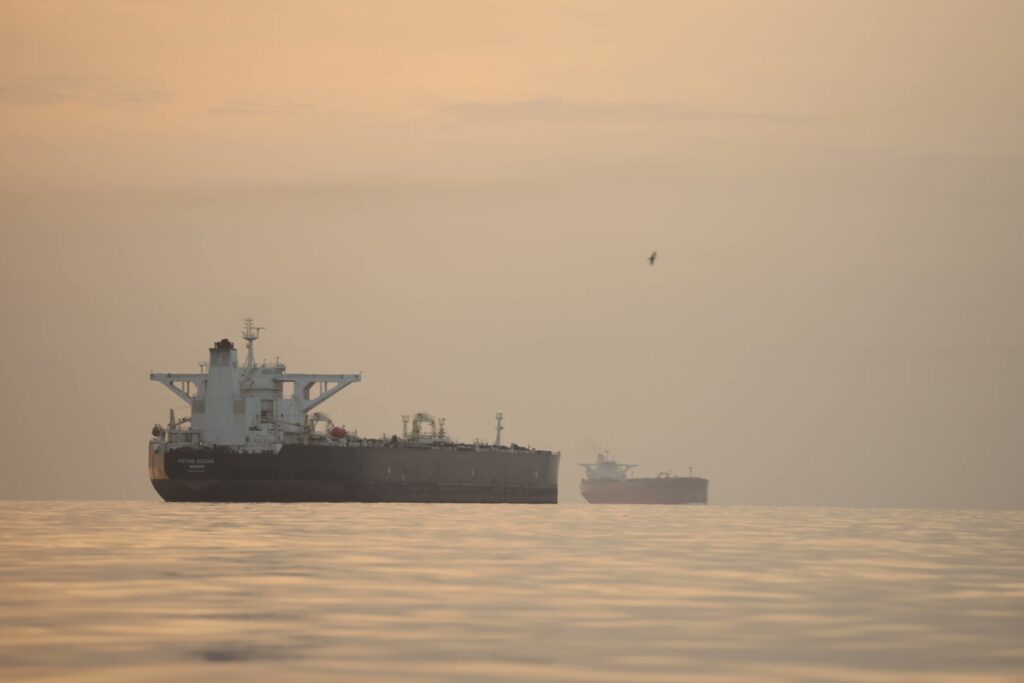
Image: from Bobnews24.com X @Bobnews24C
Open Chronicle | Global Security
Washington / Gulf Region — The United States has intercepted and seized an Iranian-flagged cargo ship in the Gulf, marking a sharp escalation in its ongoing maritime blockade against Iran.
U.S. President Donald Trump confirmed that the vessel, identified as the Touska, was taken into custody after allegedly ignoring orders to stop.
President Trump just announced the US military has SEIZED an Iranian cargo ship which attempted to GET PASSED America’s Naval blockade
President Trump wasn’t bluffing.
“It did not go well for them. pic.twitter.com/Ge1p86ybsZ
— The Q Eye (@TheQeye_) April 19, 2026
Interception at Sea
According to Trump, the nearly 900-foot cargo ship attempted to bypass the U.S. naval blockade but failed to comply with warnings issued by American forces.
He said U.S. Navy personnel disabled the vessel by targeting its engine room, effectively halting it at sea. The ship is now under U.S. control, with authorities inspecting its cargo.
The U.S. military later released footage that it said showed the moment of interception, including gunfire directed toward the vessel.
Iran has not officially commented on the incident.
Blockade Tightens
The seizure comes as Washington continues to enforce a sweeping blockade on Iranian ports, a measure introduced following failed negotiations earlier this month.
Trump has reiterated that the blockade will remain in place until a broader agreement is reached, particularly on issues related to Iran’s nuclear program and control of the Strait of Hormuz.
The narrow waterway, through which roughly 20 percent of global oil and liquefied natural gas flows, remains largely closed, with maritime traffic sharply reduced.
Diplomatic Efforts in Question
The incident coincides with renewed efforts to restart negotiations. The White House confirmed that Vice President JD Vance will lead a delegation to Islamabad for a possible second round of talks mediated by Pakistan.
However, Tehran has cast doubt on its participation. Iranian state media reported that officials are unlikely to attend while the blockade remains in effect, describing U.S. demands as excessive and counterproductive.
Despite the uncertainty, preparations in Islamabad have intensified, with heightened security measures and logistical arrangements already underway.
Strait Remains Flashpoint
Meanwhile, the situation in the Strait of Hormuz continues to deteriorate. Iran has reimposed restrictions on shipping, reversing a brief reopening during the ceasefire period.
Reports of attacks on vessels have further heightened tensions. A French-linked ship was reportedly targeted with warning fire, while incidents involving other commercial vessels, including Indian-flagged ships, have added to the sense of instability.
Shipping data indicates that traffic through the strait remains at a near standstill, amplifying concerns over global energy supplies and market volatility.
Rising Stakes
The current conflict, which began with U.S. and Israeli strikes on Iran in late February, has entered a fragile phase marked by a temporary ceasefire set to expire within days.
Trump has warned that military action could resume if negotiations fail, while insisting that the United States will not be pressured by threats to global energy routes.
“Iran cannot blackmail us,” he said, as tensions over the strait continue to dominate the strategic landscape.
Uncertain Outlook
With the seizure of the Touska, the standoff has moved beyond rhetoric into confrontation at sea.
Whether the incident will push both sides toward renewed negotiations or further escalation remains unclear. What is certain is that the balance between diplomacy and conflict is becoming increasingly fragile, with global implications tied closely to the waters of the Persian Gulf.