
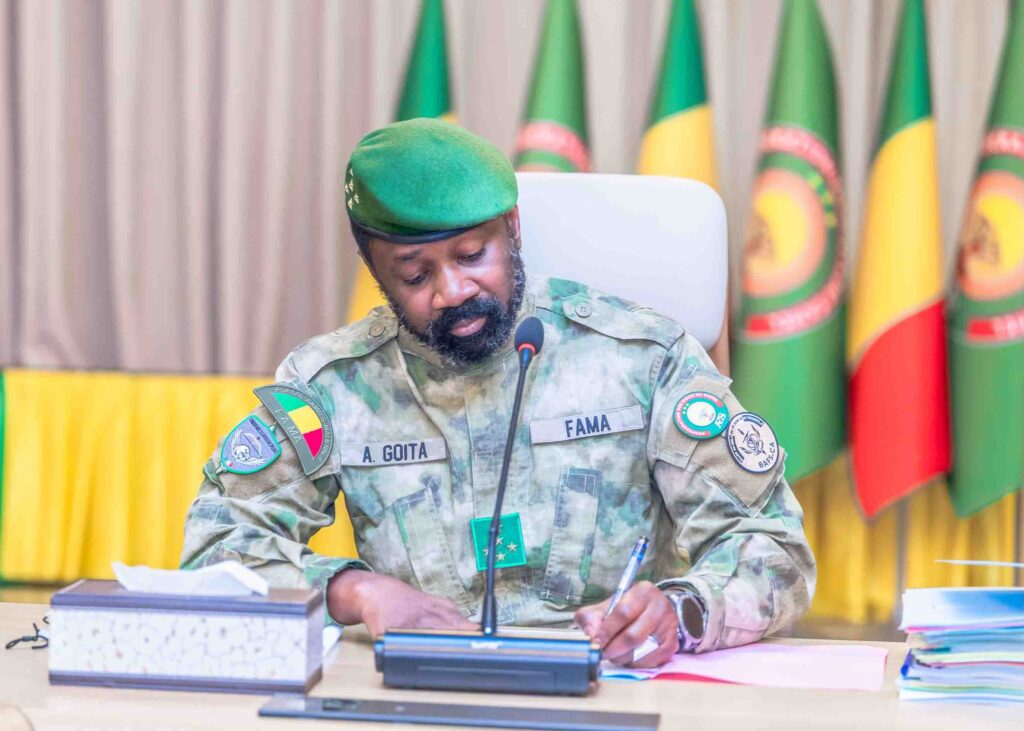
Image: from Presidence Mali X @PresidenceMali
By Open Chronicle with Agencies
Assimi Goïta has sought to reassure the nation following a wave of coordinated attacks that have shaken the country, insisting that the security situation remains “under control” despite ongoing clashes in the north.
In his first public address since the violence erupted, broadcast on state television, Goïta acknowledged the seriousness of the crisis, describing it as one of “extreme gravity,” while urging citizens to remain calm and avoid panic.
Unprecedented Assaults
The attacks, launched over the weekend, are among the largest seen in nearly 15 years in Mali. They involved a rare alliance between Tuareg separatists and jihadist fighters, targeting key military positions, including areas near the capital, Bamako.
The offensive has left at least 23 people dead, according to hospital sources, and has exposed vulnerabilities in the country’s security apparatus.
Among those killed was Sadio Camara, a central figure in the junta’s military strategy and its pivot toward closer ties with Russia.
Kiongozi wa kijeshi wa Mali Assimi Goïta amejitokea baada ya wanajihadi na kundi la waasi wa Tuareg, kutekeleza mashambulio makubwa katika miji mbalimbali nchini humo likiwemo jiji kuu Bamako mwishoni mwa wiki iliyopita, akiwahakikishia raia wa Mali usalama wao.#kidal #mali pic.twitter.com/fpwyePU3tE
— RFI Kiswahili (@RFI_Sw) April 29, 2026
Rebel Advances and Strategic Setbacks
Fighting has been particularly intense in northern regions, where separatist forces linked to the Azawad Liberation Front and jihadists from the Group for the Support of Islam and Muslims have made gains.
Rebels have reportedly taken control of the key northern town of Kidal, forcing allied forces, including Russian-backed units, to withdraw.
Russia, a major partner of Mali’s military leadership, reiterated its support, with Igor Gromyko confirming continued cooperation in counterterrorism efforts.
Rising Tensions and Uncertainty
The situation remains fluid, with reports of troop withdrawals from parts of the Gao region, another strategic military area. Meanwhile, jihadist groups have threatened to impose a blockade on roads leading into Bamako, raising fears of further instability.
A spokesperson for JNIM claimed that movement into the capital would be restricted, though these claims have not been independently verified.
Goïta’s absence in the immediate aftermath of the attacks had fueled speculation about the junta’s stability, given that he came to power in 2020 promising to restore security and combat insurgent threats.
Call for Unity
In his address, Goïta emphasized national unity, calling on citizens to resist division at a time of heightened tension. He said security operations, including search efforts and intelligence gathering, are ongoing to stabilize the situation.
The developments highlight the persistent challenges facing Mali as it grapples with insurgency, regional instability, and shifting alliances. Despite assurances from the leadership, the scale and coordination of the attacks raise fresh questions about the country’s security trajectory.