
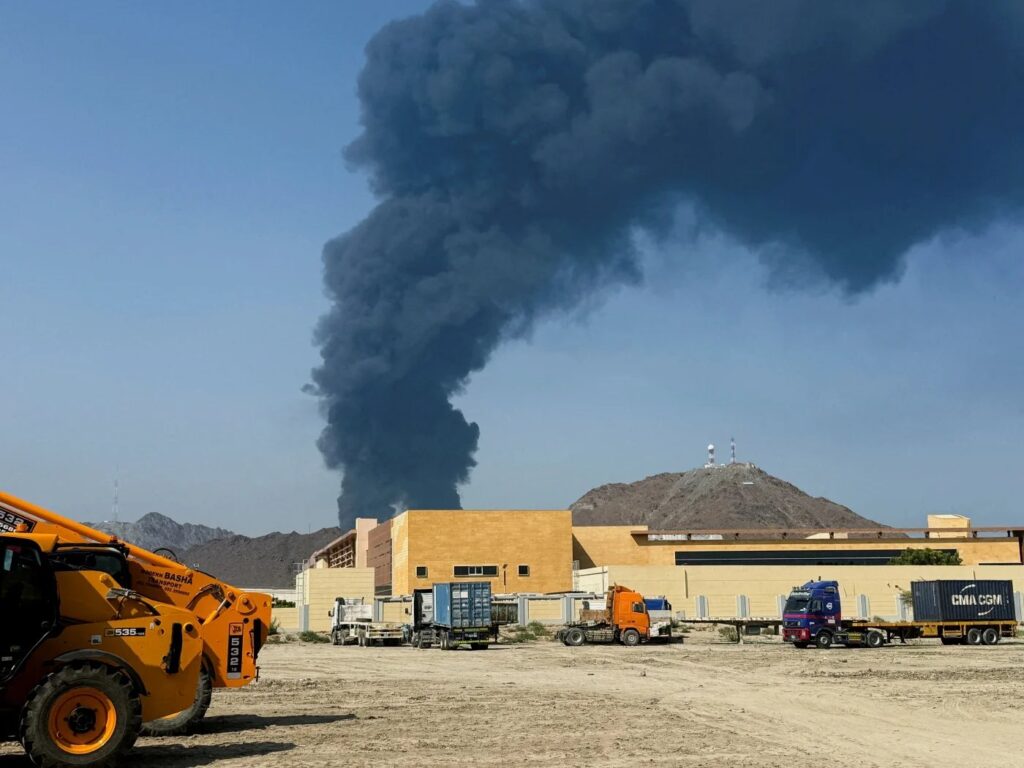
Image: from 𝕯𝖊𝖑𝖙𝖆 X @Delta13cn
By Open Chronicle with Agencies
The United Arab Emirates reported a fourth wave of missile and drone attacks from Iran on Monday evening, signaling a renewed escalation despite an ongoing ceasefire between Tehran and the United States.
According to the UAE Defense Ministry, air defense systems were activated to intercept incoming ballistic and cruise missiles, as well as unmanned aerial vehicles targeting the country. Residents across several regions reported hearing loud explosions, which authorities said were the result of interception efforts.
🇮🇷🇦🇪 Iran just attacked the UAE
12 ballistic missiles. 3 cruise missiles. 4 drones. All intercepted, so far.
Tehran warned Abu Dhabi not to take any "unwise" actions. Apparently Abu Dhabi's existence was unwise enough. https://t.co/cQXJ0d4rN5 pic.twitter.com/zrtdpDOs26
— Mario Nawfal (@MarioNawfal) May 4, 2026
Officials confirmed that no casualties or significant damage were immediately reported following the latest wave of attacks.
Earlier in the day, however, a drone strike triggered a major fire at the Fujairah Oil Industry Zone, a critical facility on the country’s eastern coast. Local authorities said three Indian nationals were injured with moderate wounds and taken to the hospital for treatment.
The incidents mark the first direct attacks on the UAE since a ceasefire between Iran and the United States took effect last month. The truce, brokered by Pakistan on April 8, has struggled to hold, with no lasting agreement reached during subsequent talks in Islamabad.
Donald Trump later extended the ceasefire without specifying a timeline, but tensions have continued to rise across the region.
The escalation follows weeks of heightened conflict triggered by US and Israeli strikes on Iran in late February, which led to retaliatory actions by Tehran against regional targets and the closure of the Strait of Hormuz.
Since mid-April, the United States has maintained a naval blockade aimed at Iranian maritime traffic, further intensifying the situation in one of the world’s most critical energy corridors.
Analysts warn that the latest wave of attacks underscores the fragility of the ceasefire and raises the risk of broader regional instability, particularly as military actions increasingly impact key energy infrastructure and civilian areas.