
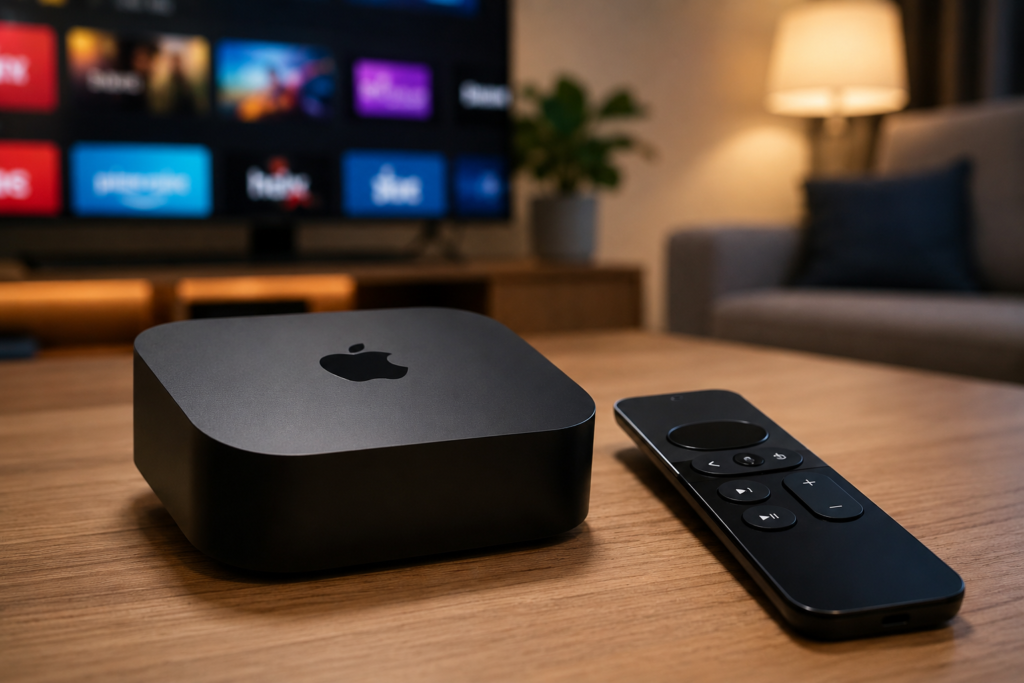
Image Credits: Image Title: Apple TV Faces Pressure to Reinvent Itself in the AI Era. Source: (chatgpt.com) Date: May 2026. Attribution: This image was created using AI-generated imagery (chatgpt.com) by Open Chronicle and does not depict a real-world scene.
By Open Chronicle
For nearly two decades, the Apple TV has maintained a reputation as one of the most polished streaming devices on the market. Fast performance, a clean interface, and deep integration with the Apple ecosystem have helped it stand apart from rivals. Yet despite its strengths, critics increasingly argue that Apple’s streaming platform has fallen behind at a time when artificial intelligence is reshaping consumer technology.
Originally introduced alongside the first iPhone, Apple TV was once described by Steve Jobs as a “hobby.” Many analysts now believe the description still applies.
While competitors have aggressively expanded smart home integration, AI-powered assistants, and low-cost streaming solutions, Apple’s streaming box remains focused primarily on delivering a premium viewing experience. Industry observers say that may no longer be enough in a market increasingly driven by intelligent personalization and interconnected digital ecosystems.
The current Apple TV 4K begins at $129, making it significantly more expensive than rivals such as Amazon’s Fire TV devices, which often retail for under $50. Despite the higher price, the device performs many of the same core functions as competing products, including streaming video applications and voice-controlled search.
Supporters argue the difference lies in execution. Apple TV runs on tvOS, a television-focused operating system derived from iOS, and uses processors similar to those found in iPhones and iPads. This allows for faster navigation, smoother animations, and seamless interaction with other Apple devices.
Users can quickly sign into services using their iPhones, stream music and photos across devices, and access games through Apple Arcade. However, critics say the overall viewing experience has changed little over the years.
The debate comes as Apple reportedly delays several smart home products tied to its broader artificial intelligence strategy. According to multiple reports, the company has postponed launches for updated Apple TV and HomePod devices as it continues developing advanced versions of Siri and its new Apple Intelligence platform, first previewed at WWDC 2024.
Analysts believe the future of Apple TV may depend on how successfully Apple integrates AI into entertainment and home automation.
Potential future features discussed by industry insiders include natural language content searches, AI-generated recaps of previous episodes, scene recognition technology and on screen contextual assistance. Viewers could theoretically ask Siri about filming locations, actors, clothing, or objects appearing during a movie scene without interrupting playback.
Artificial intelligence could also dramatically improve search capabilities. Rather than manually browsing streaming applications, users might ask for highly specific moments within films or request recommendations based on mood, themes or visual style.
Apple’s ambitions extend beyond streaming. Reports suggest the company is preparing a new “HomePad” device combining smart speaker functionality with a built in display, designed to serve as a central control hub for connected homes.
The delays have drawn attention to Apple’s broader AI challenges. Although the company announced major intelligence features during WWDC 2024, many capabilities remain unavailable, fueling criticism that Apple is moving more cautiously than competitors in the AI race.
Leadership changes may also influence the direction of the company. Reports indicate that John Ternus is expected to play a larger role in shaping Apple’s future product strategy, particularly around hardware innovation and smart home technology.
For now, Apple TV remains widely regarded as one of the best streaming boxes available. Yet in an era increasingly defined by AI-powered experiences, many observers believe the platform must evolve beyond simply being a fast and polished media player if it hopes to justify its premium price and maintain relevance in the years ahead.