
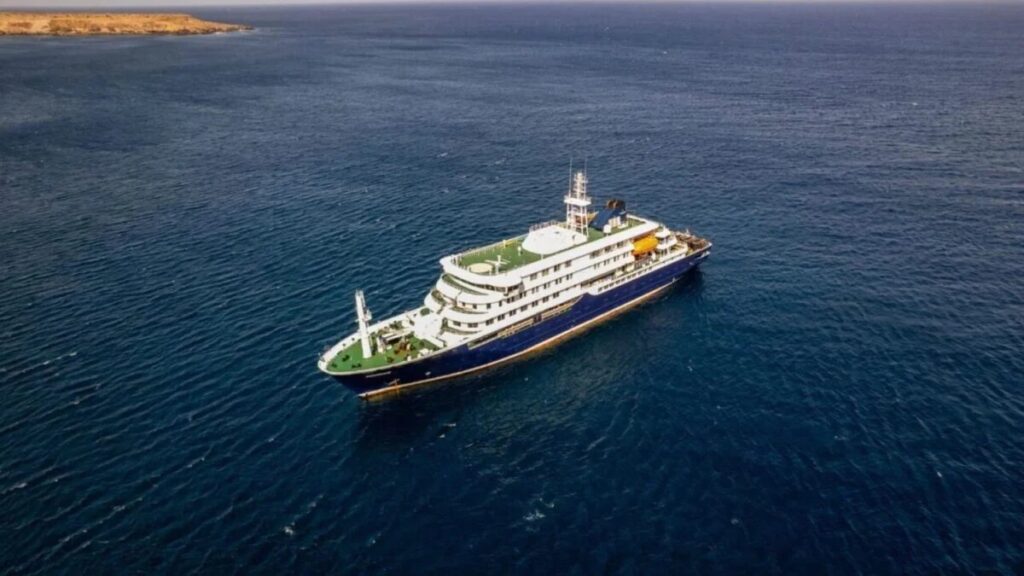
Image: from Mario Nawfal X @MarioNawfal
By Open Chronicle with agencies
All 18 Americans evacuated from the cruise ship linked to the deadly hantavirus outbreak remain under federal quarantine as US health officials continue testing and monitoring efforts to prevent further spread of the rare Andes strain.
The Centers for Disease Control and Prevention said Wednesday that passengers from the MV Hondius are being encouraged to remain in quarantine for the full 42-day incubation period associated with the virus.
The monitoring period officially began on Monday, the day the passengers disembarked from the vessel after arriving in the Canary Islands.
CDC official Dr. David Fitter emphasized that federal and local officials are working around the clock to ensure the safe return of passengers while protecting American communities from potential health risks.
"Big priorities for us are the safe and healthy return of the… pic.twitter.com/k9FfBI7KcZ
— Fox News (@FoxNews) May 11, 2026
CDC Continues Exposure Assessments
Dr. David Fitter, incident manager for the CDC’s hantavirus response, said health authorities are still conducting interviews with passengers to determine the extent of their exposure during the voyage.
“Currently, there are no state or federal quarantine orders that have been drawn,” Fitter said during a briefing. “The goal is to work with them for the best possible place for them.”
Officials said the assessment process is expected to continue through at least Thursday.
Two passengers have already undergone testing specifically for the Andes strain of hantavirus, which is responsible for the outbreak aboard the cruise ship.
One passenger who displayed symptoms and was transferred to Emory University Hospital later tested negative for the virus.
Passenger Initially Testing Positive Later Cleared
Health officials also reported positive developments in Omaha, where one passenger initially isolated in a high-security biocontainment unit has since been cleared to move into standard quarantine.
University of Nebraska Medical Center confirmed Wednesday that the passenger’s condition no longer required intensive isolation measures.
Dr. Stephen Kornfeld, one of the cruise passengers, told CNN that he initially tested “faintly positive” for hantavirus but later received a negative result and was transferred out of the biocontainment unit.
Americans Across Multiple States Monitoring Symptoms
In addition to those under federal quarantine, at least seven Americans who had previously left the ship earlier in the voyage are currently isolating at home across several US states.
State health departments are maintaining regular contact with the individuals while monitoring them for symptoms.
“We are working very closely with state and local health departments and the passengers who are home to ensure that they understand what is expected for them to monitor themselves,” Fitter said.
Officials noted that home quarantine measures may include isolation within separate parts of a residence and the use of N95 masks.
The CDC declined to specify how many individuals across the United States are currently under observation, citing privacy concerns.
Rare Andes Strain Raises Global Attention
As of Wednesday, health authorities had identified 11 hantavirus cases linked to the outbreak worldwide, including eight confirmed infections.
All cases involve passengers or crew members from the MV Hondius.
Three people connected to the outbreak have died, including a Dutch couple believed to have been exposed while traveling through South America before boarding the ship.
The outbreak involves the rare Andes strain of hantavirus, the only known variant capable of spreading from person to person.
Most hantavirus infections are traditionally linked to exposure to infected rodent urine, saliva, or droppings.
Scientists stress that human-to-human transmission remains extremely uncommon.
Health experts estimate that only between 2% and 5% of Andes strain infections are believed to result from direct transmission between people.
Public Risk Still Considered Low
Despite the international attention surrounding the outbreak, health officials continue emphasizing that the broader public risk remains low.
Testing is currently recommended only for people who have both experienced exposure and developed symptoms.
Officials said blood tests for the Andes strain have already been validated, while PCR testing capabilities are also available, though not yet widely used for patient care.
The CDC and international health authorities continue to closely monitoring the situation as quarantine operations remain underway in multiple countries.