
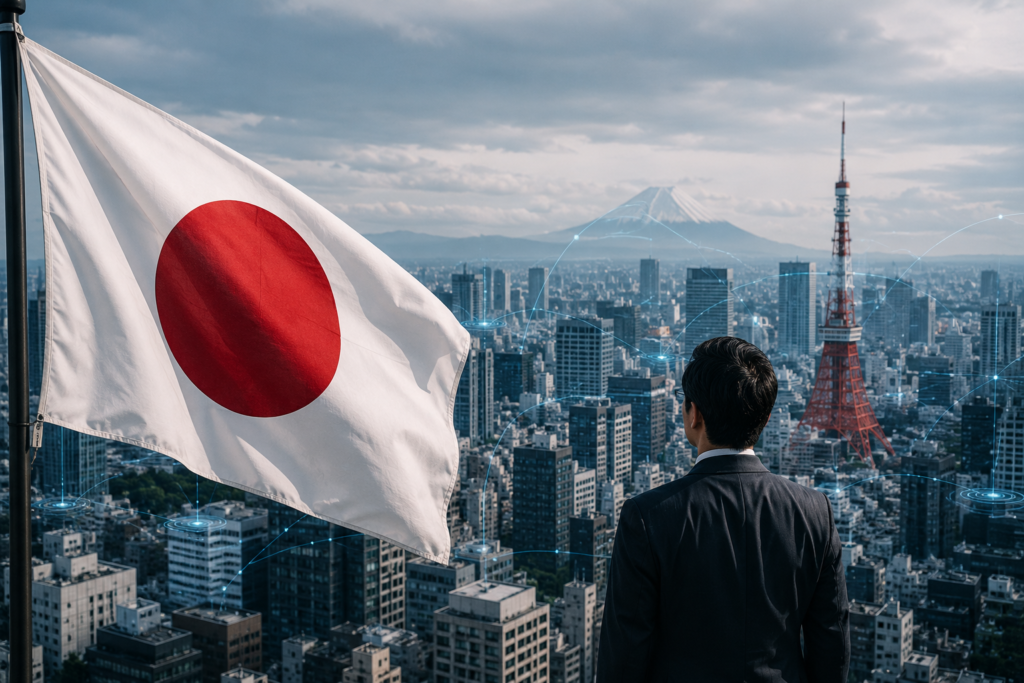
Image Credentials: Image Title: Japan Launches Biggest Intelligence Reform Since World War II. Source: (chatgpt.com) Date: May 2026. Attribution: This image was created using AI-generated imagery (chatgpt.com) by Open Chronicle and does not depict a real-world scene.
By Open Chronicle with agencies
Japan is moving forward with its most significant intelligence reform since the end of the Second World War, as the government seeks to strengthen national security capabilities amid growing regional tensions and intensifying geopolitical competition in Asia.
New legislation approved in Tokyo is designed to modernize Japan’s intelligence structure and bring the country closer to establishing an organization comparable to the American Central Intelligence Agency, according to Japanese media reports and government officials.
The reforms reflect mounting concern within Japan over the rapidly changing security environment surrounding the country, particularly the military expansion of China, missile threats from North Korea, cyber warfare risks, and growing instability linked to regional power rivalries.
A Historic Shift in Japan’s Security Policy
For decades after World War II, Japan maintained strict limitations on intelligence operations due to constitutional pacifism and deep public caution toward military and security institutions.
Unlike many Western powers, Japan never developed a centralized foreign intelligence agency with broad overseas operational authority. Intelligence responsibilities remained fragmented across different ministries, police bodies, and defense institutions.
The new legislation aims to change that structure by improving intelligence coordination, expanding information-sharing mechanisms, and strengthening Tokyo’s ability to gather and analyze foreign intelligence independently.
Officials argue that the reforms are necessary as security threats become increasingly complex and technologically sophisticated.
The changes also align with Japan’s broader national security transformation under recent governments, which have steadily expanded defense spending, cyber capabilities, and cooperation with Western allies.
Closer Alignment With Western Intelligence Partners
The reforms are expected to deepen cooperation between Japan and its closest intelligence partners, particularly the United States and members of the Five Eyes intelligence network, which includes the United Kingdom, Canada, Australia, and New Zealand.
Japanese officials have long sought greater intelligence integration with Western partners, especially as concerns rise over cyber espionage, maritime tensions in the Indo-Pacific, and technological competition involving artificial intelligence and semiconductors.
Analysts say Tokyo’s evolving intelligence structure could eventually improve Japan’s ability to participate in multinational intelligence operations and regional threat monitoring.
The legislation also focuses heavily on cybersecurity and protection of sensitive information, areas where Japan has faced criticism in the past for relatively weak legal frameworks compared to Western allies.
China and North Korea Driving Urgency
Regional tensions have accelerated calls for reform inside Japan.
China’s growing military presence around the East China Sea and Taiwan has alarmed Japanese policymakers, while North Korea continues missile testing programs that frequently place Japanese territory and airspace within potential range.
Japanese security officials increasingly view intelligence modernization as essential for early warning systems, cyber defense, and strategic decision-making.
Tokyo has also become increasingly concerned about economic security threats, including industrial espionage, supply chain vulnerabilities, and attempts to steal advanced technologies.
The government believes a more integrated intelligence structure will help protect critical industries tied to semiconductors, robotics, artificial intelligence, and defense manufacturing.
Domestic Debate Over Oversight and Civil Liberties
Despite broad support from Japan’s ruling coalition, the reforms have also sparked debate over transparency, privacy protections, and democratic oversight.
Critics warn that expanding intelligence powers could raise concerns about surveillance and government accountability, particularly in a country where memories of wartime authoritarianism remain historically sensitive.
Supporters of the legislation argue that safeguards and parliamentary oversight mechanisms are being included to prevent abuses while allowing Japan to adapt to modern security realities.
The reforms stop short of creating a direct replica of the CIA, but observers say they represent the clearest move yet toward a centralized intelligence capability with greater operational reach and strategic coordination.
A New Era for Japanese Security Policy
Japan’s intelligence overhaul forms part of a broader strategic shift that has transformed the country’s defense posture over recent years.
The government has already announced plans to significantly increase military spending, acquire counterstrike capabilities, and strengthen alliances throughout the Indo-Pacific region.
Officials argue that the international environment no longer allows Japan to rely solely on postwar assumptions about security and regional stability.
As geopolitical competition intensifies across Asia, Tokyo appears increasingly determined to build the intelligence infrastructure necessary to operate as a more assertive strategic power on the global stage.