
By Open Chronicle with agencies
The head of Britain’s intelligence and cybersecurity agency is expected to deliver a stark warning about the growing danger of cyberattacks and technological warfare, arguing that the United Kingdom and its allies face an increasingly narrow window to maintain their security advantage.
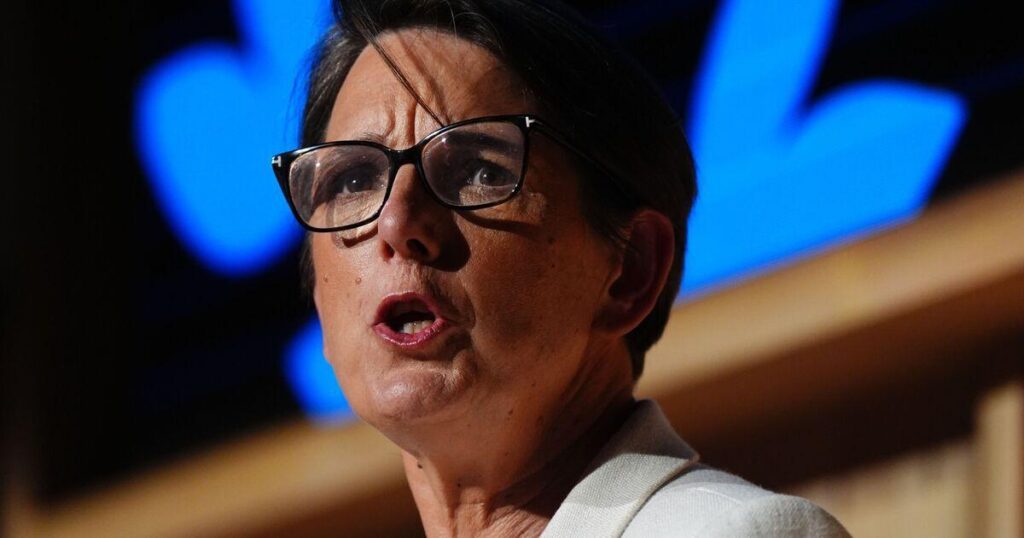
Anne Keast-Butler, director of the UK’s Government Communications Headquarters (GCHQ), will use a major speech at Bletchley Park to highlight what she describes as a rapidly evolving threat landscape driven by artificial intelligence, cyber warfare, and geopolitical instability.
According to excerpts released ahead of the address, Keast-Butler plans to say that “the ground beneath our feet is shifting” as AI technologies continue advancing at extraordinary speed.
She is also expected to describe China as a global science and technology superpower with increasingly sophisticated intelligence, military, and cyber capabilities.
“China is now a science and tech superpower with sophisticated capabilities across its intelligence, cyber, and military agencies,” she is expected to say.
The speech comes at a symbolic location deeply connected to British intelligence history. During the Second World War, Bletchley Park served as the operational center where British codebreakers worked to decipher German military communications, playing a decisive role in the Allied war effort.
Now, Keast-Butler argues that a new era of digital conflict demands an equally urgent response.
She plans to warn that cybersecurity efforts must become “10 times more urgent,” calling for stronger digital protections not only within governments and corporations, but throughout society.
“From boardrooms to living rooms,” she will say, cybersecurity preparedness must improve dramatically.
The GCHQ chief is also expected to accuse Russia of intensifying what British officials describe as hybrid warfare operations targeting Europe and the United Kingdom.
According to the planned remarks, Russia is “relentlessly targeting critical infrastructure, democratic processes, supply chains and public trust.”
Keast-Butler will warn that the risk of escalation and miscalculation is among the highest she has seen during her career.
Her speech references several alleged sabotage incidents linked to Russian operations during the ongoing war in Ukraine. Among them were fires caused by incendiary devices hidden inside DHL parcels in 2024, including one blaze at a logistics facility in Leipzig, Germany, and another at a warehouse in Birmingham, England.
British intelligence officials have repeatedly accused Moscow of orchestrating disruption campaigns across Europe in retaliation for Western military and political support for Ukraine.
“As we remain steadfast in our support for Ukraine, Vladimir Putin is going backwards on the battlefield,” Keast-Butler plans to say.
The speech also marks the 80th anniversary of the UKUSA intelligence agreement, the postwar intelligence-sharing framework that eventually evolved into the Five Eyes alliance between the United Kingdom, the United States, Australia, Canada, and New Zealand.
The alliance remains one of the most powerful intelligence-sharing networks in the world and has increasingly focused on cyber defense, emerging technologies, and countering foreign interference operations.
Keast-Butler’s remarks reflect growing concern among Western governments that future conflicts may be shaped as much by cyber sabotage, artificial intelligence, and digital infrastructure attacks as by conventional military force.
Analysts warn that critical systems such as energy networks, telecommunications, transport infrastructure, and financial systems are becoming increasingly vulnerable to state-sponsored cyber operations, particularly as geopolitical tensions deepen between major global powers.