
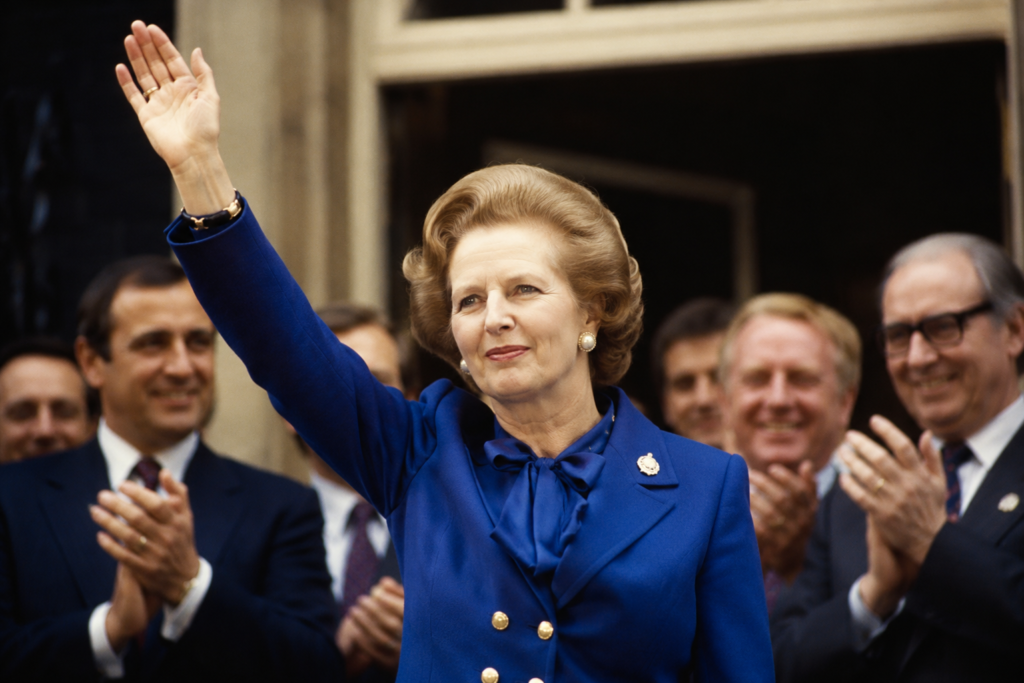
Image Credentials: Image Title: Today in History, June 9: Margaret Thatcher Secures a Landslide Reelection Victory. Source: (chatgpt.com) Date: June 2026. Attribution: This image was created using AI-generated imagery (chatgpt.com) by Open Chronicle and does not depict a real-world scene.
By Open Chronicle
On June 9, 1983, British Prime Minister Margaret Thatcher won one of the most decisive electoral victories in modern British history, securing a second term in office and strengthening her position as one of the most influential political figures of the twentieth century.
Leading the Conservative Party, Thatcher entered the general election campaign with momentum largely generated by Britain’s success in the Falklands War the previous year. The conflict, fought between the United Kingdom and Argentina over the Falkland Islands in the South Atlantic, ended in a British victory and significantly boosted public confidence in Thatcher’s leadership. Her reputation for determination and resolve earned her widespread support among voters.
The election also took place during a period of deep division within the opposition Labour Party. Internal disputes over policy and leadership weakened Labour’s appeal, while the newly formed Social Democratic Party-Liberal Alliance attracted a substantial share of the anti-Conservative vote. The split in opposition support helped the Conservatives convert their popularity into a commanding parliamentary majority.
When the results were announced, the Conservatives secured 397 seats in the House of Commons, giving Thatcher a majority of 144 seats. It was one of the party’s strongest performances since World War II and confirmed her dominance over British politics.
The victory allowed Thatcher to continue implementing her ambitious economic agenda. Her government pursued policies aimed at reducing inflation, privatizing state-owned industries, limiting the power of trade unions, and promoting free-market reforms. While these measures remained controversial, they transformed large sectors of the British economy and reshaped the country’s political landscape.
Thatcher’s second term further established her international profile. She became a close ally of U.S. President Ronald Reagan and played a significant role in Cold War diplomacy during a period of major global change.
Today, Margaret Thatcher remains one of the most debated figures in British history. Admirers credit her with revitalizing the British economy and restoring national confidence, while critics argue that her policies increased social divisions and economic inequality. Regardless of perspective, her landslide reelection on June 9, 1983, marked a defining moment in modern British politics and secured her place as one of the most consequential leaders of her era.