
Image: from The STRATCOM Bureau X @OSPSF
By Open Chronicle with agencies
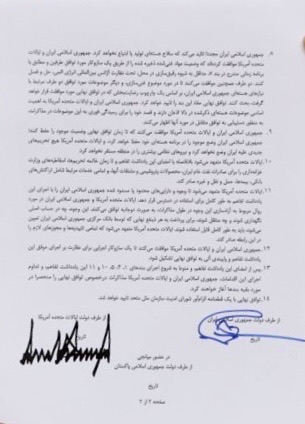
Senior United States officials have disclosed the contents of a draft memorandum of understanding between Washington and Tehran, shedding light on a proposed framework designed to end months of conflict and restart negotiations over Iran’s nuclear programme.
The document, titled the Islamabad Memorandum of Understanding between the United States of America and the Islamic Republic of Iran, outlines a ceasefire, the reopening of key maritime routes, phased sanctions relief, and a 60-day negotiating process aimed at achieving a comprehensive final agreement.
The draft was released ahead of a formal signing ceremony expected to take place on Friday.
Immediate End to Hostilities
At the core of the agreement is an immediate and permanent cessation of military operations between the United States, Iran, and their respective allies involved in the conflict.
Both governments commit to refraining from future military action, threats of force, or interference in each other’s internal affairs. The draft also includes provisions aimed at preserving the territorial integrity and sovereignty of Lebanon, a country heavily affected by the wider regional conflict.
Negotiators would then have up to 60 days, with the possibility of extension by mutual consent, to transform the memorandum into a binding final agreement.
Strait of Hormuz to Reopen
One of the most significant provisions concerns the reopening of the Strait of Hormuz, a vital maritime corridor through which a substantial share of global energy exports passes.
Under the draft, the United States would begin dismantling its naval blockade immediately after the agreement is signed and fully remove it within 30 days.
Iran, meanwhile, would facilitate the safe passage of commercial vessels between the Persian Gulf and the Sea of Oman, initially without transit charges for a 60-day period. Tehran would also undertake demining operations and work with Oman and other Gulf states on future maritime administration arrangements.
The reopening of the waterway is expected to reduce pressure on global energy markets that have experienced significant volatility during the conflict.
Sanctions Relief and Economic Reconstruction
The memorandum proposes sweeping economic measures intended to support Iran’s recovery and reintegration into international markets.
Washington would issue waivers allowing the export of Iranian crude oil, petroleum products, and related services, including banking, insurance, and transportation activities.
The agreement also commits the United States and regional partners to developing a reconstruction and economic development programme valued at a minimum of $300 billion. Details of how the fund would operate are expected to be negotiated during the upcoming talks.
In addition, the United States would facilitate access to Iranian assets and funds that have been frozen or restricted under previous sanctions regimes.
The draft further states that both sides intend to negotiate the eventual termination of a broad range of sanctions, including unilateral American sanctions and measures linked to international institutions.
Nuclear Provisions
A central component of the agreement focuses on Iran’s nuclear activities.
Iran reiterates its commitment not to develop or acquire nuclear weapons. The draft also establishes a mechanism for managing the country’s stockpile of enriched uranium, with the minimum requirement being on-site downblending under the supervision of the International Atomic Energy Agency (IAEA).
Future negotiations will address broader questions related to uranium enrichment levels, monitoring procedures, and Iran’s civilian nuclear needs.
Until a final agreement is reached, Tehran would maintain the current status of its nuclear programme while Washington would refrain from imposing new sanctions or deploying additional military forces in the region.
Monitoring and International Guarantees
The memorandum calls for the creation of a joint executive mechanism to oversee implementation and verify compliance with both the interim agreement and any future accord.
The final agreement, once negotiated, would be submitted for endorsement through a binding United Nations Security Council resolution, providing international legal backing for its provisions.
A Return to Diplomacy
The draft agreement effectively seeks to reverse many of the consequences of the conflict that erupted earlier this year, restoring commercial shipping, reopening energy markets, and restarting diplomatic engagement between the two adversaries.
While major differences remain unresolved, the memorandum provides a structured framework for negotiations and represents the most substantial diplomatic effort between Washington and Tehran in years.
Whether the agreement can evolve into a lasting settlement will depend on the success of the upcoming talks, particularly on sensitive issues such as sanctions removal, nuclear oversight, and long-term regional security arrangements.