
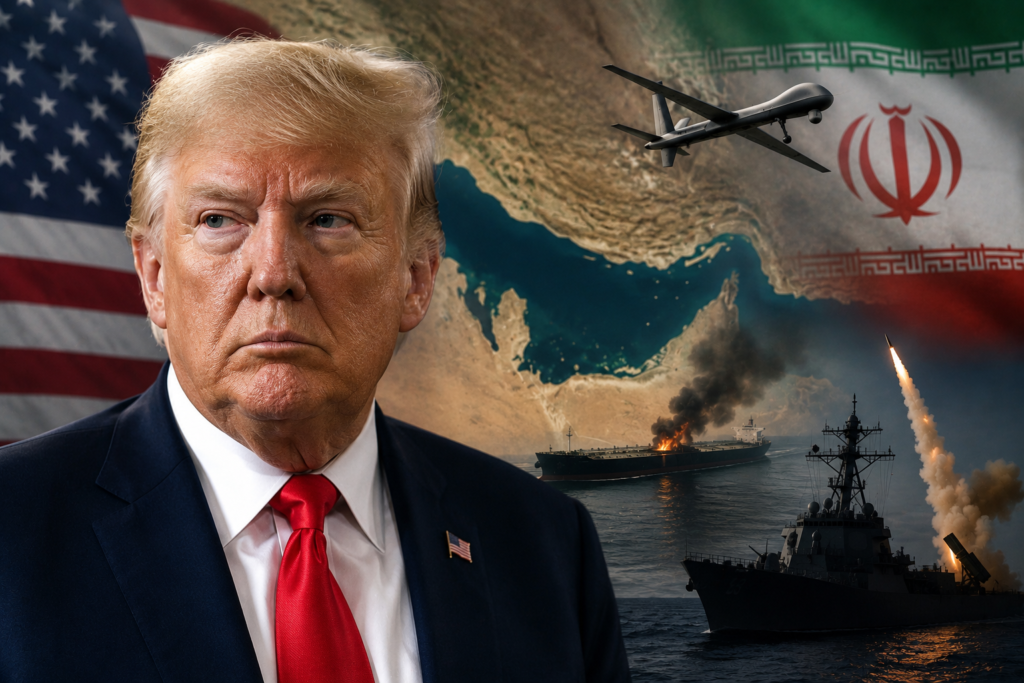
Image Credentials: Image Title: Trump Says He Is at the Top of Iran’s Assassination List as Tensions Escalate. Source: (chatgpt.com) Date: June 2026. Attribution: This image was created using AI-generated imagery (chatgpt.com) by Open Chronicle and does not depict a real-world scene.
By Open Chronicle with Agencies
U.S. President Donald Trump has declared that he believes he is the primary target of an Iranian assassination plot, underscoring the sharp deterioration in relations between Washington and Tehran as military and diplomatic tensions continue to rise across the Middle East.
Speaking amid the ongoing NATO Summit in Ankara and following a series of escalating confrontations between the United States and Iran, Trump said U.S. intelligence agencies remain fully aware of what he described as persistent threats from Tehran.
“I’m at the top of Iran’s assassination list,” the president said, adding that his administration is closely monitoring developments as regional instability continues to grow.
*President Trump:* 'Iran's leaders are gone. I may be gone soon too, because I'm their number one target.' pic.twitter.com/Z0cFaalucE
— יוני בן מנחם Yoni Ben Menachem (@BwMnhm) July 8, 2026
Heightened Security Concerns
Trump’s remarks come during one of the most volatile periods in U.S.- Iran relations in recent years. The latest escalation follows attacks on commercial shipping in the Strait of Hormuz, renewed U.S. military strikes against Iranian targets, and Iranian retaliatory operations against American military facilities in the Gulf region.
Although the president did not provide specific intelligence details, his comments suggest that security agencies continue to view threats against senior U.S. officials as a significant concern.
The White House has maintained enhanced security measures around the president amid ongoing assessments of risks linked to the deteriorating regional situation.
Washington Maintains Pressure on Tehran
In recent days, Trump has adopted increasingly forceful rhetoric toward Iran, warning that the United States possesses broad military and economic options should Tehran continue actions that threaten American interests or those of its allies.
The administration has repeatedly stated that it will not tolerate attacks against U.S. personnel, military installations or international maritime traffic.
At the same time, Washington continues to pursue diplomatic efforts aimed at reaching a broader agreement with Iran, despite the collapse of the recent ceasefire arrangement following renewed exchanges of military strikes.
U.S. officials insist negotiations remain possible, even as military deterrence and economic sanctions continue to play a central role in American policy.
Strait of Hormuz Remains a Flashpoint
The latest crisis has been fuelled by attacks on commercial vessels transiting the Strait of Hormuz, one of the world’s most strategically important maritime chokepoints through which roughly one fifth of global oil supplies normally pass.
The United States has accused Iran of threatening international shipping and undermining regional stability, allegations Tehran has either denied or rejected.
The renewed confrontation has also prompted concerns among Gulf states, NATO allies and international energy markets over the possibility of further disruptions to maritime trade.
International Concern Over Escalation
Political and security analysts say Trump’s comments reflect the seriousness of the current confrontation between Washington and Tehran.
While diplomatic channels remain open, observers warn that continued military exchanges and increasingly confrontational rhetoric could heighten the risk of a broader regional conflict involving multiple actors across the Middle East.
Governments throughout Europe and the Gulf continue to urge restraint, stressing the importance of preserving freedom of navigation, protecting civilian shipping and preventing the crisis from escalating into a wider war with global economic consequences.