
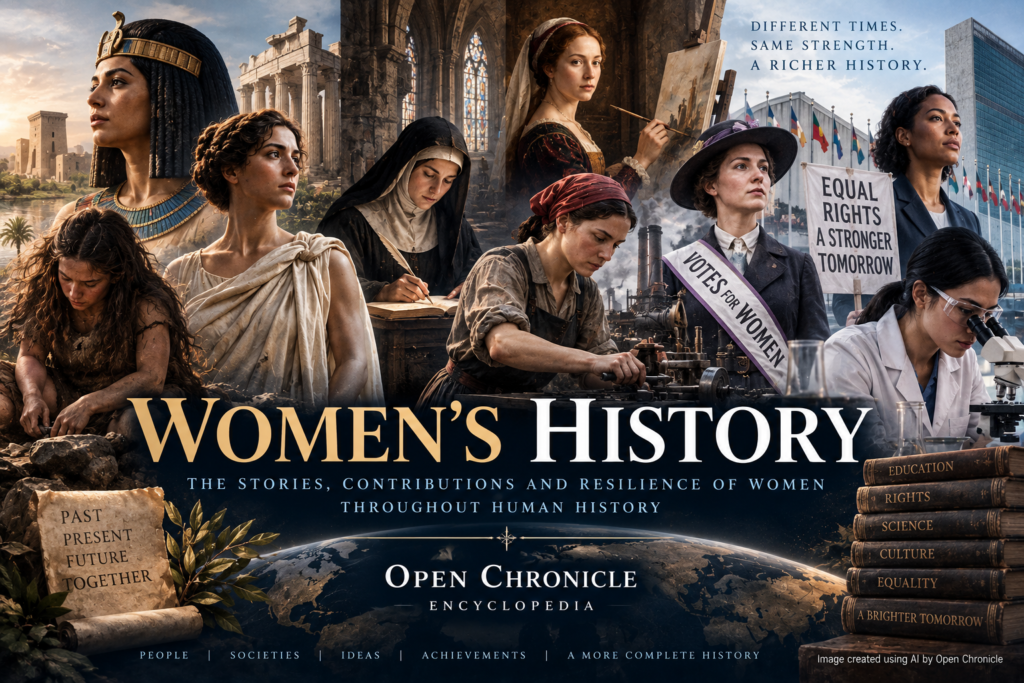
The study of women’s lives, experiences and contributions throughout human history
By Open Chronicle Encyclopedia
Women’s History
Women’s history is the branch of historical scholarship concerned with the experiences, activities, social positions and contributions of women throughout human history. It examines how women have participated in the development of societies, political institutions, economies, cultures, religions, scientific knowledge and intellectual traditions, while also investigating the historical conditions that have shaped their opportunities, rights and everyday lives.
The field encompasses the study of individual women, collective movements, family structures, labour, education, political participation, cultural expression and the changing relationships between women and men.
Women’s history also investigates how historical developments affected women differently according to their social class, geographical location, ethnicity, religion, age and other circumstances.
Although women have participated in every known human society, their experiences have not always received comparable attention in conventional historical narratives. Traditional histories frequently concentrated on rulers, military campaigns, diplomatic relations and political institutions, areas in which men often held formal positions of authority.
The development of women’s history as a distinct academic discipline sought to address these limitations by examining previously neglected historical evidence and reconsidering established interpretations of the past.
Today, women’s history is an established field of historical research, closely connected with social history, cultural history, gender history, economic history and the history of political and social movements.
Its purpose is not simply to identify prominent women who participated in major historical events. It also seeks to understand how women experienced historical change, how their activities influenced the societies in which they lived and how ideas about femininity, masculinity and gender shaped human institutions.
1. Overview
Quick Facts
| Field | History and historiography |
| Subject | Women’s lives, experiences, activities and historical contributions |
| Chronological scope | Prehistory to the present |
| Geographical scope | Global |
| Related disciplines | Gender history, social history, cultural history, feminist history and economic history |
| Principal sources | Written records, archaeological evidence, oral histories, material culture, personal correspondence and visual sources |
| Modern academic development | Particularly prominent from the 1960s and 1970s onward |
Women’s history operates on two interconnected levels.
The first concerns the reconstruction of women’s experiences in different historical periods. Researchers investigate what women did, how they lived, which opportunities were available to them and how their circumstances differed across societies.
The second concerns the historical construction of gender itself. Historians examine how societies defined women’s roles, how these definitions changed and how they influenced political authority, economic organisation, family relationships and cultural expectations.
These approaches allow women’s history to contribute to the understanding of historical processes extending far beyond the experiences of women alone.
For example, studying women’s agricultural labour can change interpretations of economic development. Examining marriage and inheritance practices can illuminate the distribution of property and political authority. Investigating women’s experiences during warfare can reveal dimensions of conflict that are not visible in conventional military histories.
The field therefore contributes to a broader understanding of how societies functioned and changed.
2. Historiography
2.1. Women’s representation in traditional history
Women appeared in historical writing long before women’s history emerged as a recognised academic discipline.
Ancient historians recorded the activities of queens, religious figures and women associated with political power. Medieval chronicles described female rulers, saints, noblewomen and influential members of religious communities.
However, these accounts generally concentrated on exceptional individuals rather than the experiences of women as a wider social group.
Women who worked in agriculture, domestic service, manufacturing, commerce and other occupations were less frequently documented as individuals.
Their activities were often recorded indirectly through taxation, legal proceedings, property transactions or household accounts.
The resulting historical record was uneven.
A queen might be extensively documented through official correspondence, while the lives of thousands of women living in the same society might survive only through scattered administrative records.
This imbalance created methodological difficulties for later historians seeking to reconstruct women’s experiences.
2.2. The emergence of modern women’s history
Women’s history developed into a more prominent academic field during the twentieth century, particularly from the 1960s onward.
Its expansion was closely connected with developments in social history, the growth of women’s studies and the influence of feminist scholarship.
Social historians increasingly investigated the experiences of ordinary people rather than concentrating exclusively on political and military elites.
At the same time, researchers began examining the historical foundations of women’s legal status, employment, education, family responsibilities and political participation.
Universities introduced courses devoted to women’s history, while specialist journals, research organisations and academic conferences helped establish the field.
In the United States and Britain, historians associated with social history and second wave feminism played an important role in this development.
2.3. Gerda Lerner and the development of the discipline
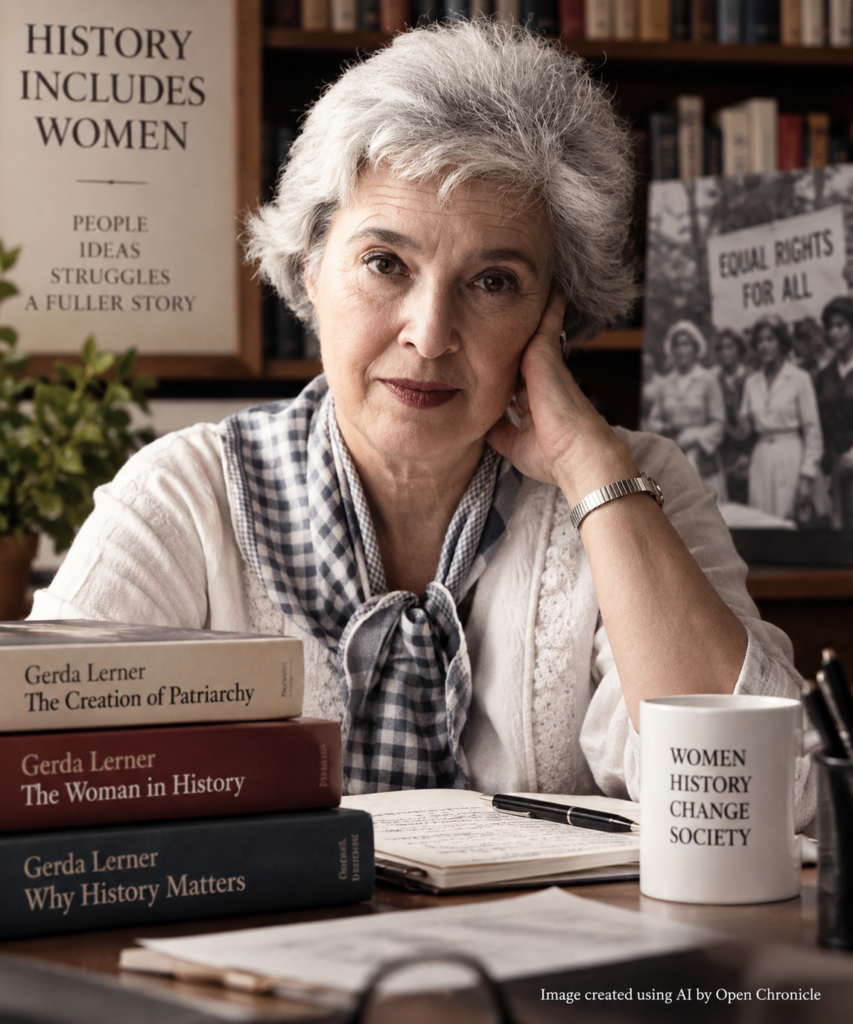
The historian Gerda Lerner was an influential figure in the institutional development of women’s history.
Her research examined women’s historical experiences and the development of patriarchal social structures. She argued that women should be studied as historical participants whose experiences were essential to understanding the development of human societies.
Lerner’s scholarship also investigated the historical origins of women’s subordination, including relationships between gender, property, slavery and the formation of states.
Her work helped establish women’s history as a subject of systematic historical investigation rather than a supplementary collection of biographies.
2.4. The development of gender history
During the 1980s, historians increasingly distinguished between women’s history and gender history.
Women’s history generally focuses on women’s experiences, while gender history examines the historical construction of gender categories and the relationships between them.
A significant contribution came from historian Joan Wallach Scott.
In her 1986 article, Gender: A Useful Category of Historical Analysis, Scott argued that gender could be used to investigate social relationships and the organisation of power.
Her approach encouraged historians to examine how ideas about masculinity and femininity influenced political institutions, economic systems, cultural traditions and social hierarchies.
Women’s history and gender history remain closely connected, although they are not identical disciplines.
3. Historical methods and sources
Reconstructing women’s history requires the examination of a wide variety of historical sources.
The availability of evidence differs considerably between periods, geographical regions and social groups.
Written records from political institutions, religious organisations and commercial enterprises frequently provide more information about women who belonged to wealthy or influential families than about those who lived in poverty.
Historians therefore combine different types of evidence to reconstruct women’s lives.
Written records
Legal documents, marriage contracts, wills, property registers, taxation records, correspondence and court proceedings can reveal women’s economic activities, family relationships and legal status.
Personal diaries and letters provide information about individual experiences, although their survival is often uneven and affected by literacy, wealth and archival preservation.
Archaeology and material culture
Archaeological evidence can illuminate women’s activities in societies that left limited written documentation.
Burial sites, domestic structures, agricultural equipment, clothing, jewellery, tools and other artefacts provide evidence of social organisation and everyday life.
However, identifying an individual’s sex or social role from archaeological remains requires careful interpretation. Objects traditionally associated with women or men do not necessarily demonstrate that all individuals followed the same social patterns.
Oral history
Oral history is particularly important for studying women whose experiences were not extensively recorded in official documents.
Interviews can preserve memories of employment, migration, political activism, family life, education and social change.
Oral testimony must be evaluated alongside other evidence, since memories may be affected by the passage of time and the circumstances in which interviews are conducted.
Visual and cultural sources
Paintings, photographs, films, literature, advertisements and other cultural materials reveal how women were represented in different societies.
These sources can also provide information about clothing, employment, social expectations and public participation.
Historians distinguish between representations of how women were expected to behave and evidence of how women actually lived.
4. Women’s History by Historical Period
4.1. Prehistory
The study of women in prehistoric societies depends primarily on archaeological and anthropological evidence.
Because written records do not exist for prehistoric periods, researchers examine human remains, burial practices, settlement patterns, tools and other material evidence.
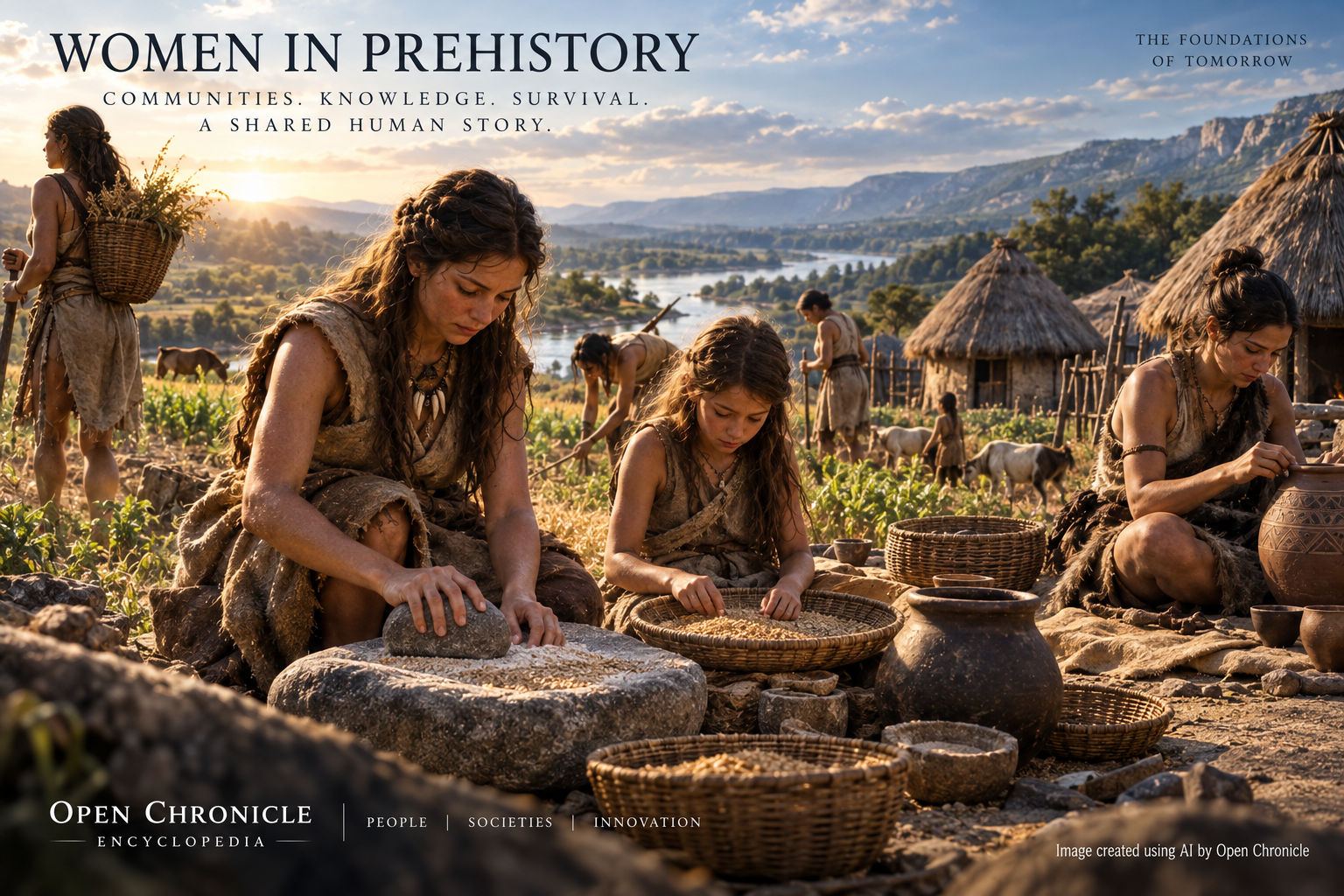
Women participated in the economic and social activities necessary for the survival of early human communities.
These activities included food acquisition, food processing, childcare, tool production and the transmission of practical knowledge.
The precise division of labour varied between societies and periods.
Traditional interpretations sometimes portrayed prehistoric men primarily as hunters and women primarily as gatherers or caregivers. More recent archaeological research has encouraged greater caution about treating these divisions as universal.
The development of agriculture
The emergence of agriculture transformed the organisation of human communities.
The cultivation of crops, domestication of animals and establishment of permanent settlements created new forms of labour and property management.
Women participated in agricultural production, food storage, textile manufacture and household economies.
The consequences of agricultural development for women’s social position varied across regions.
Some societies developed more pronounced divisions of labour and property ownership, while others maintained different forms of economic cooperation and kinship organisation.
There is no single prehistoric model that accurately describes the position of women across all early human societies.
4.2. Women in ancient civilisations
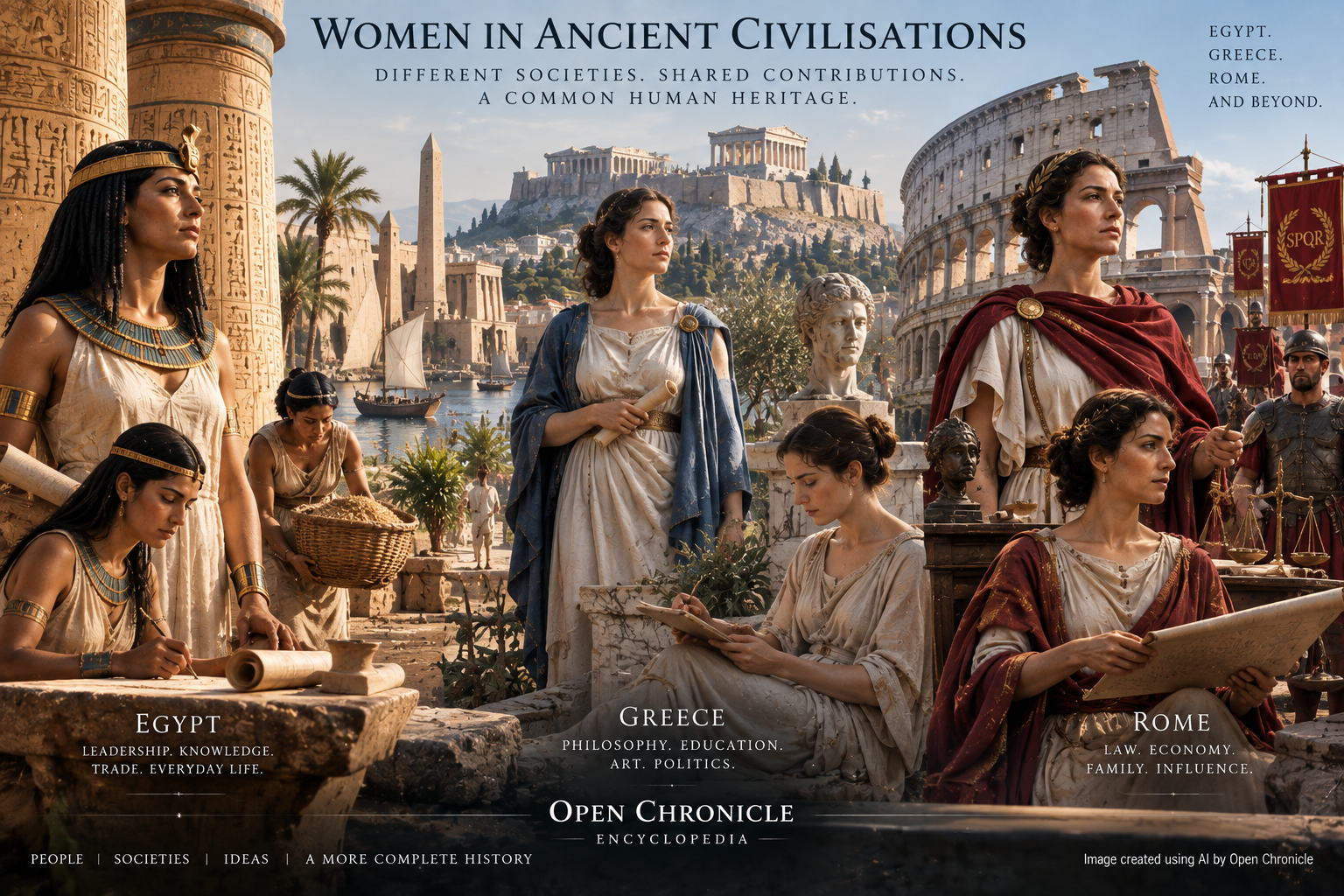
Ancient societies developed diverse systems governing women’s legal status, property rights, religious activities and political participation.
Women’s experiences differed according to wealth, citizenship, family position, occupation and local customs.
Ancient Egypt
Women in ancient Egypt could own property, enter contracts, inherit wealth and participate in legal proceedings.
They worked in agriculture, textile production, commerce, religious institutions and household management.
Although most political offices were held by men, some women exercised considerable political authority.
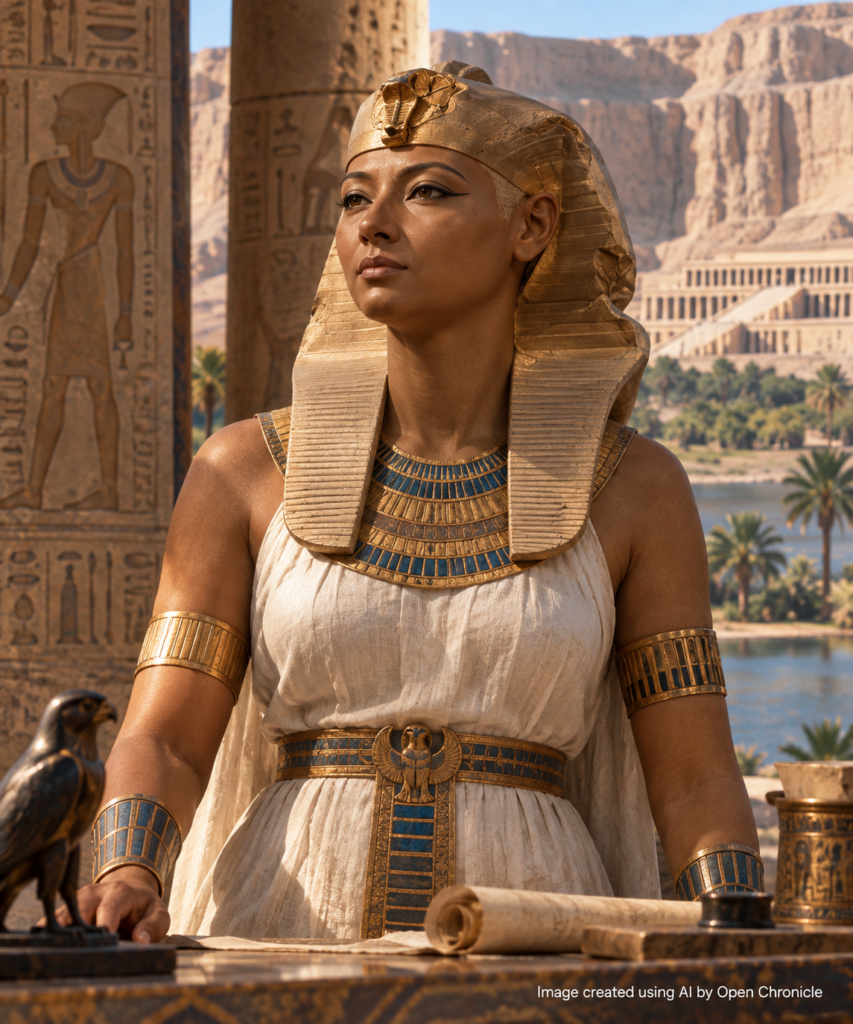
Hatshepsut ruled Egypt during the Eighteenth Dynasty and adopted the full titulary and ceremonial attributes of a pharaoh.
Her reign demonstrates that women could occupy the highest political office in ancient Egypt, although female pharaohs were uncommon.
Other prominent women included Nefertiti and Cleopatra VII, whose historical significance was connected with royal authority, diplomacy and the political development of Egypt.
Ancient Mesopotamia
Women’s status in ancient Mesopotamia varied between cities, kingdoms and historical periods.
Legal texts reveal that marriage, inheritance, divorce, property ownership and family obligations were regulated by written and customary laws.
Women participated in textile production, agriculture, trade and religious institutions.
Some held positions as priestesses or managed property and commercial activities.
The surviving legal evidence also demonstrates substantial differences in status between free women, enslaved women and members of elite households.
Ancient Greece
Women’s experiences in ancient Greece differed between city states.
In classical Athens, women were excluded from formal political participation and generally acted through male guardians in many legal matters.
Nevertheless, they participated in religious ceremonies, household management, economic activities and the social life of the city.
Spartan women occupied a different social position, with greater opportunities for physical education and property ownership than women in classical Athens.
These differences illustrate the importance of examining individual societies rather than treating ancient Greece as a single social system.
Ancient Rome
Roman women experienced changes in legal and economic status over the long history of the Roman state.
Freeborn women could own property under certain legal arrangements, inherit wealth and participate in economic activities.
Women from wealthy families could exercise influence through family networks, patronage and political relationships.
However, Roman women did not possess the same formal political rights as male citizens.
The experiences of enslaved women were fundamentally different from those of freeborn women, particularly regarding personal autonomy, labour and family relationships.
4.3. Women in Asia
Women’s history in Asia encompasses an exceptionally wide range of societies, religious traditions and political systems.
The experiences of women in China, India, Japan, Korea, Southeast Asia and Central Asia cannot be reduced to a single historical pattern.
China
In imperial China, women’s social position was influenced by family structures, Confucian traditions, economic conditions and dynastic institutions.
Women participated in agriculture, textile production, commerce, education and literary culture.
Family expectations frequently emphasised marriage, motherhood and relationships within extended households.
However, women’s experiences differed significantly according to class, region and historical period.
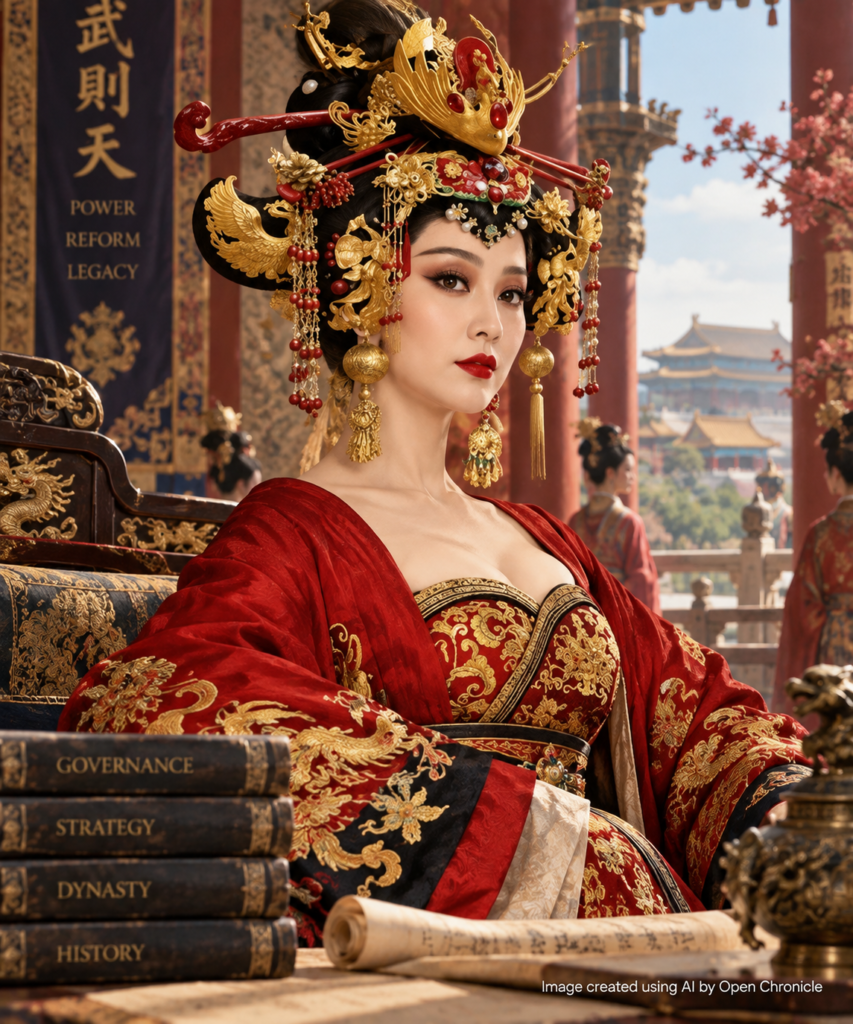
Wu Zetian became the only woman in Chinese imperial history to rule under the title of emperor in her own right.
Her reign during the Zhou dynasty she established illustrates the exceptional circumstances in which a woman could exercise supreme imperial authority.
Other important figures include the historian and scholar Ban Zhao, whose writings provide evidence of women’s intellectual participation and the social expectations of the Han period.
India
Women’s history in the Indian subcontinent reflects the diversity of its religious, linguistic, regional and political traditions.
Women participated in agricultural production, commerce, religious life, literature and political administration.
Their legal and social positions varied across historical periods and communities.
Some women exercised authority as rulers, military leaders and religious figures.
The development of women’s education and reform movements during the nineteenth and twentieth centuries became important components of modern Indian history.
Japan
Japanese women’s experiences changed substantially across the country’s historical periods.
During the Heian period, aristocratic women contributed significantly to literary culture.
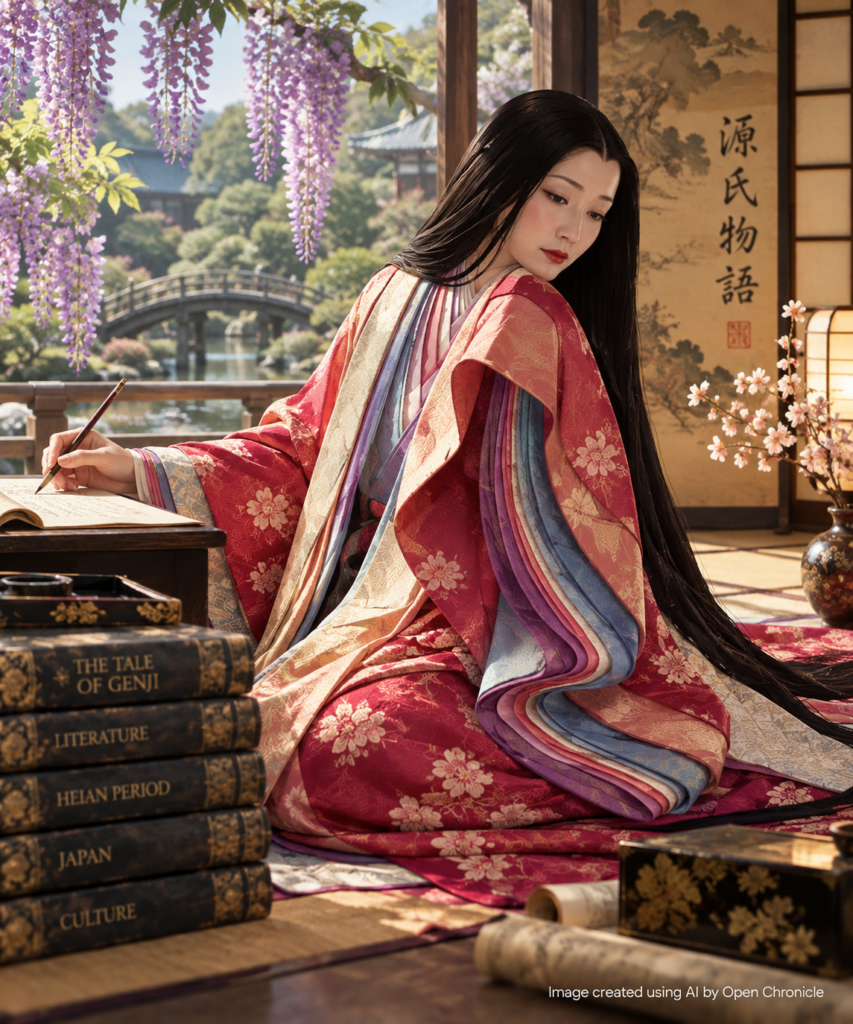
Murasaki Shikibu, a court lady of the Heian period, is traditionally credited with writing The Tale of Genji, one of the most celebrated works of classical Japanese literature.
Her work provides valuable evidence of court culture, social relationships and literary expression.
In later periods, women’s roles were shaped by changing political institutions, family structures and economic developments.
Industrialisation during the nineteenth and twentieth centuries created new employment opportunities while also introducing demanding factory working conditions.
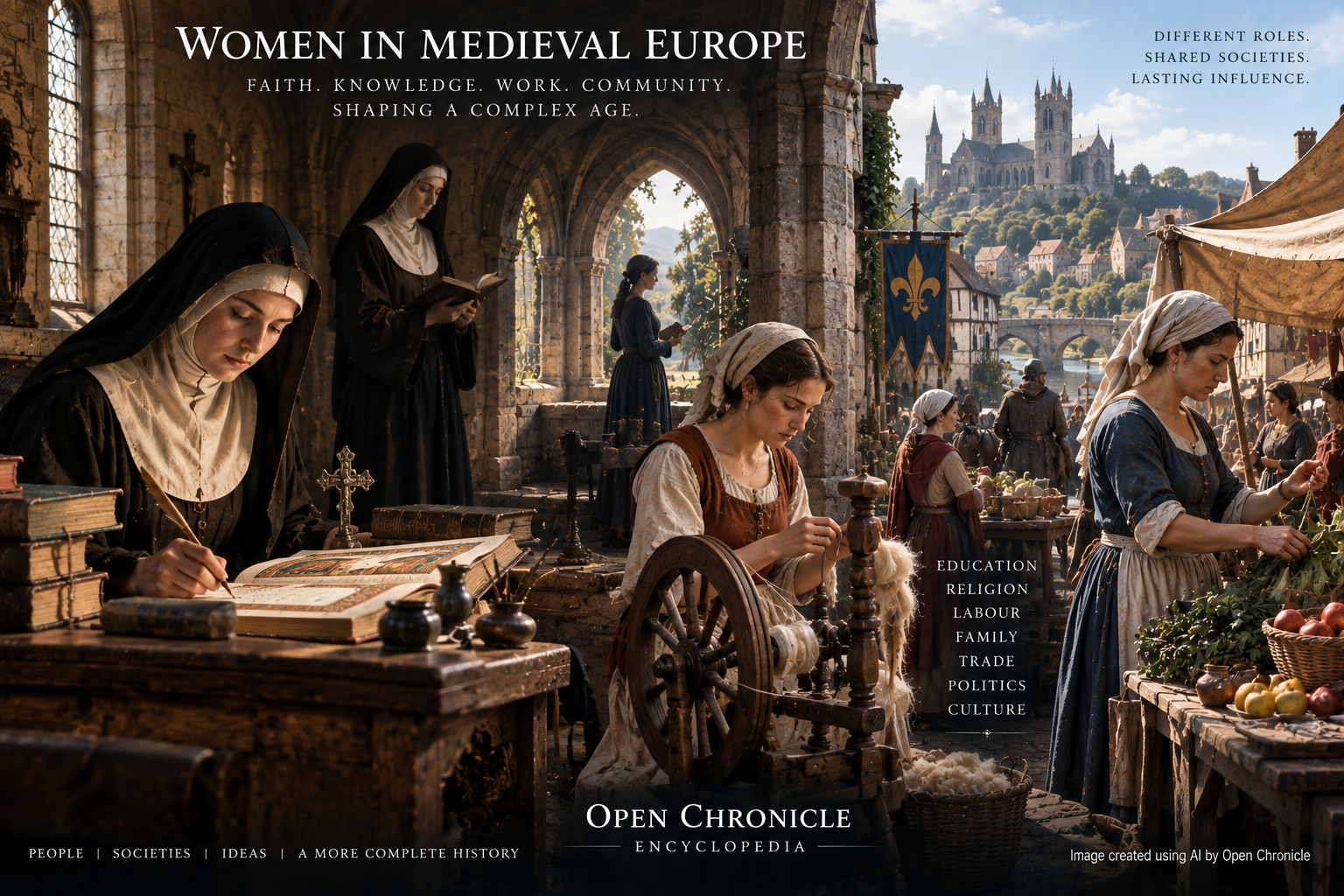
4.4. Women in medieval Europe
Women’s lives in medieval Europe were shaped by feudal institutions, religious traditions, local customs and economic circumstances.
Most women lived in rural communities and participated in agricultural production, food preparation, textile manufacture and household management.
Women in towns worked in trade, craft production, domestic service and other occupations.
Their legal rights and economic opportunities varied between regions and periods.
Religious institutions
Convents provided some women with opportunities for education, administration, intellectual activity and religious leadership.
Women could become abbesses and exercise authority over religious communities and their property.
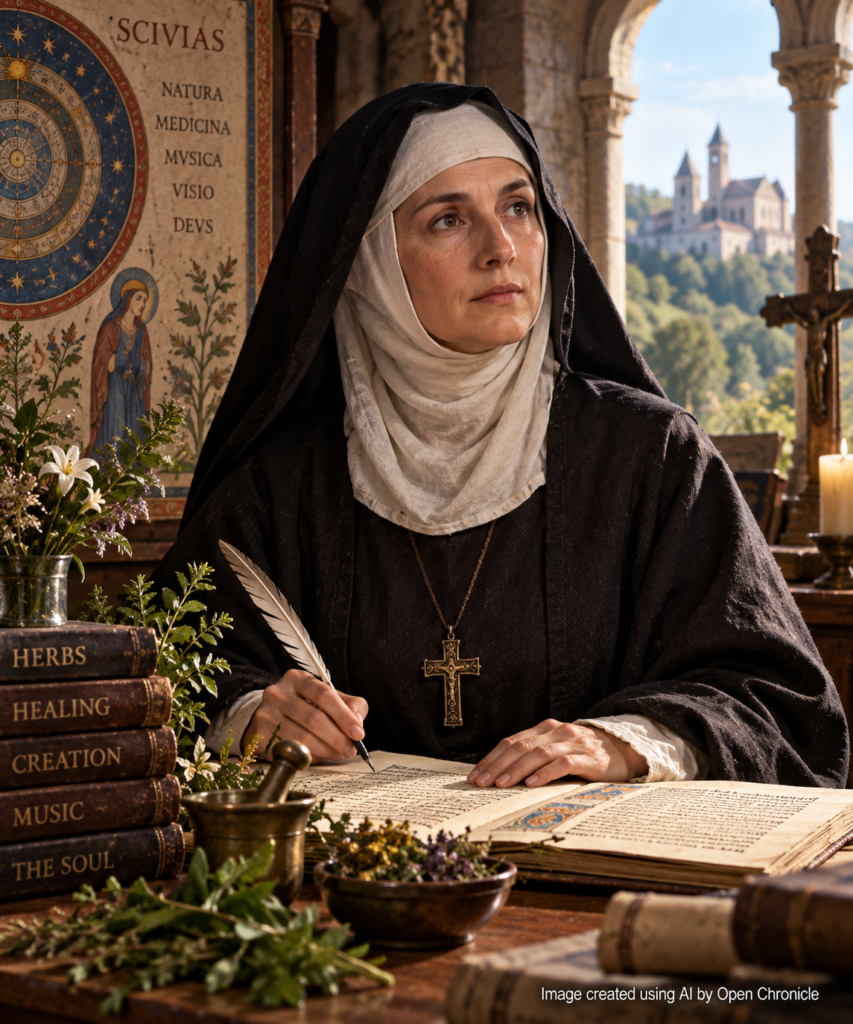
Hildegard was a Benedictine abbess, writer, composer and religious thinker.
Her surviving works include theological writings, musical compositions and texts concerning the natural world.
Political authority
Women from ruling families could exercise political power as queens, regents and territorial rulers.
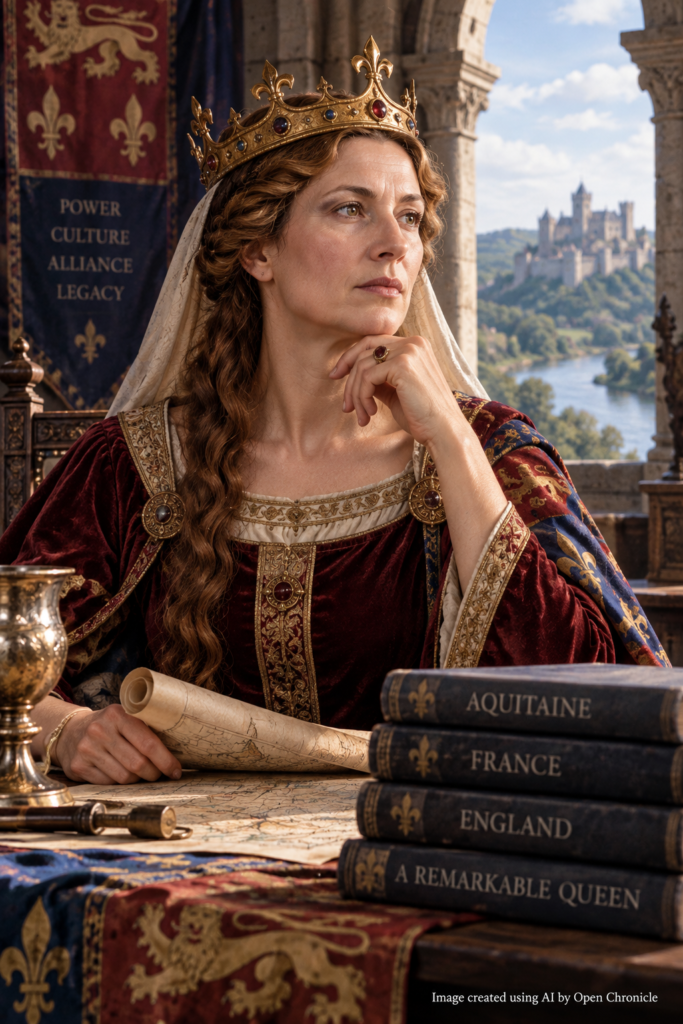
Eleanor of Aquitaine was queen consort of both France and England and played an important role in the dynastic politics of the twelfth century.
Other women exercised authority through inheritance, marriage alliances and regency arrangements.
Nevertheless, formal political power remained concentrated among a relatively small proportion of the population, and most women did not have access to these positions.
4.5. Women in Africa
African women’s history encompasses a wide range of political systems, economic structures and cultural traditions.
Women participated in agricultural production, trade, religious institutions, family networks and political administration.
In some societies, women held formal positions of political authority or exercised influence through specialised institutions.
Women in political leadership
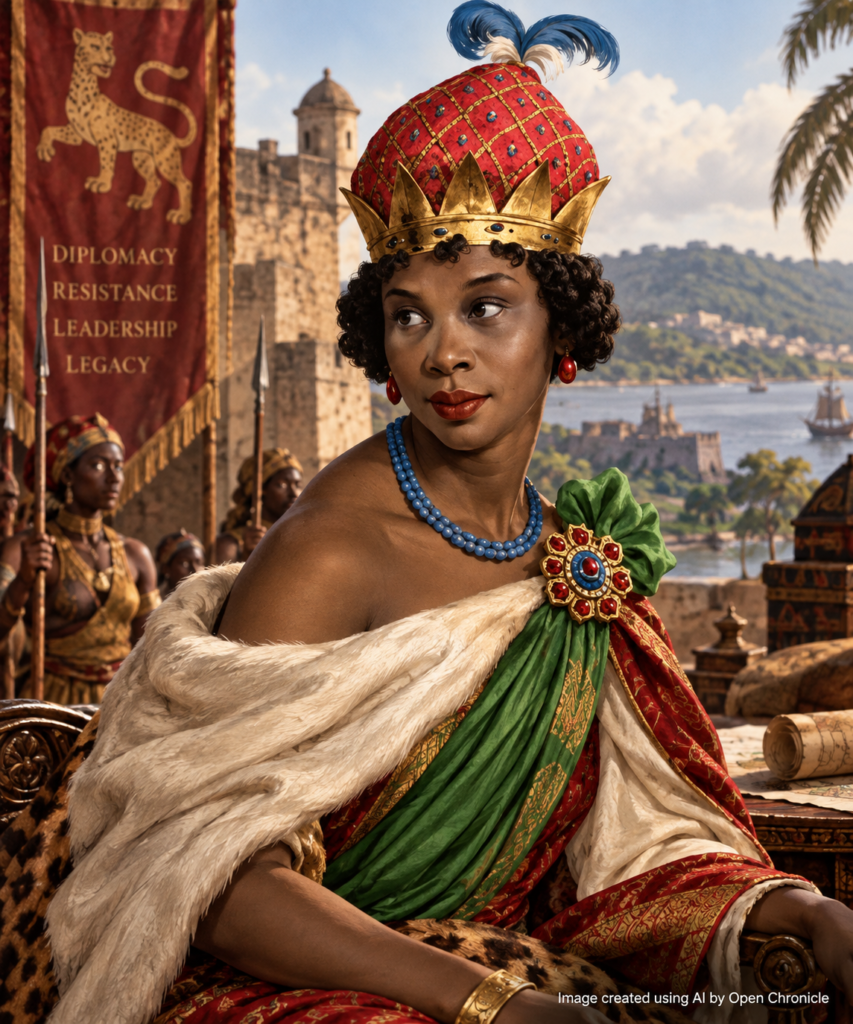
Nzinga ruled Ndongo and Matamba in Central Africa and became an important figure in the region’s seventeenth century political and military history.
Her reign involved diplomacy, warfare and resistance to Portuguese expansion.
Other examples include women who held political authority in the Kingdom of Kongo, the Kingdom of Dahomey and various West African societies.
Trade and economic activity
Women played important roles in local and regional commerce.
In parts of West Africa, female traders developed commercial networks connecting agricultural producers, markets and urban centres.
Women’s economic activities were also shaped by colonial rule, changes in taxation and the expansion of export agriculture.
Colonialism and social change
European colonial expansion transformed many African societies.
Colonial administrations frequently introduced new legal systems, labour policies and forms of political authority.
These changes affected women’s access to land, economic independence and participation in local governance.
Women’s responses included adaptation, commercial activity, community organisation and participation in anticolonial movements.
4.6. Women in the Americas
Women’s history in the Americas includes the experiences of Indigenous peoples, European settlers, enslaved Africans and their descendants, and later migrant communities.
The historical position of women varied considerably between societies.
Indigenous women
Indigenous societies developed diverse systems of kinship, property ownership, political authority and labour organisation.
In some communities, women held important roles in agricultural production, the distribution of resources and the selection of political leaders.
The impact of European colonisation differed between regions but frequently involved demographic disruption, changes in land ownership, forced labour and the introduction of new legal and religious institutions.
Colonial societies
Women in colonial societies participated in household economies, agriculture, commerce, religious life and community organisation.
Their legal status often depended on marital position, social class, ancestry and whether they were free or enslaved.
Enslaved women experienced coercive labour, restrictions on personal autonomy and the vulnerability of family relationships under slavery.
Women’s history therefore examines colonial society through the interconnected histories of gender, race, labour and political authority.
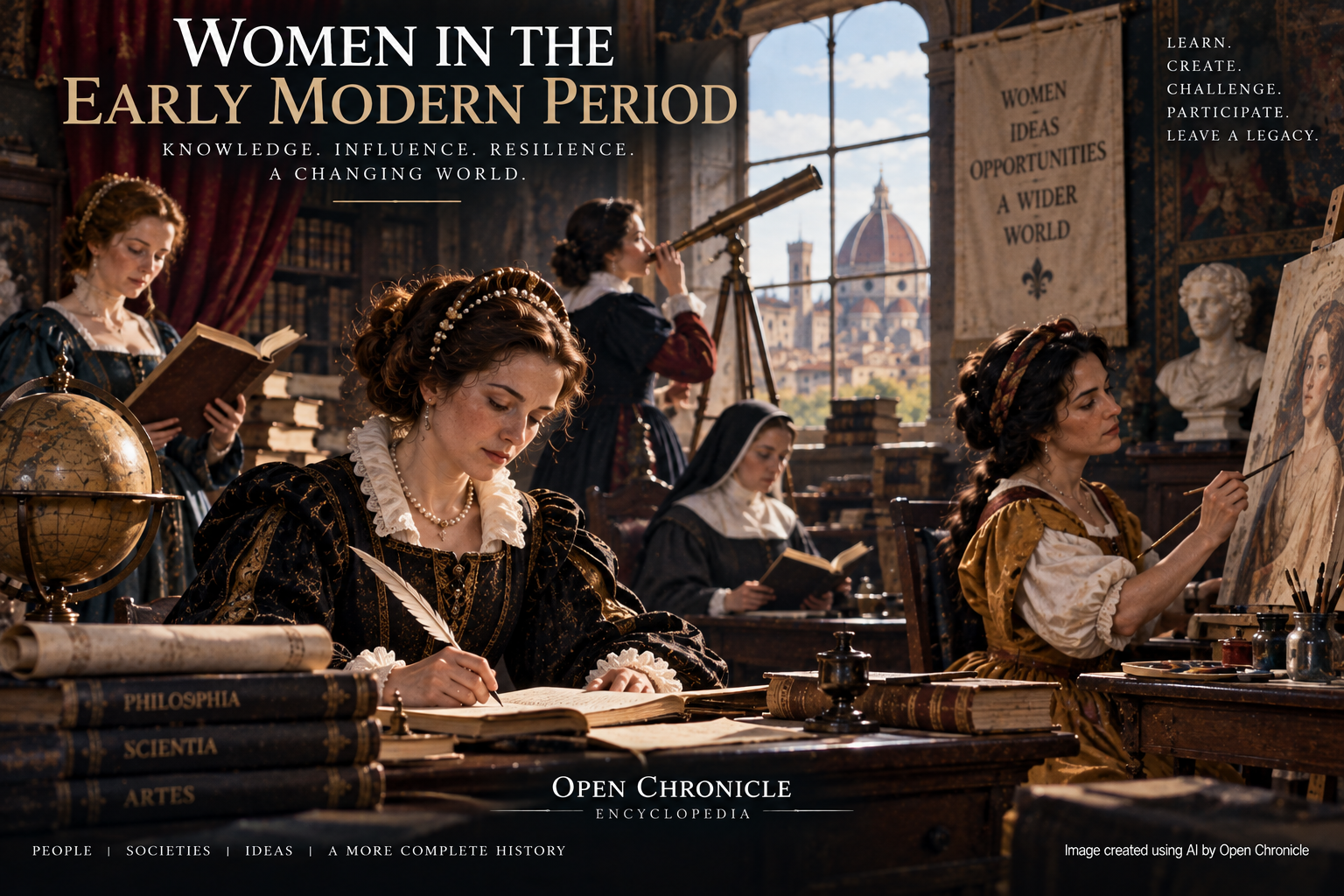
5. Women in the Early Modern Period
The early modern period, conventionally extending from approximately the fifteenth to the eighteenth century in European history, witnessed important changes in political institutions, religious life, commerce and intellectual culture.
Women participated in these developments, although their opportunities were often constrained by legal and social expectations.
5.1. Renaissance and intellectual culture
Women from wealthy and educated families sometimes received instruction in literature, languages, philosophy and the arts.
Some became writers, patrons, artists and scholars.
However, access to formal education and intellectual institutions remained limited for much of the female population.
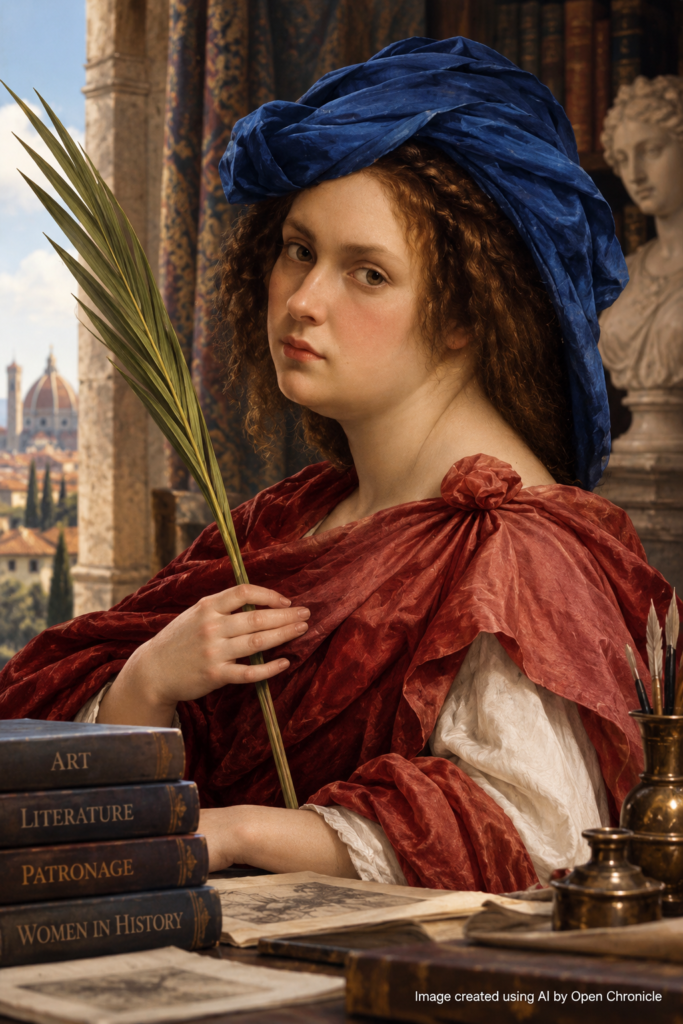
Artemisia Gentileschi, a seventeenth century Italian painter, became one of the most prominent women artists of the Baroque period.
Her career demonstrates both women’s participation in professional artistic culture and the institutional obstacles that could affect their work.
5.2. Religious reform
The Protestant Reformation and Catholic Reformation transformed religious institutions and family life across Europe.
These changes affected women’s participation in religious communities, education and charitable activities.
The dissolution of convents in some Protestant territories reduced certain forms of institutional religious life available to women.
Elsewhere, new religious communities and educational initiatives created different opportunities.
Women also participated in religious controversy, publishing and reform movements.
5.3. Women and scientific knowledge
Women contributed to scientific investigation despite limited access to universities and learned societies.
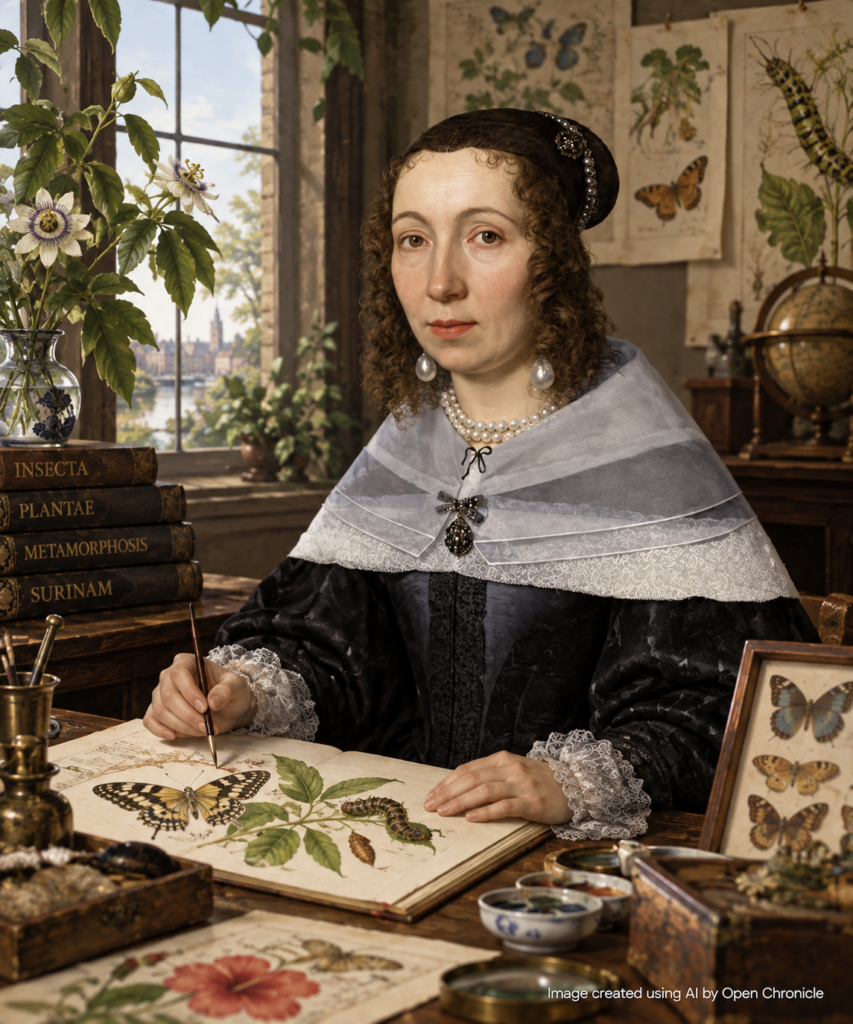
Merian was a naturalist and scientific illustrator whose studies of insects and their life cycles contributed to early modern natural history.
Her observations challenged misconceptions about insect development and demonstrated the value of detailed empirical investigation.
Other women participated in astronomy, mathematics, medicine and natural philosophy through family networks, private education and collaboration with established scholars.
6. Women and the Industrial Revolution
Industrialisation transformed women’s employment, family relationships and economic opportunities.
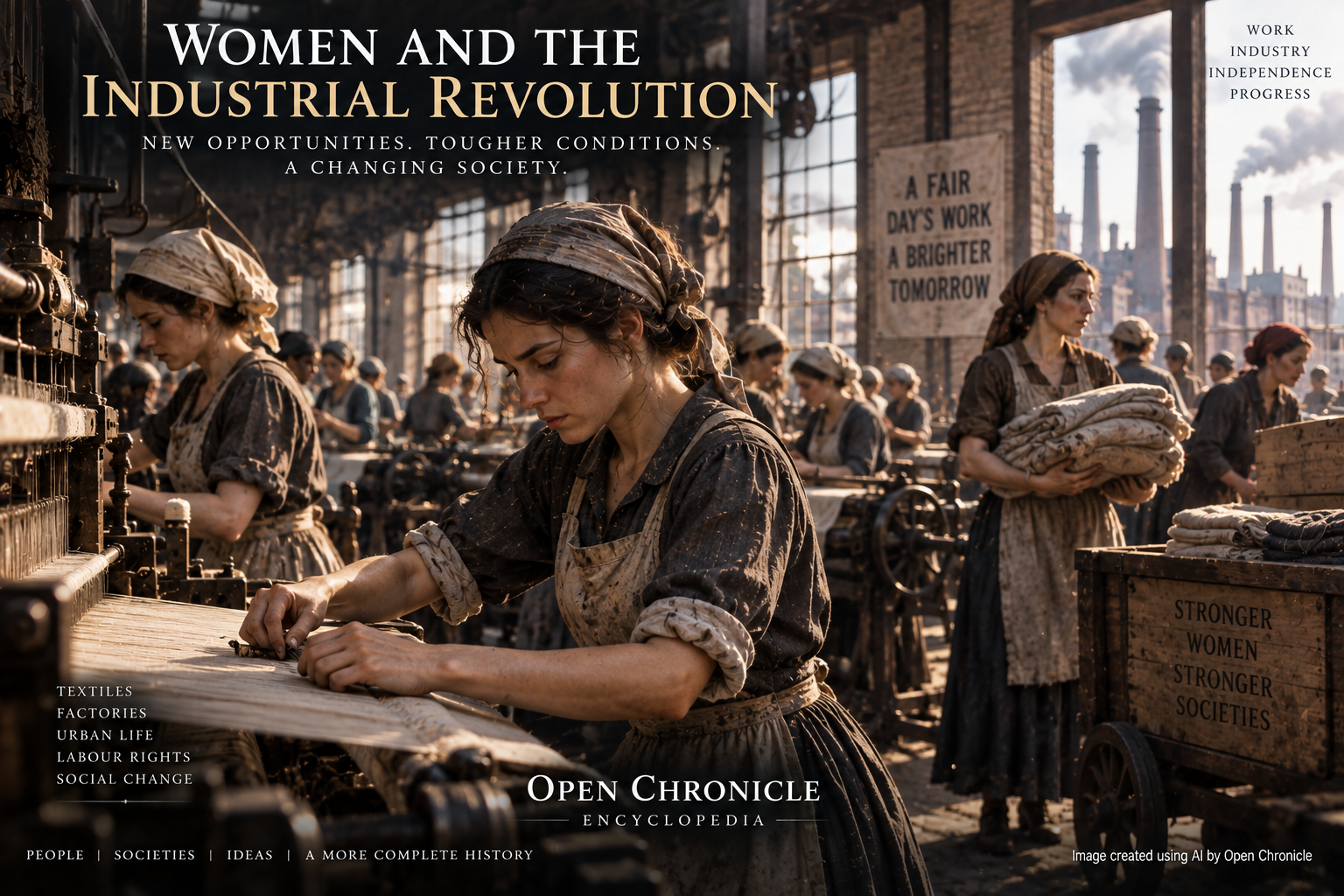
The development of mechanised manufacturing created new forms of paid labour outside the household, particularly in textile production, clothing manufacture and domestic service.
However, industrialisation did not mark the beginning of women’s economic activity.
Women had long participated in agricultural production, craft manufacturing, trade and family businesses.
The Industrial Revolution changed the organisation, location and conditions of much of this work.
6.1. Factory labour
Women and girls formed an important part of the industrial workforce in several nineteenth century manufacturing economies.
Textile factories employed large numbers of female workers.
Working conditions could involve long hours, low wages, industrial accidents and limited employment protection.
Women’s wages were frequently lower than those of men, although pay structures differed between industries and occupations.
Industrial employment also created opportunities for women to earn wages and participate in emerging labour organisations.
6.2. Domestic service
Domestic service remained a major source of employment for women throughout the nineteenth century.
Servants worked in private households as cooks, cleaners, nurses, governesses and general domestic workers.
Employment conditions varied according to the size and wealth of the household, the worker’s duties and local labour markets.
Domestic service was particularly important for young women migrating from rural areas to towns and cities.
6.3. Labour movements
Women participated in strikes, trade unions and campaigns for improved working conditions.
Their demands included shorter working hours, better wages, safer workplaces and protection against exploitation.
Female workers also established organisations specifically concerned with women’s employment and economic rights.
The history of women’s labour movements is closely connected with the broader development of industrial society and modern social legislation.
7. Women’s Education
Education has been one of the central subjects of women’s history.
Throughout much of recorded history, access to formal education was strongly influenced by gender, wealth, social position and religious institutions.
Women could receive education through families, religious communities, private tutors and specialised schools, but opportunities for advanced study were often limited.
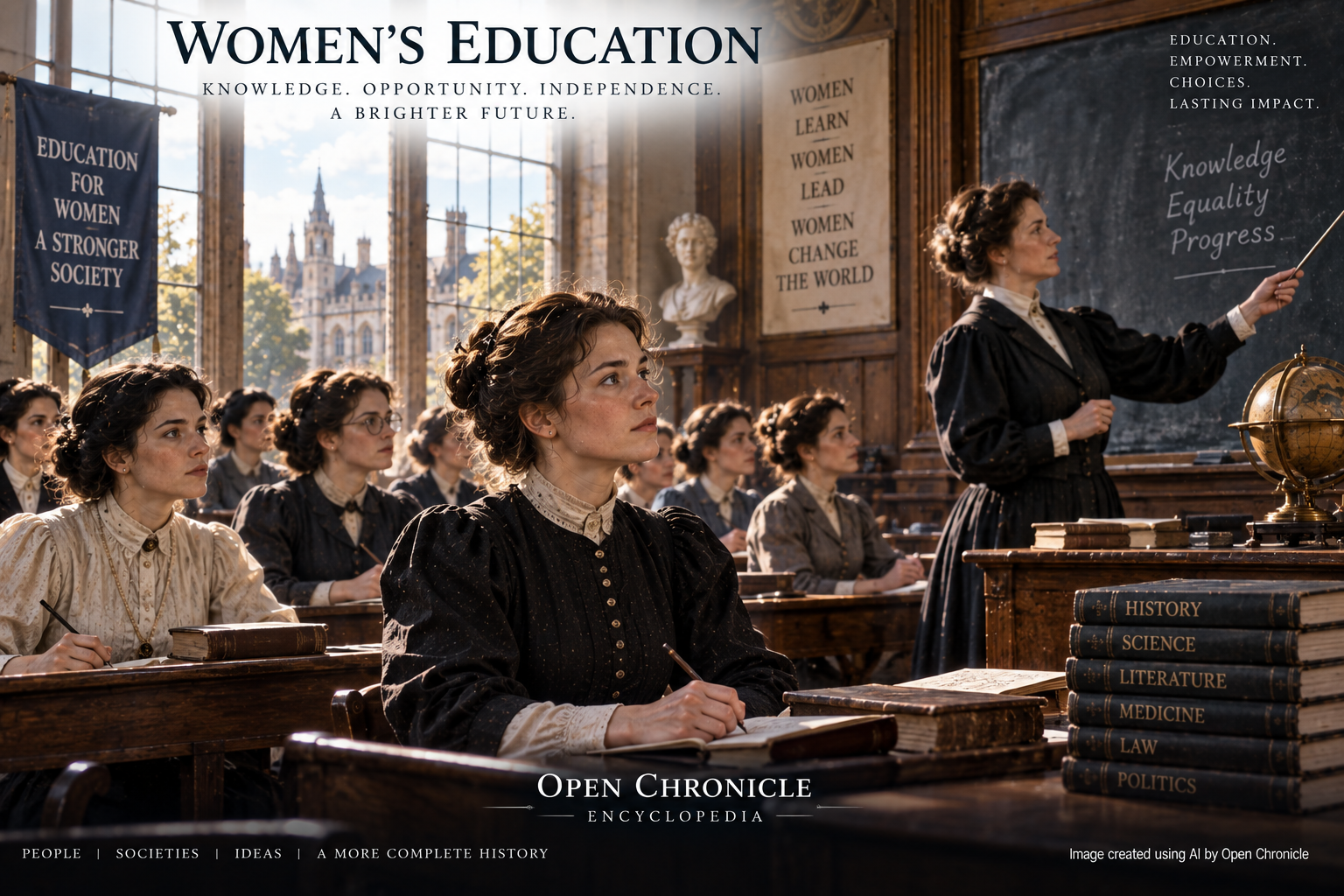
The expansion of public education and the establishment of institutions admitting female students transformed these circumstances.
7.1. Early educational opportunities
In ancient and medieval societies, some women received instruction in reading, writing, religious studies and practical subjects.
Women from elite families sometimes obtained extensive literary and intellectual education.
Religious institutions also provided educational opportunities in certain historical settings.
However, these experiences were not representative of the female population as a whole.
7.2. Women’s colleges and universities
During the eighteenth and nineteenth centuries, educational reformers established schools and colleges intended to expand women’s access to learning.
The admission of women to universities developed unevenly across countries.
Some institutions introduced separate colleges, while others gradually opened existing courses and qualifications to female students.
During the twentieth century, women’s participation in higher education expanded substantially in many parts of the world.
7.3. Education and professional employment
Access to higher education enabled more women to enter professions such as medicine, law, teaching, scientific research and public administration.
Nevertheless, formal admission to educational institutions did not always guarantee equal employment opportunities.
Professional associations, licensing systems and workplace practices could continue to restrict women’s participation.
The history of women’s education therefore includes both the expansion of access and the gradual transformation of professional institutions.
8. Women’s Rights and Political Participation
The history of women’s political rights encompasses changes in citizenship, voting rights, property ownership, legal status and access to public office.
These developments occurred at different times and through different processes across the world.
Women’s political participation also existed before the introduction of universal suffrage.
Women participated in petitions, religious movements, community organisations, public demonstrations, political correspondence and campaigns for legal reform.
8.1. Early demands for equality
During the eighteenth century, Enlightenment debates concerning natural rights and political representation encouraged new discussions about women’s legal and political status.
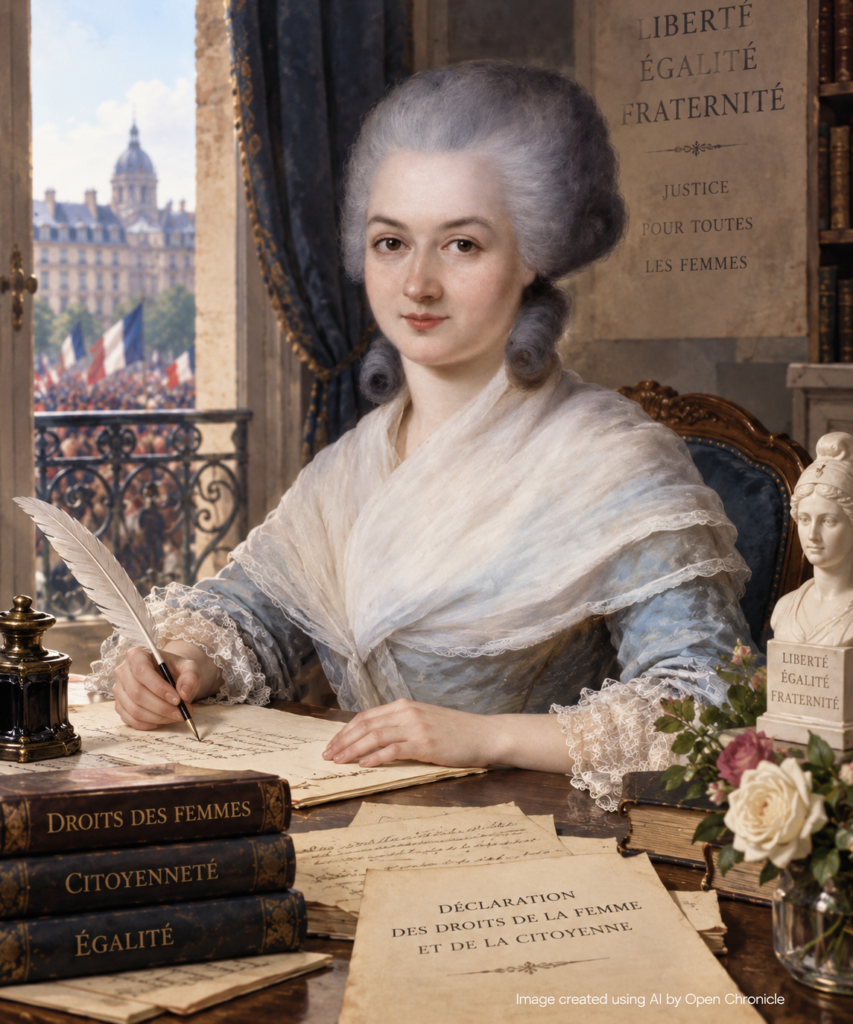
The French writer and political activist published the Declaration of the Rights of Woman and of the Female Citizen in 1791.
The document challenged the exclusion of women from the political rights proclaimed during the French Revolution.
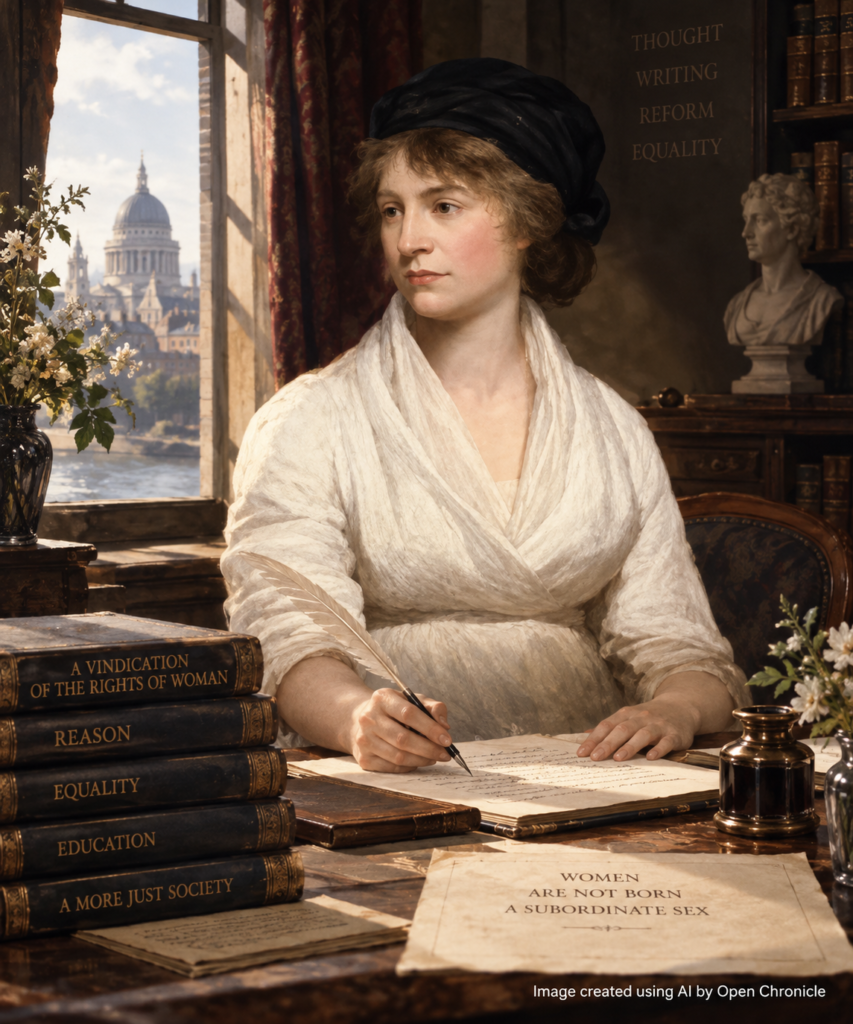
Wollstonecraft published A Vindication of the Rights of Woman in 1792.
Her work argued for women’s education and challenged assumptions that women’s intellectual capacities justified their exclusion from public life.
These writings became important reference points in the intellectual history of women’s rights.
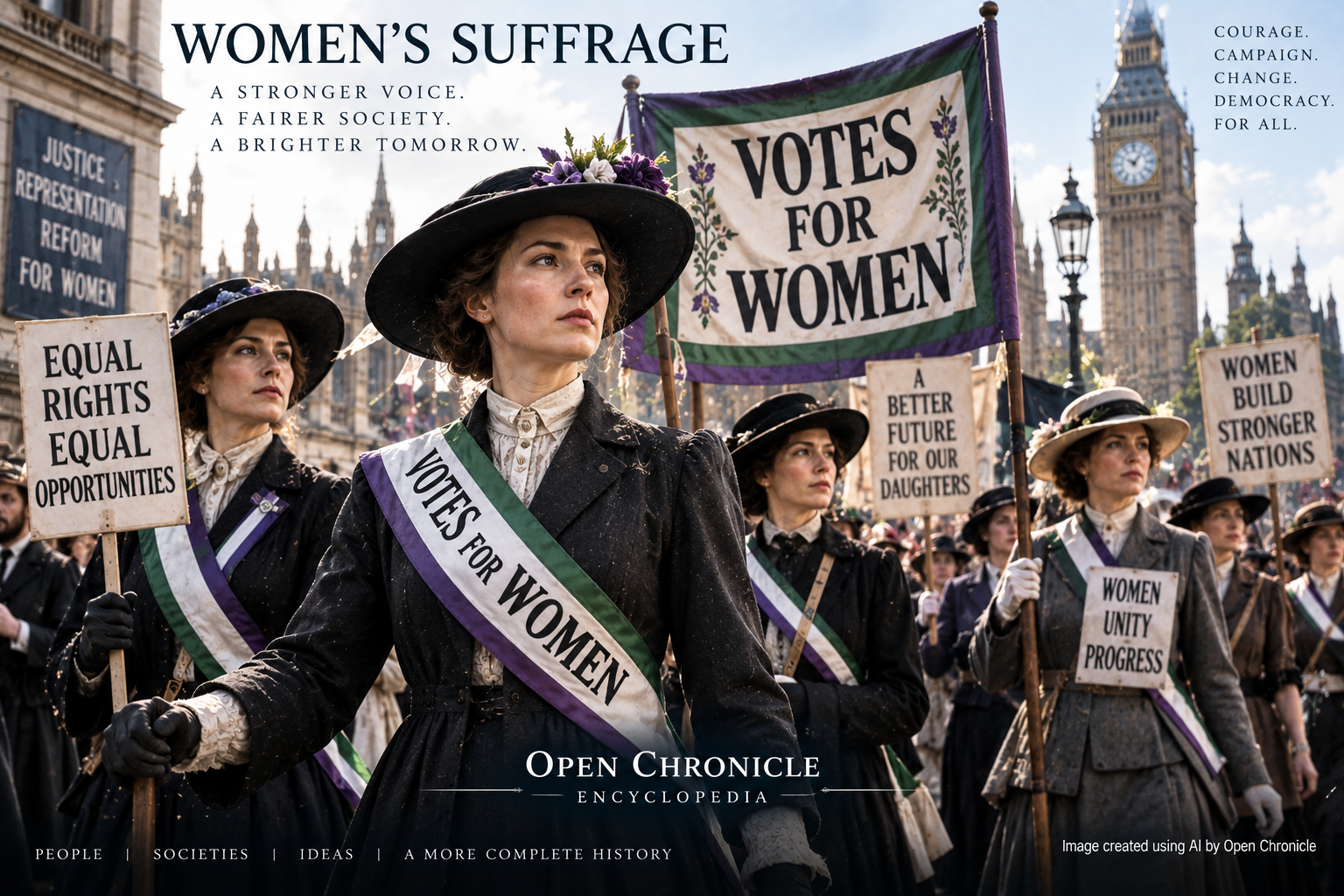
8.2. Women’s suffrage
The women’s suffrage movement sought to extend voting rights to women.
Organised campaigns developed during the nineteenth and early twentieth centuries, particularly in Europe, North America and parts of the British Empire.
Campaigners used petitions, public meetings, publications, demonstrations and other forms of political organisation.
In some countries, suffrage organisations pursued constitutional and legislative reform.
In others, campaigners employed civil disobedience and direct action.
Selected milestones in women’s suffrage
-
1893 | New Zealand
New Zealand grants women the right to vote in parliamentary elections, becoming the first self governing country to introduce nationwide women’s parliamentary suffrage.
-
1906 | Finland
Finland introduces universal and equal parliamentary suffrage and eligibility for election for women and men.
-
1918 | United Kingdom
The Representation of the People Act grants parliamentary voting rights to women aged 30 and over who meet specified qualifications.
-
1920 | United States
Ratification of the Nineteenth Amendment prohibits denying voting rights on the basis of sex. Racially discriminatory laws and practices continue to obstruct voting by many women.
-
1928 | United Kingdom
Women obtain parliamentary voting rights on the same age terms as men.
-
1932 | Brazil
Electoral reforms establish women’s suffrage, subject initially to qualifications and the broader restrictions of the electoral system.
-
1944 | France
Women receive the right to vote and stand for election.
-
1971 | Switzerland
Women obtain voting rights in federal elections.
-
1976 | Portugal
The democratic Constitution establishes equal political rights following the 1974 revolution and the expansion of women’s suffrage in 1975.
Selected national milestones. Local, colonial and regional voting rights often followed different timelines.
The extension of suffrage did not immediately eliminate inequalities in political representation.
Women continued to encounter barriers to candidacy, party leadership, public office and political participation.
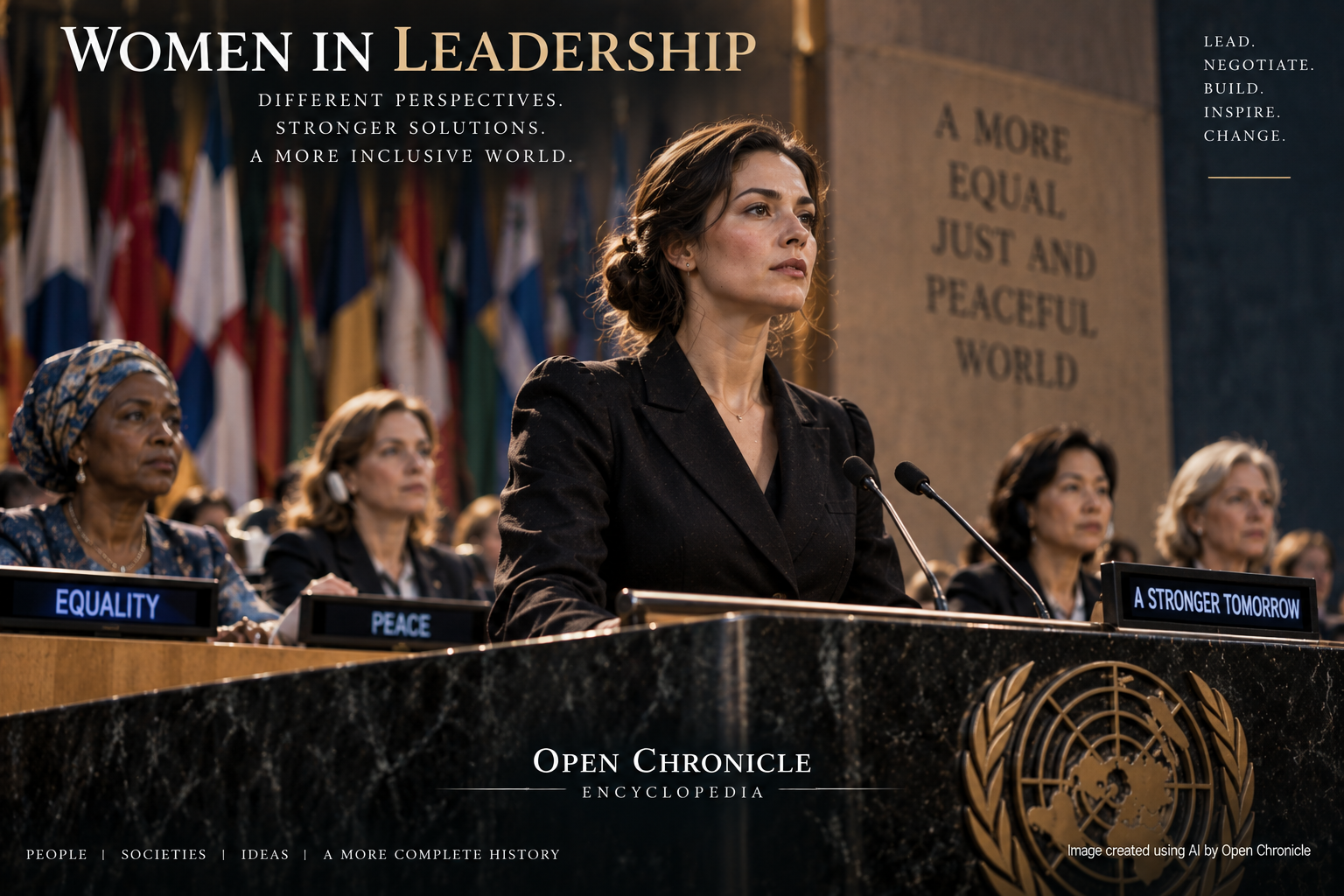
8.3. Women in government
During the twentieth century, women increasingly entered national legislatures, ministerial positions and executive offices.
Sirimavo Bandaranaike became prime minister of Ceylon, now Sri Lanka, in 1960, becoming the first woman to serve as a prime minister in the modern world.
Other prominent female heads of government included Indira Gandhi, Golda Meir and Margaret Thatcher.
The historical study of women in government examines not only individual leaders but also the institutions, social movements and legal reforms that influenced women’s political participation.
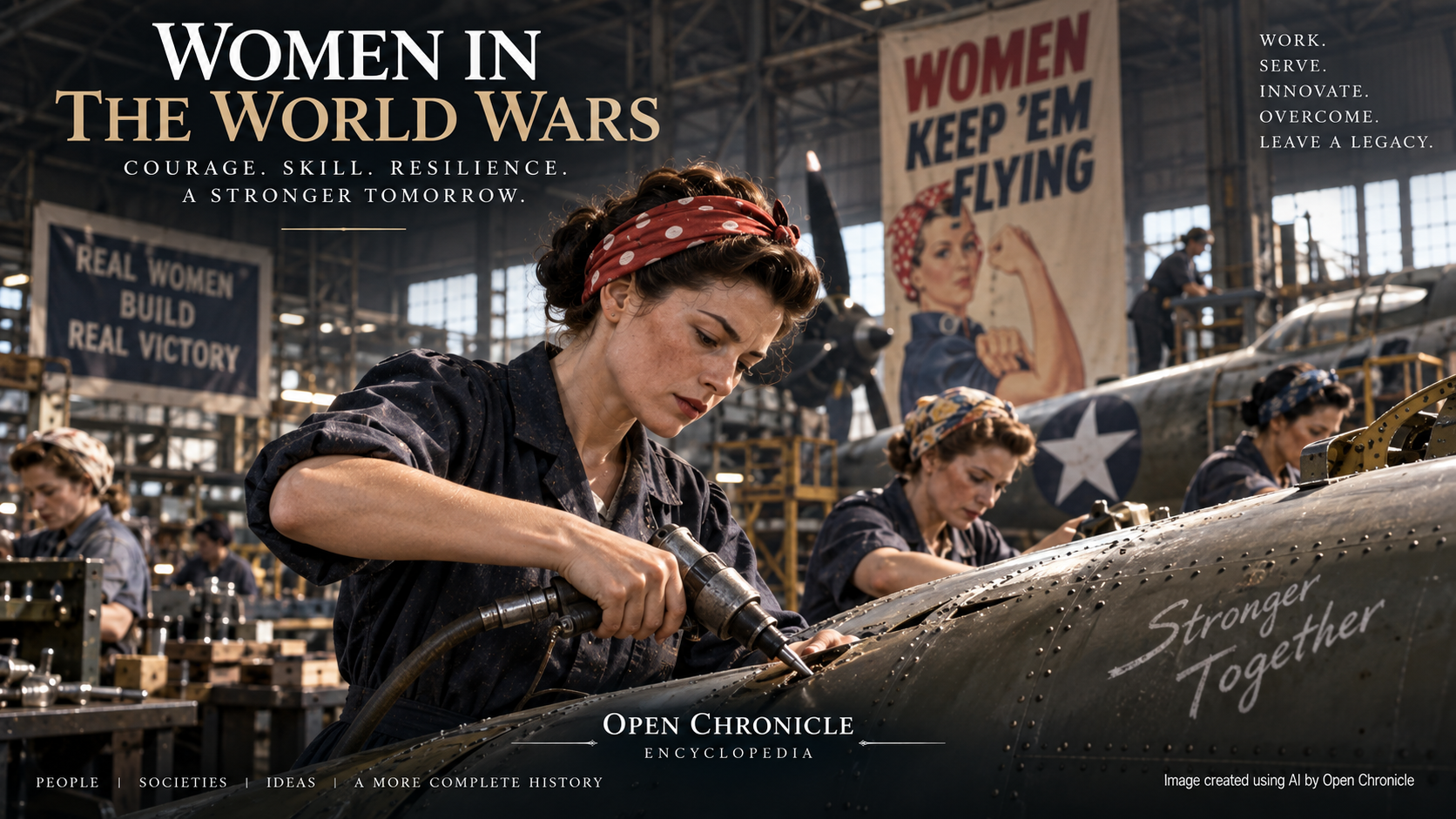
9. Women in the World Wars
The two world wars transformed women’s employment, family responsibilities and participation in military and civilian institutions.
Women worked in agriculture, manufacturing, transport, communications, nursing, administration and other essential occupations.
Many also participated directly in military organisations, resistance movements and intelligence operations.
9.1. First World War
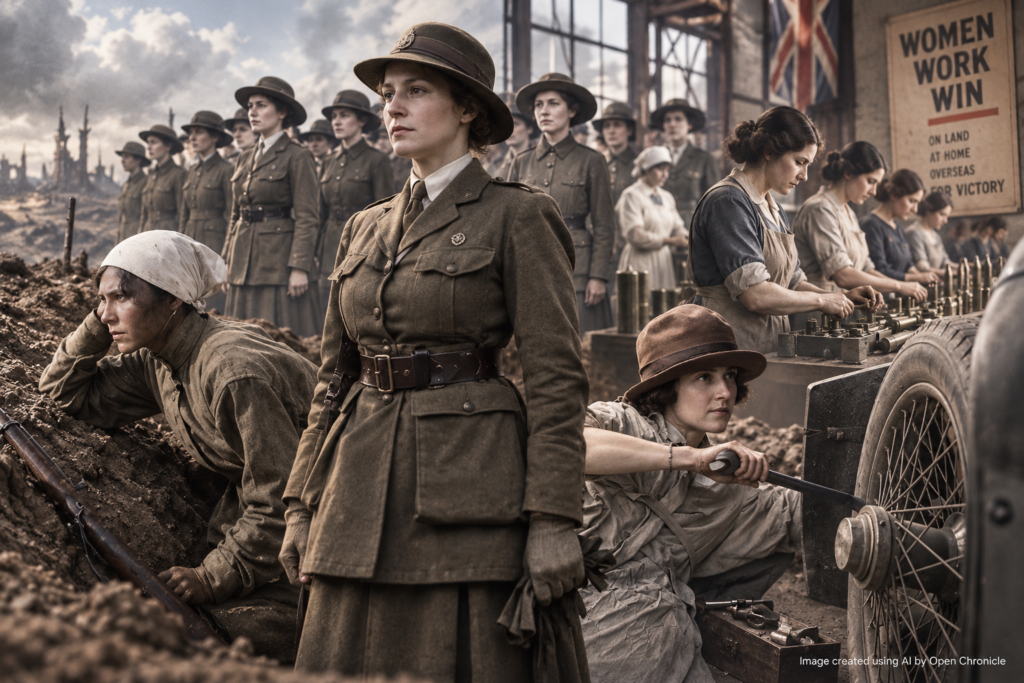
The mobilisation of millions of men created increased demand for civilian labour.
Women entered or expanded their participation in industries associated with wartime production.
They worked in munitions factories, transport systems, hospitals and administrative services.
Women also served as nurses near combat zones and participated in humanitarian organisations.
The war contributed to changes in employment patterns and political expectations, although many women faced pressure to leave wartime occupations after demobilisation.
9.2. Second World War
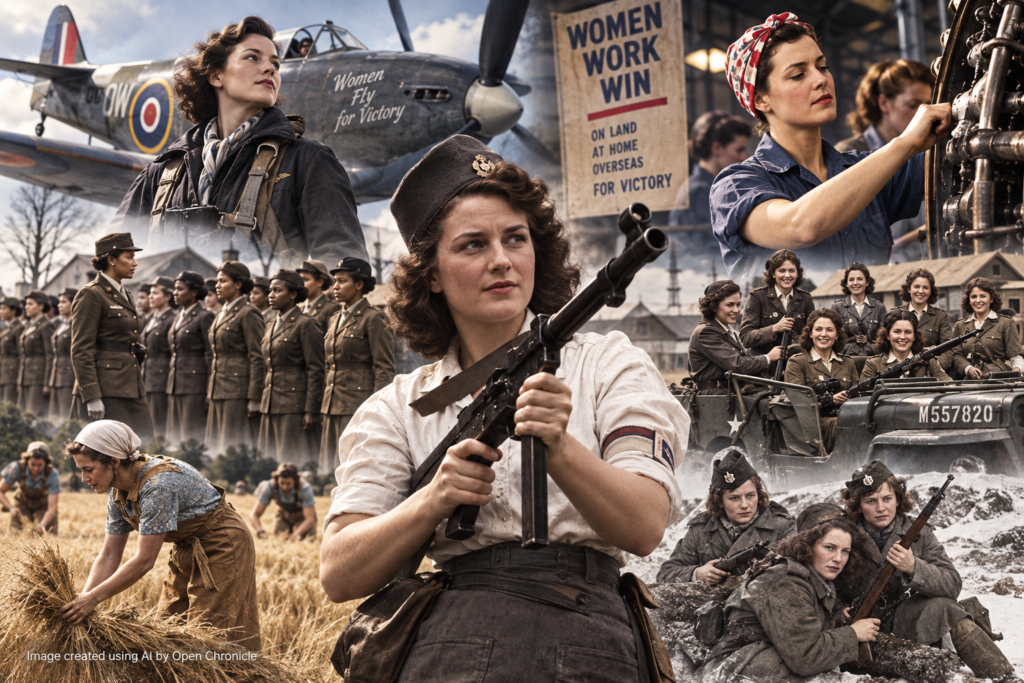
During the Second World War, women’s participation in military and industrial activities expanded considerably.
In the Soviet Union, women served in military aviation, medical units, partisan formations and other military roles.
In Britain and the United States, women worked in aircraft manufacturing, shipbuilding, communications and auxiliary military services.
Women also participated in resistance movements throughout occupied Europe.
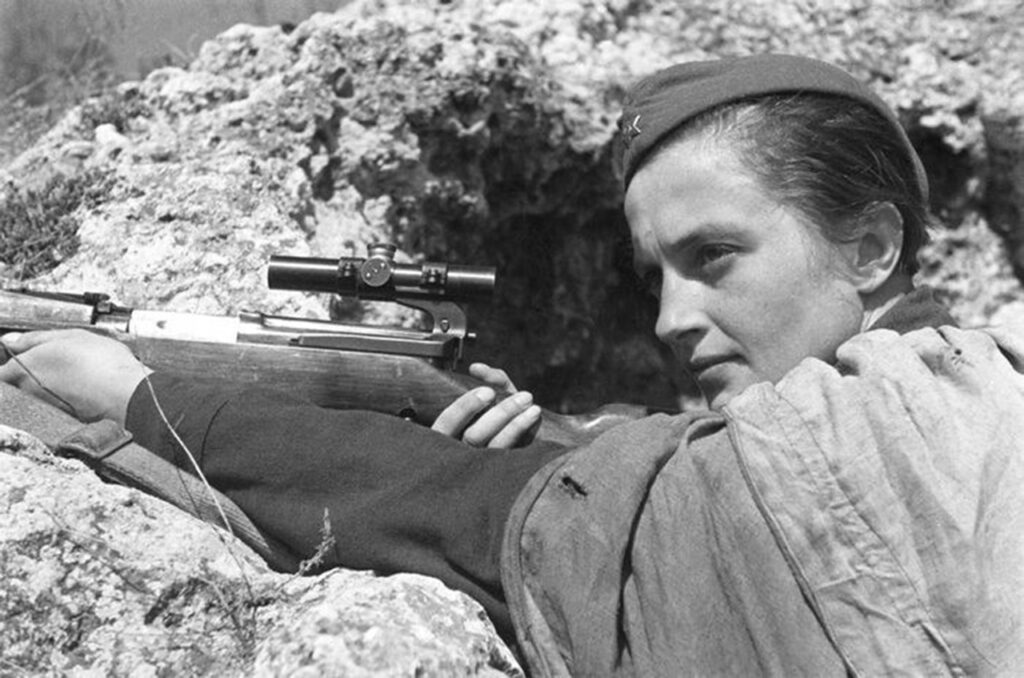
Pavlichenko served as a Soviet sniper during the Second World War and became one of the most widely documented women combatants of the conflict.
Women’s wartime experiences also included displacement, persecution, forced labour, imprisonment and sexual violence.
The consequences of war differed substantially according to nationality, occupation, social position and geographical location.
9.3. Postwar consequences
The end of the Second World War did not produce a uniform transformation of women’s social status.
In some countries, women were encouraged to return to domestic roles as men reentered civilian employment.
Elsewhere, women’s participation in paid employment continued to expand.
Wartime experiences nevertheless contributed to changing expectations regarding women’s capabilities, employment and public responsibilities.
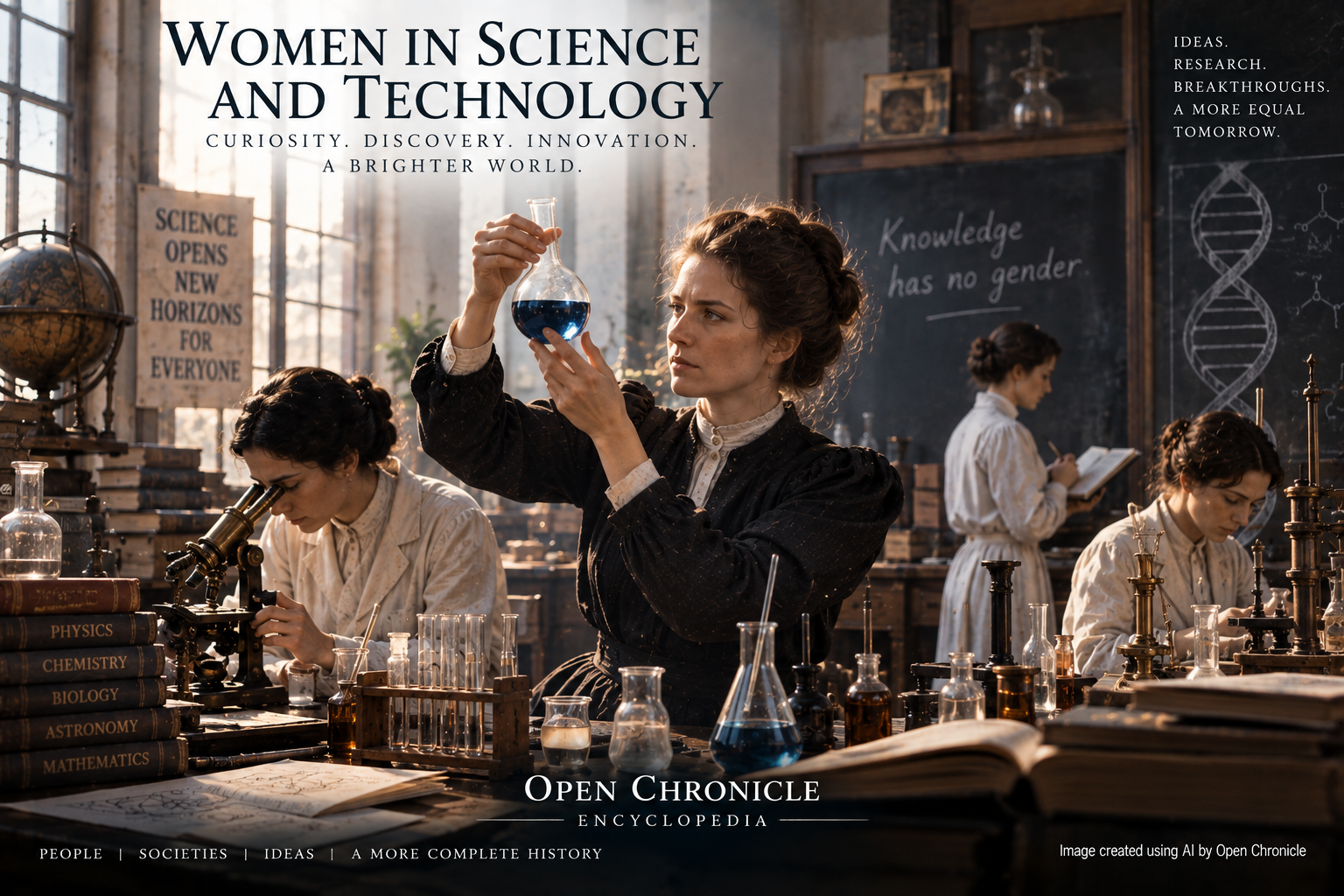
10. Women in Science and Technology
Women have contributed to scientific knowledge throughout history, although access to formal scientific institutions was frequently restricted.
Their work encompassed medicine, astronomy, mathematics, chemistry, physics, biology, engineering and computing.
The expansion of education and professional opportunities during the nineteenth and twentieth centuries increased women’s participation in scientific research.
Selected historical figures
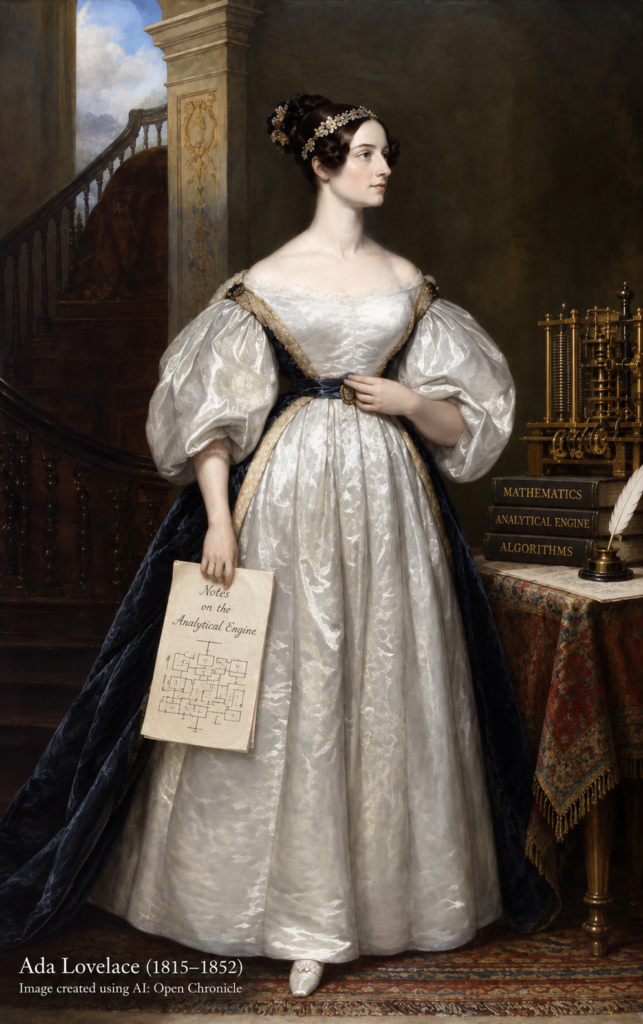
The mathematician wrote extensive notes on Charles Babbage’s proposed Analytical Engine, including an algorithm intended for its operation. Her work occupies an important place in the early history of computing.
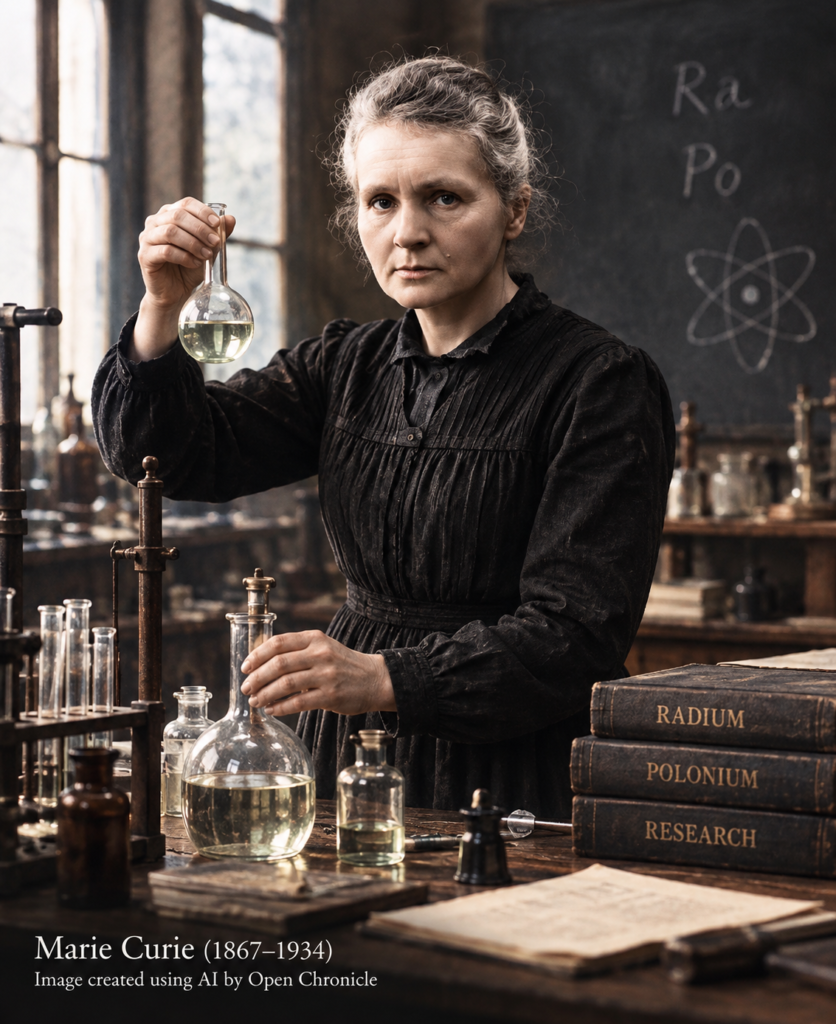
Curie conducted pioneering research into radioactivity and received Nobel Prizes in Physics in 1903 and Chemistry in 1911.
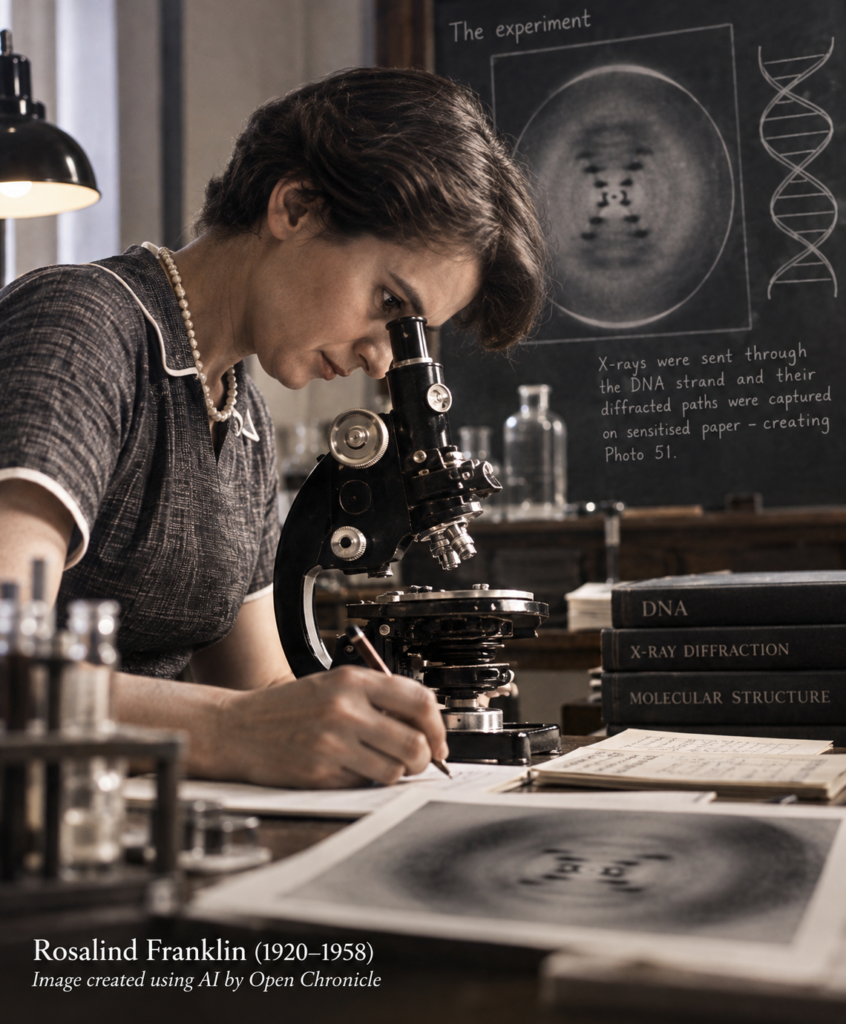
Franklin’s X ray diffraction research provided important evidence concerning the molecular structure of DNA.
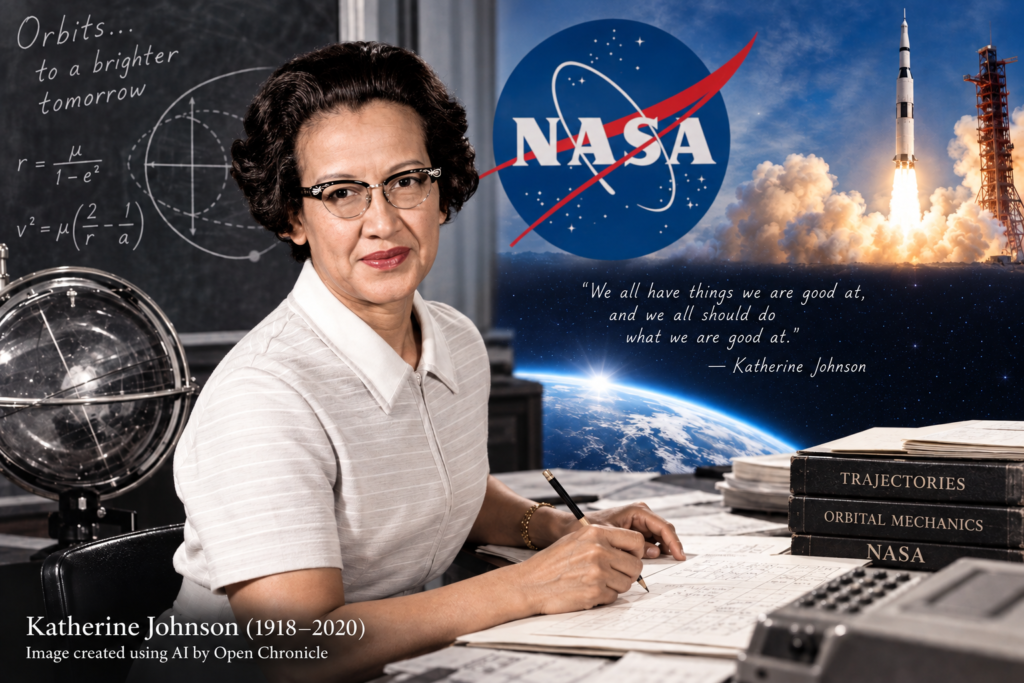
Johnson was an American mathematician whose calculations contributed to NASA’s early human spaceflight programmes.
The history of women in science also examines institutional barriers, research collaboration, recognition and the ways in which scientific work was credited.
It extends beyond famous discoveries to include the contributions of laboratory assistants, technicians, educators and other scientific workers.
11. Women in Literature, Art and Culture
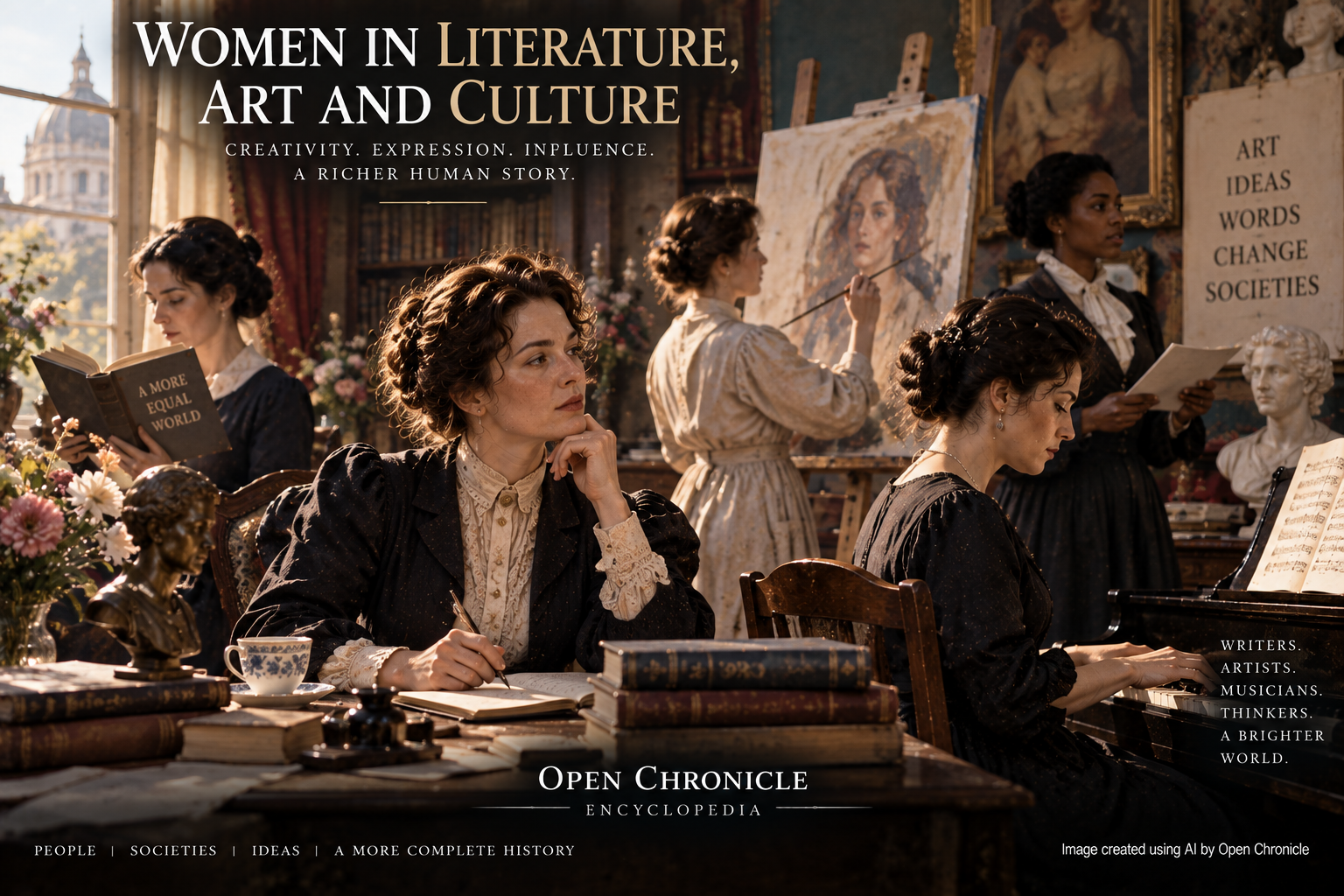
Women have participated in literary, artistic and musical traditions across the world.
Their opportunities to produce and circulate cultural works were influenced by education, patronage, publishing institutions, religious traditions and social expectations.
Some women published anonymously or under pseudonyms, while others established successful careers under their own names.
The history of women’s cultural production includes both the works that achieved recognition during their creators’ lifetimes and those subsequently recovered through historical research.
Literature
Jane Austen, the Brontë sisters, George Eliot and Virginia Woolf are among the women whose works became central to the history of English literature.
Outside Europe, writers such as Murasaki Shikibu and Sor Juana Inés de la Cruz contributed to major literary and intellectual traditions.
Visual arts
Women worked as painters, sculptors, illustrators, photographers and designers.
Artemisia Gentileschi, Élisabeth Vigée Le Brun, Berthe Morisot and Frida Kahlo represent different periods and artistic traditions.
Music
Women participated in musical culture as composers, performers, patrons and educators.
Clara Schumann developed an international career as a pianist and composer during the nineteenth century.
Other women contributed to religious music, folk traditions, opera, jazz and modern popular music.
Women’s cultural history also investigates how artistic institutions, commercial markets and social expectations shaped opportunities for creative work.
12. Women and Social Reform Movements
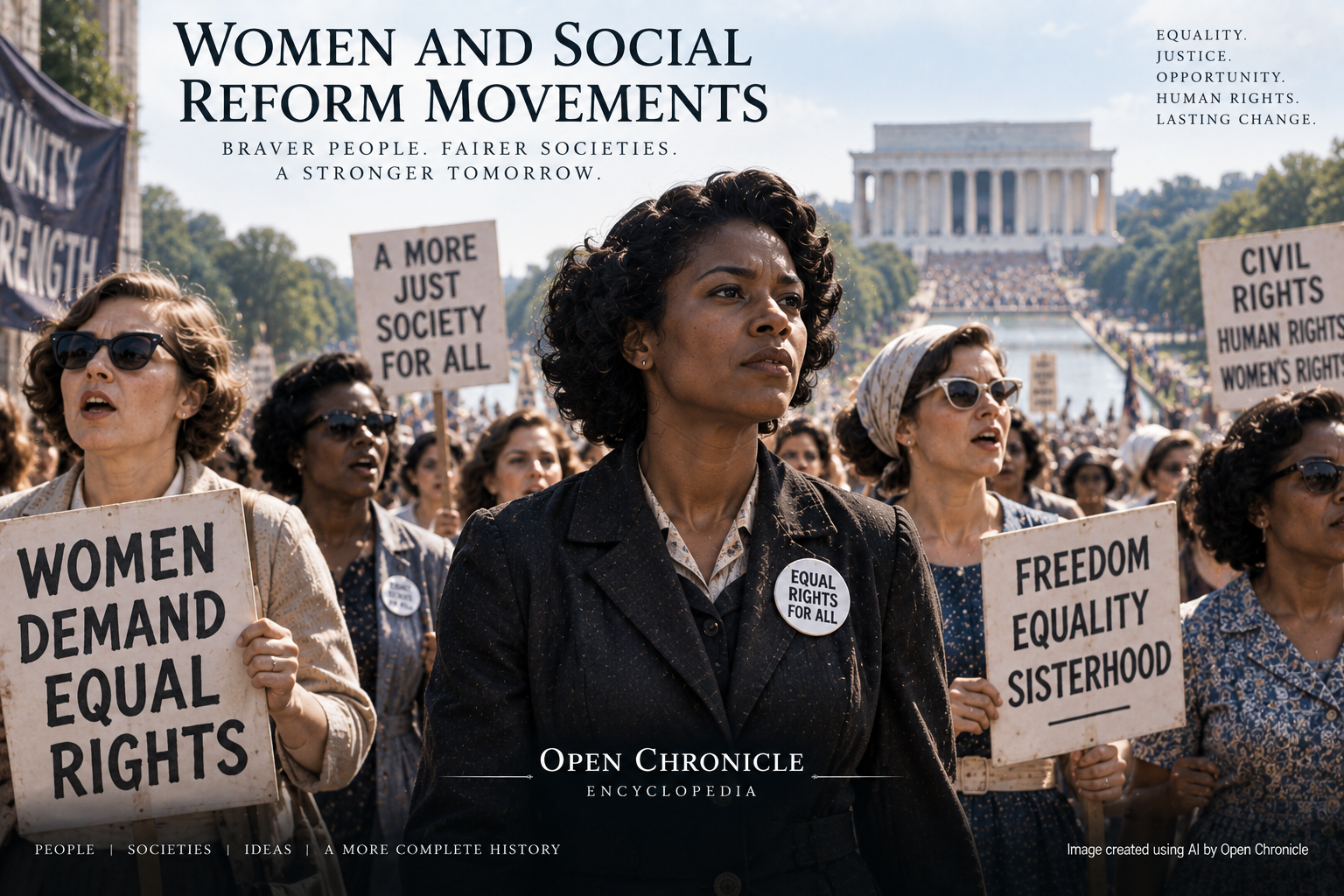
Women have participated in movements concerned with slavery, education, labour conditions, public health, political representation and civil rights.
Their activities included organising associations, publishing newspapers, fundraising, public speaking, legal advocacy and direct political action.
12.1. Abolitionism
Women participated in movements opposing slavery during the eighteenth and nineteenth centuries.
In the United States, figures such as Sojourner Truth and Harriet Tubman became associated with abolitionism and the struggle against slavery.
Women also participated in abolitionist organisations in Britain, the Caribbean and other parts of the Atlantic world.
The relationship between abolitionism and women’s rights became particularly significant as activists examined the connections between legal inequality, citizenship and political representation.
12.2. Civil rights movements
Women played important roles in twentieth century civil rights movements.
Rosa Parks became a prominent figure in the American civil rights movement following her arrest in Montgomery, Alabama, in 1955.
Other women contributed through legal activism, community organisation, education and political leadership.
The history of civil rights movements also demonstrates the importance of examining differences among women according to race, class and social position.
12.3. Feminist movements
The term feminism encompasses diverse intellectual traditions and social movements concerned with women’s rights and gender relations.
Historians sometimes describe modern feminist history through successive waves.
The first wave is commonly associated with nineteenth and early twentieth century campaigns for legal rights and suffrage.
The second wave, particularly prominent from the 1960s onward, addressed employment, education, reproductive rights, family relationships and social expectations.
Later feminist movements placed increased emphasis on differences among women, including the effects of race, class, sexuality and geographical location.
The wave model provides a useful framework for certain movements, particularly in Europe and North America, but it does not adequately describe every feminist tradition or the chronology of women’s activism worldwide.
13. Women’s History in the Contemporary World
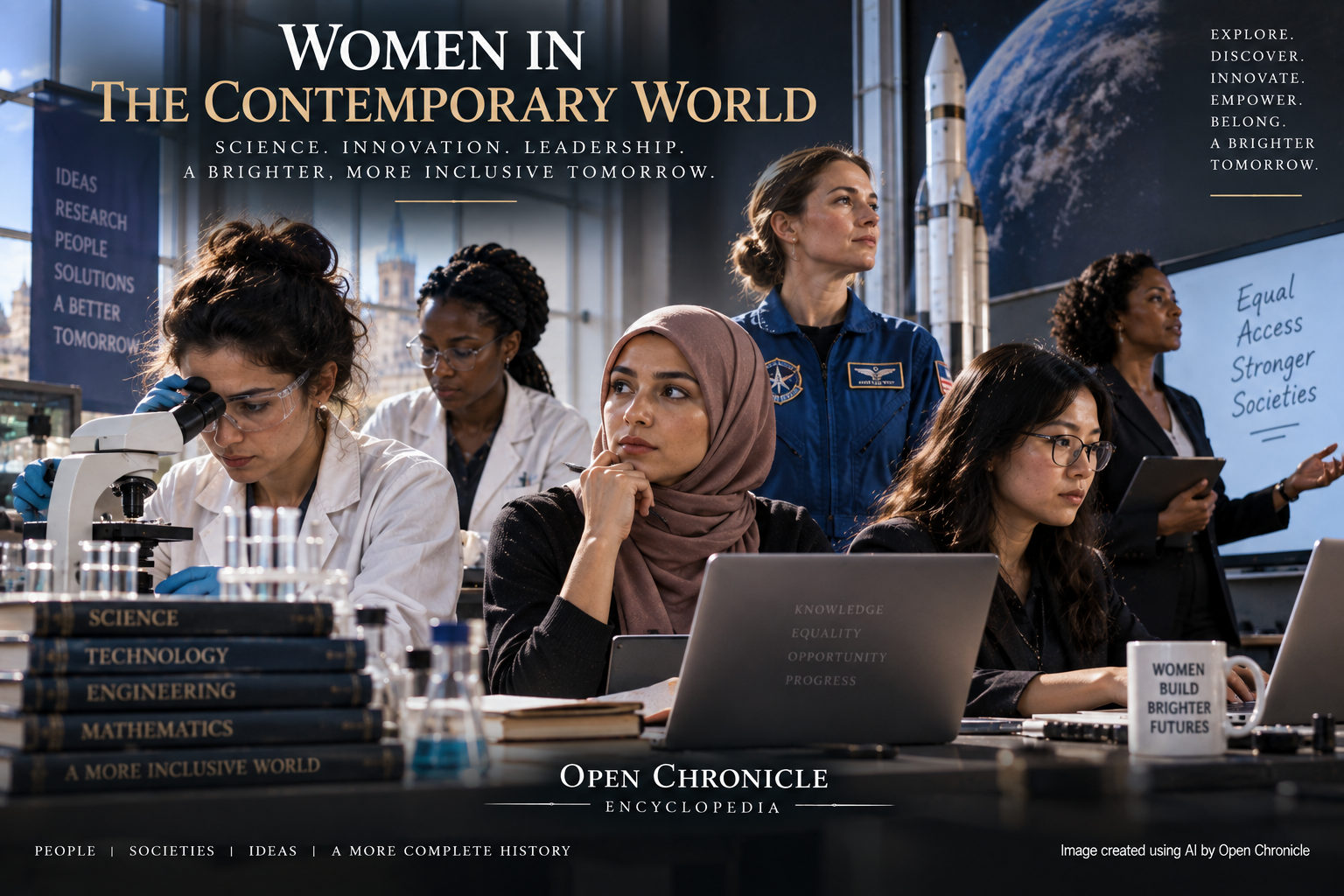
The contemporary history of women examines the consequences of expanding education, industrialisation, urbanisation, political participation and changes in family structures.
The twentieth and twenty first centuries have witnessed significant transformations in women’s legal status and access to public institutions.
However, these developments have not occurred uniformly across the world.
Women’s experiences continue to differ according to national institutions, economic circumstances, cultural traditions and individual opportunities.
13.1. International institutions and women’s rights
The establishment of the United Nations in 1945 created new opportunities for international cooperation concerning women’s legal status and political participation.
The United Nations Commission on the Status of Women was established in 1946.
Subsequent international agreements and conferences addressed discrimination, education, employment, political rights and violence against women.
The Convention on the Elimination of All Forms of Discrimination against Women was adopted by the United Nations General Assembly in 1979.
The Fourth World Conference on Women, held in Beijing in 1995, produced the Beijing Declaration and Platform for Action.
These developments became important milestones in the international history of women’s rights, although implementation and legal obligations differ between countries.
13.2. Women and the digital age
Digital technologies have transformed women’s participation in education, employment, scientific research, cultural production and public communication.
The internet has created new opportunities for professional activity, political organisation and the preservation of historical materials.
Digital archives also allow historians to examine previously inaccessible collections of correspondence, photographs, newspapers and institutional records.
At the same time, digital technologies have introduced new subjects for historical research, including online activism, digital labour and changing forms of public participation.
14. Regional and Comparative Women’s History
Women’s history is increasingly studied through comparative and transnational approaches.
These methods examine how women’s experiences differed between societies and how ideas, institutions and social movements crossed geographical boundaries.
A comparative approach is particularly important because developments such as industrialisation, suffrage, education and legal reform occurred at different times and under different conditions.
Principal areas of regional study
| Europe | Family structures, religious institutions, industrialisation, political rights and social reform. |
| North America | Colonial societies, slavery, Indigenous histories, suffrage, labour and civil rights. |
| Latin America and the Caribbean | Colonialism, independence, slavery, education, labour and political participation. |
| Africa | Trade, agriculture, political authority, colonialism, independence and social transformation. |
| Asia | Family institutions, imperial systems, religious traditions, education, industrialisation and political reform. |
| Middle East | Legal traditions, religious institutions, education, economic activity and social movements. |
| Oceania | Indigenous societies, colonial institutions, suffrage, migration and contemporary social change. |
Comparative women’s history also examines migration, empire, international labour networks and the circulation of political and intellectual ideas.
These approaches help historians understand both the diversity of women’s experiences and the historical connections between different societies.
Labour and economic history
Women’s participation in agriculture, manufacturing, trade, domestic service, professional employment and household production.
Family and everyday life
Marriage, kinship, childhood, household organisation, caregiving, inheritance and family relationships.
Political and legal history
Citizenship, property rights, political representation, legal institutions and collective movements.
Health and medicine
Medical knowledge, childbirth, reproductive health, healthcare professions and women’s experiences of medical institutions.
Education and intellectual history
Literacy, schools, universities, scientific institutions, literary production and access to knowledge.
War and conflict
Military service, civilian labour, resistance movements, displacement, violence and postwar reconstruction.
16. Timeline of Women’s History
-
c. 1479 BCE | Ancient Egypt
Hatshepsut begins her reign as pharaoh during the Eighteenth Dynasty.
-
690 | China
Wu Zetian establishes her Zhou dynasty and assumes the imperial title.
-
c. 1000 | Japan
Murasaki Shikibu produces The Tale of Genji during the Heian period.
-
1791 | France
Olympe de Gouges publishes the Declaration of the Rights of Woman and of the Female Citizen.
-
1792 | Britain
Mary Wollstonecraft publishes A Vindication of the Rights of Woman.
-
1848 | United States
The Seneca Falls Convention adopts a declaration calling for reforms to women’s civil and political status.
-
1893 | New Zealand
Women obtain the right to vote in parliamentary elections.
-
1903 | Science
Marie Curie becomes the first woman to receive a Nobel Prize.
-
1918 to 1928 | United Kingdom
Women’s parliamentary voting rights are introduced and subsequently extended on equal age terms with men.
-
1945 | United Nations
The UN Charter includes the equal rights of men and women among its foundational principles.
-
1946 | United Nations
The Commission on the Status of Women is established.
-
1960 | Sri Lanka
Sirimavo Bandaranaike becomes the world’s first woman prime minister.
-
1975 | International Women’s Year
The United Nations holds the first World Conference on Women in Mexico City.
-
1979 | International law
The United Nations adopts the Convention on the Elimination of All Forms of Discrimination against Women.
-
1986 | Historiography
Joan Wallach Scott publishes Gender: A Useful Category of Historical Analysis.
-
1995 | Beijing
The Fourth World Conference on Women adopts the Beijing Declaration and Platform for Action.
-
Twenty first century
Women’s history continues to expand through global, comparative, intersectional and digital historical research.
Selected milestones illustrating different dimensions of women’s history. This timeline is not intended as an exhaustive global chronology
17. Historiographical Debates and Research Challenges
Women’s history continues to develop through debates concerning historical evidence, interpretation and methodology.
One major challenge is the uneven preservation of historical records.
Women who belonged to wealthy or politically influential families often left more extensive documentation than women from poorer communities.
Historians must therefore avoid assuming that the experiences of prominent individuals were representative of the wider population.
Another challenge concerns the relationship between women’s history and gender history.
Some researchers emphasise the importance of recovering women’s experiences as a distinct subject. Others argue that understanding these experiences requires examining gender relations throughout society.
The approaches are not mutually exclusive and frequently contribute to the same historical investigations.
The study of race, class, colonialism and migration has also encouraged historians to question interpretations that treat women as a single homogeneous historical group.
Women’s experiences have differed substantially according to economic position, legal status, geographical location and cultural context.
Contemporary scholarship increasingly combines these perspectives to investigate the complexity of historical societies.
18. Significance
Women’s history has expanded the range of subjects, sources and questions addressed by historical scholarship.
By examining women’s experiences, historians have developed more comprehensive interpretations of economic production, family organisation, political authority, religious institutions, cultural expression and social change.
The field has also contributed to methodological developments in oral history, social history, historical demography and the study of everyday life.
Its significance extends beyond the recovery of previously overlooked individuals.
Women’s history demonstrates that historical processes cannot be fully understood through political institutions, military campaigns or prominent public figures alone.
The experiences of people whose activities were less frequently recorded in official documents are also essential to reconstructing the development of human societies.
Explore this subject
Continue exploring related Open Chronicle Encyclopedia entries through the categories associated with this article.

Staff Writers at Open Chronicle produce trusted journalism, strategic analysis and authoritative reference content across global affairs, geopolitics, defense, science, history, technology, business, culture and sport. Their work combines accurate reporting with historical perspective and analytical depth, helping readers understand not only what is happening, but why it matters. Beyond daily news coverage, Staff Writers contribute to the Open Chronicle Encyclopedia, investigative features, original research projects and long-form reports, building a comprehensive knowledge platform designed to inform, educate and preserve reliable information for a global audience.